Three lessons the Flyers should heed if they hope to close out the Penguins in Game 6
The Flyers weren't terrible in Game 5 but their failure to home in on some small details proved costly in a 3-2 loss to the Penguins.
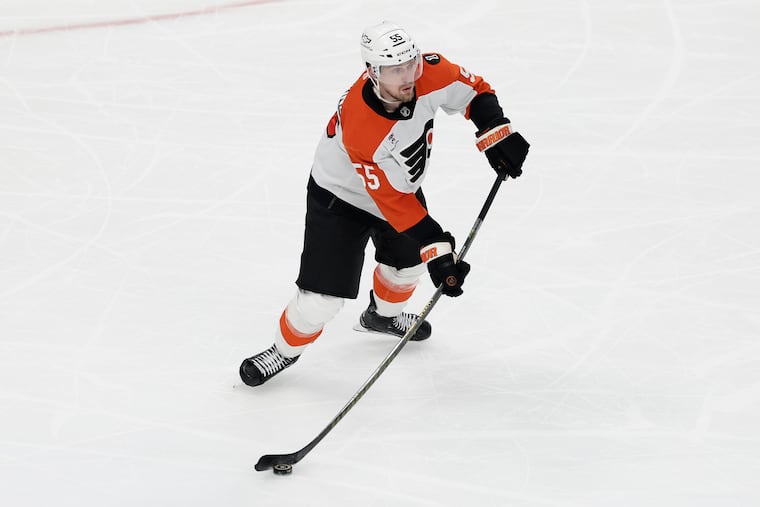
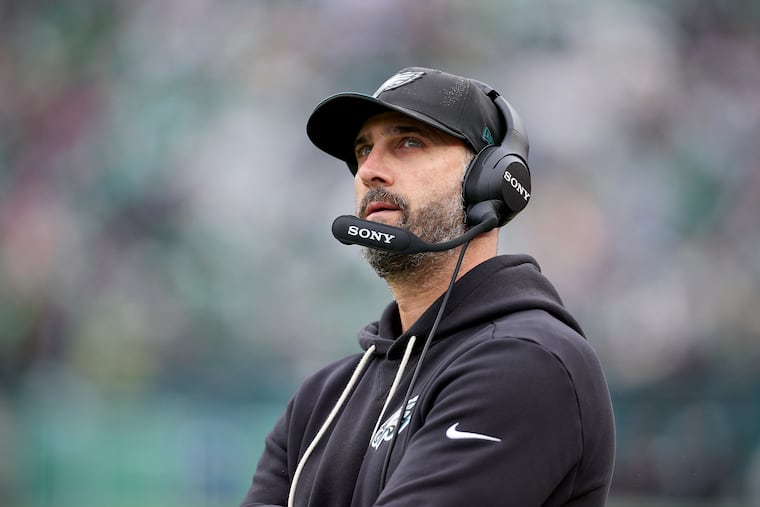
PITTSBURGH — Rick Tocchet has long talked about the lessons that his young Flyers team needs to learn. He has often mentioned teachable moments in both losses and in wins.
They have now lost two straight games after breaking out to a three to nothing lead in their best-of-seven game series against the Pittsburgh Penguins.
The Flyers are still at the head of the class, as they hold the 3-2 advantage and have two more chances to advance. But it feels like the teacher is starting to implement a curve that could pull their grade down as the Penguins push and claw their way back into the series.
» READ MORE: lyers drop second straight as Penguins pull series back to 3-2
There is a saying that goes something like, “Forget the past, but never forget the lesson.” Well, the Flyers need to dig back into their old notes and cram before Game 6 on Wednesday night at Xfinity Mobile Arena because they definitely don’t want to become part of a history-making series — on the wrong side this time.
Here are three lessons they need to study up on.
1. Be hard on your clears
Back on Jan. 13, one of the lessons jotted down after a loss to the Tampa Bay Lightning was: Cut down on turnovers. This one needs to be re-learned quickly.
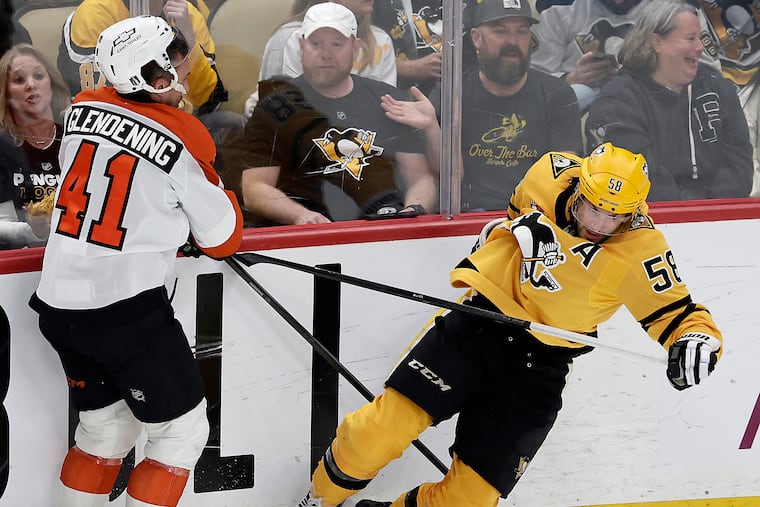
On Monday night, while the official stat sheet will say the Flyers had only 11 giveaways to the Penguins’ 22, turnovers and lackadaisical play consistently allowed the Penguins to keep the puck in, handing them one goal and almost another.
“Failed clears. A little too soft with failed clears,” Tocchet said.
There were several moments, but three stand out.
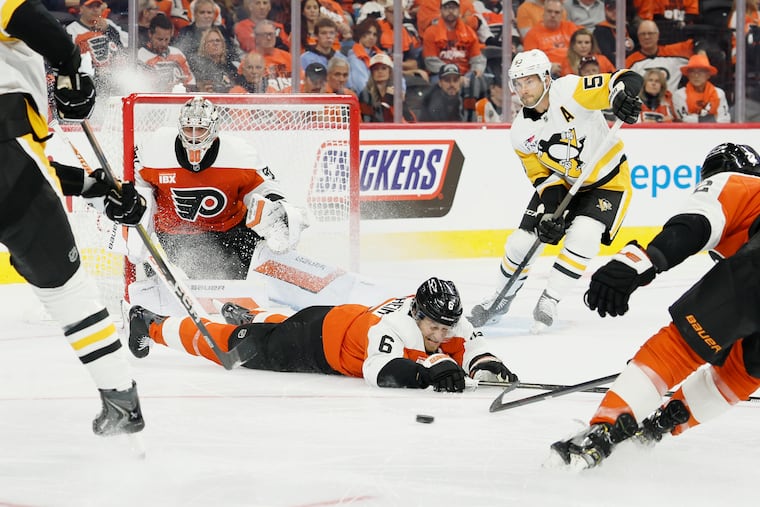
Twice, Owen Tippett had a chance to at least clear the zone, but he couldn’t get it out before Connor Dewar scored to make it 2-0. The first time was a tougher play, but he couldn’t get enough on the puck to chip it past Parker Wotherspoon at the blue line.
His second attempt was much easier when a rebound went to him in the corner, and he had time and space to skate the puck up. Facing a bit of pressure, he opted to send a backhand lift to Trevor Zegras, but it wasn’t high enough, and 5-foot-11 Sidney Crosby knocked it down before feeding Dewar.
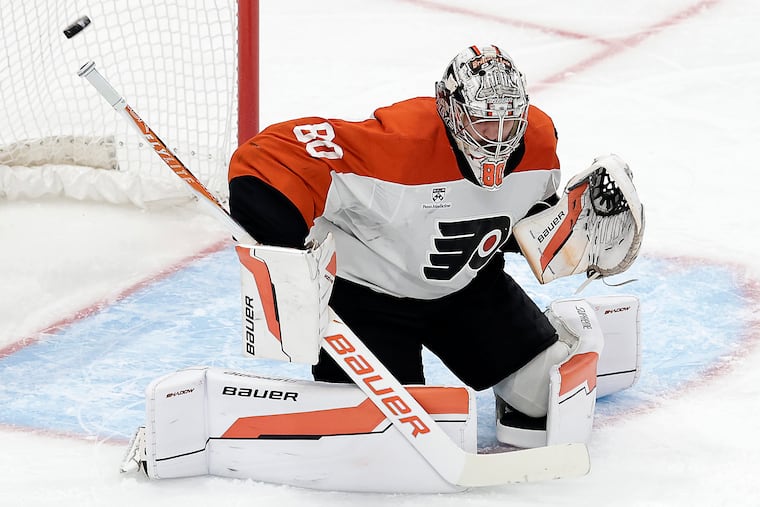
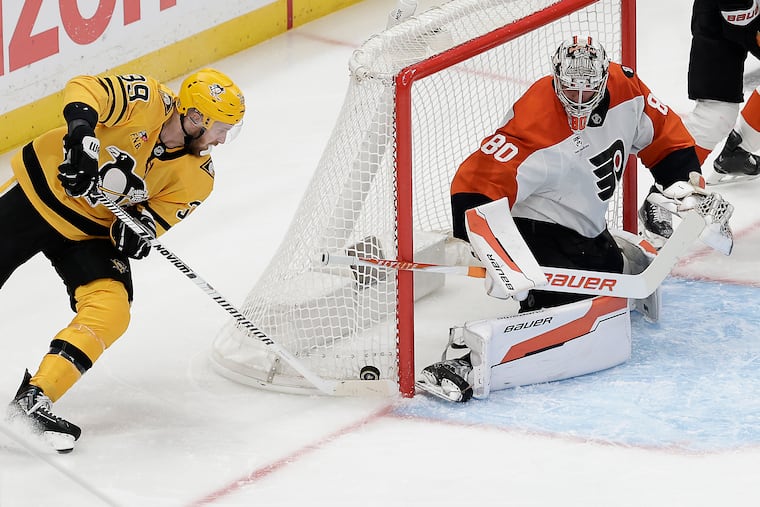
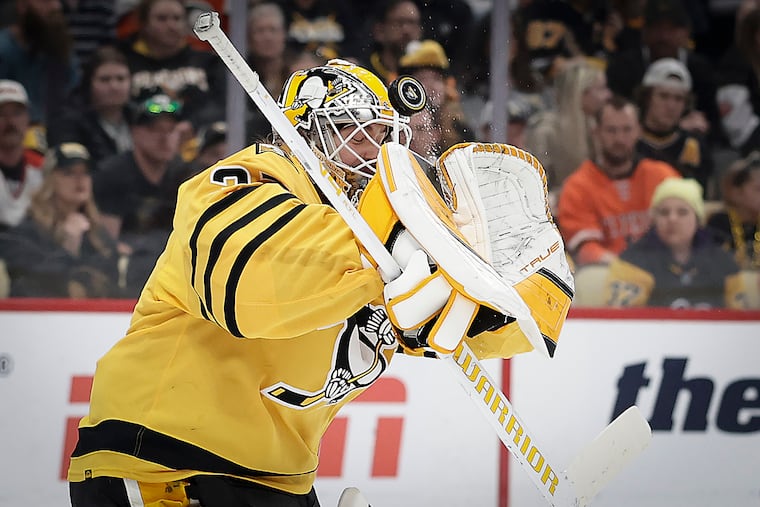
And early in the third period, in a one-goal game, after the Flyers won a faceoff, Rasmus Ristolainen tried to lift it over the crowd, but it was caught and put on the ice by Crosby again. He passed the puck to Bryan Rust, who dipped around Travis Sanheim, cut across the crease, and was only stopped by the fully extended left pad of Dan Vladař. It was one of several occasions where a Flyers mistake unnecessarily invited a period of pressure.
“Combination,” defenseman Travis Sanheim said postgame when asked if it was the Penguins’ forecheck or the Flyers’ execution. “Obviously, they’re coming hard, but there’s some battles that we have to win, some more battles that we have to win, that we were winning earlier in the series and executing our wall play, and just haven’t been enough of it the last two games.”
But was it the Flyers not playing hard and just trying to rely on flipping pucks out, or was it that the Penguins clogged lanes?
“They just seemed quicker on the forecheck, and a little more responsible, a little more dedicated to their defensive game,“ said Sean Couturier via Zoom on Tuesday. So it makes it harder on us, but it’s on us to find another gear. That’s what playoffs are. It gets tougher and tougher every game, and it’s on us to find a way to elevate our game.”
» READ MORE: Benching Matvei Michkov didn’t work for the Flyers. Now what? Bench Porter Martone? Tyson Foerster?
2. Keep the foot on the pedal
This was a lesson handed out in late January, when the Flyers beat the Colorado Avalanche after losing two nights earlier on a late tying goal and an overtime tally to the Utah Mammoth. There are multiple ways to interpret this, whether in-game or game-to-game, and right now the Flyers need to do both.
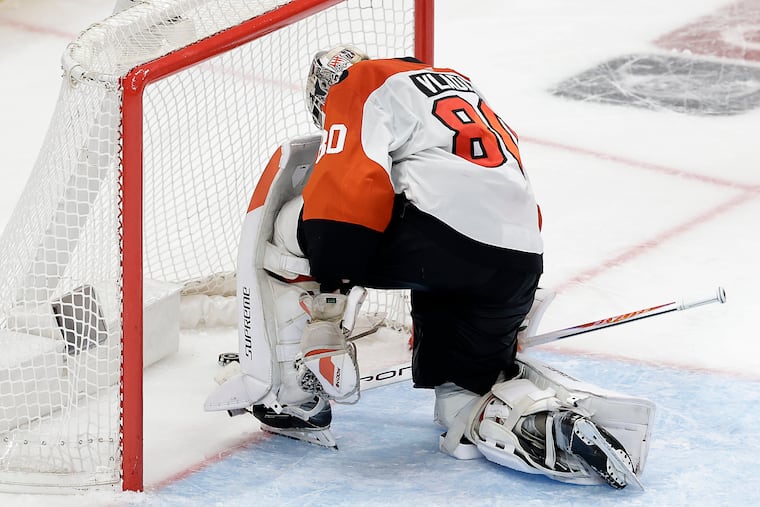
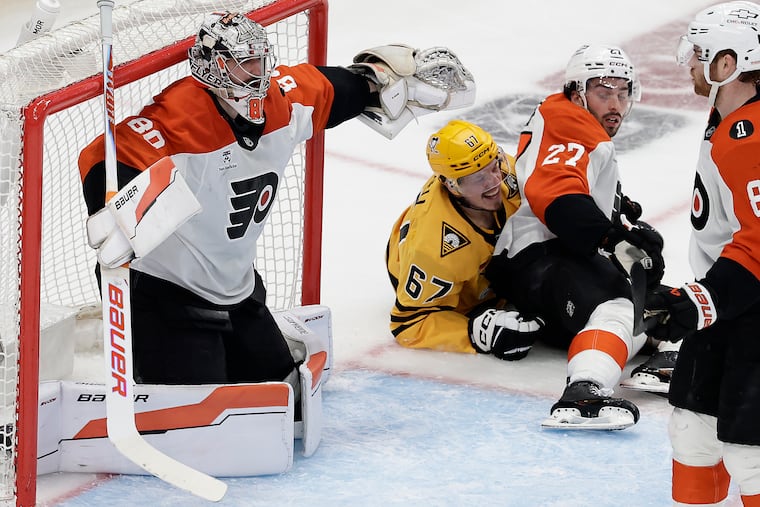
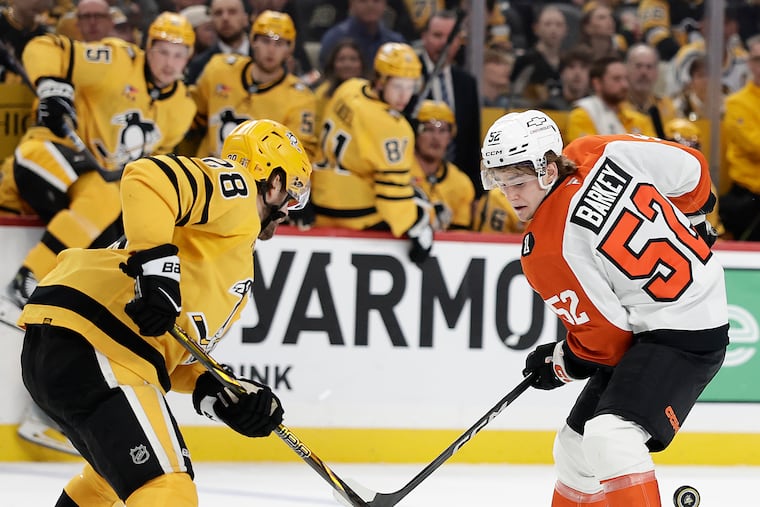
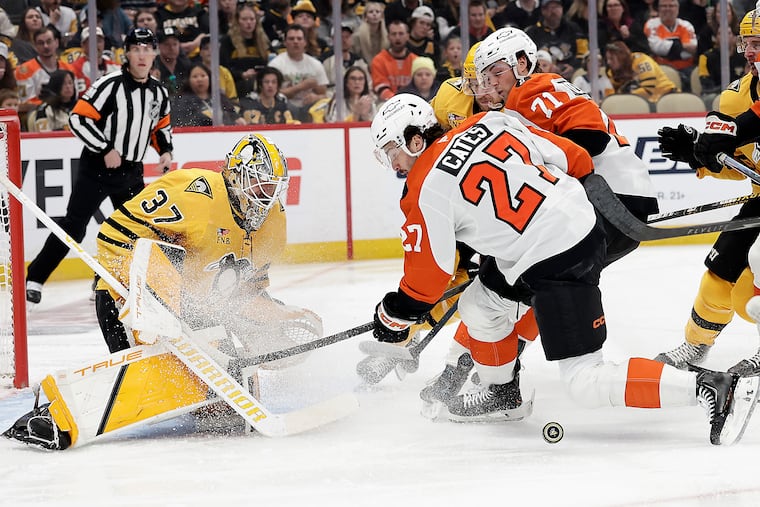
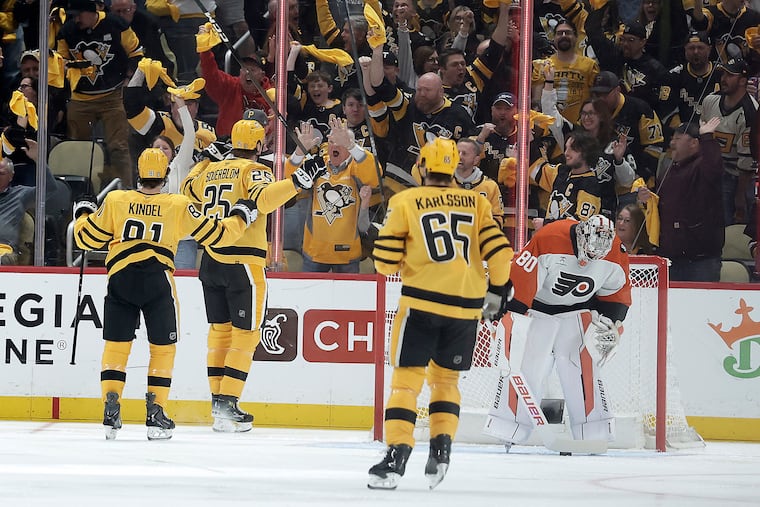
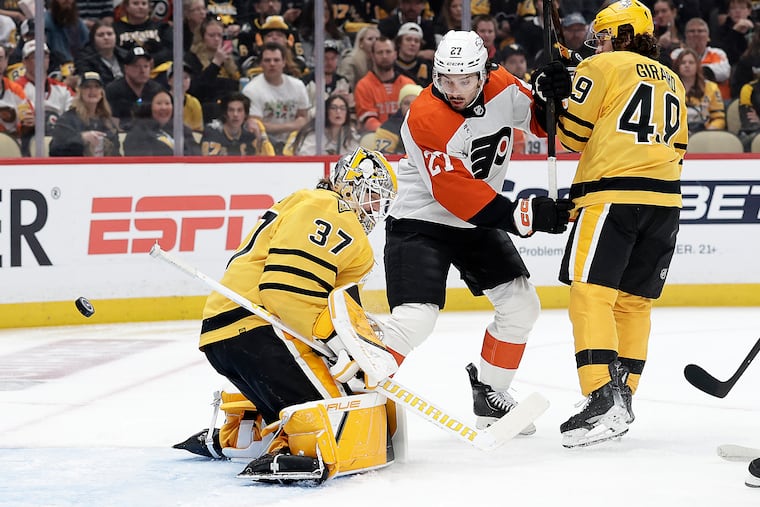
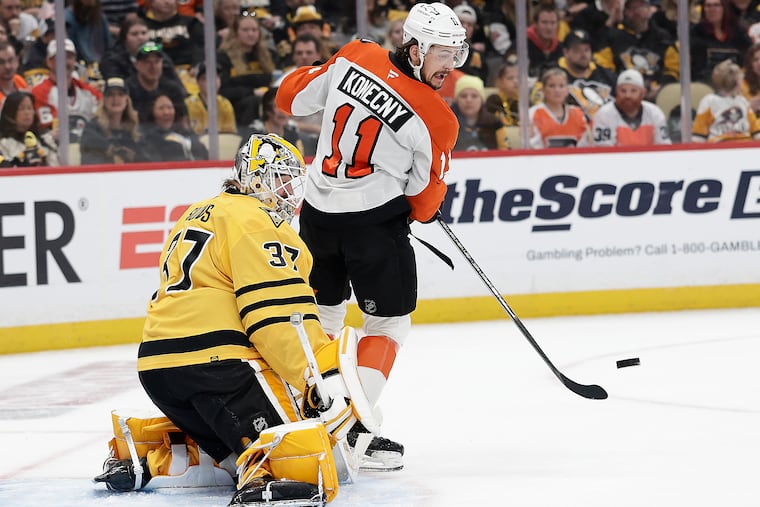
After a slow start in Game 4, the Flyers changed their mindset and came out hard to start Game 5. They had eight shot attempts, including shots on goal by Alex Bump, Denver Barkey, and Nick Seeler, before the Penguins got their first attempt. The problem? That wide-open shot by Elmer Söderblom found the back of the net.
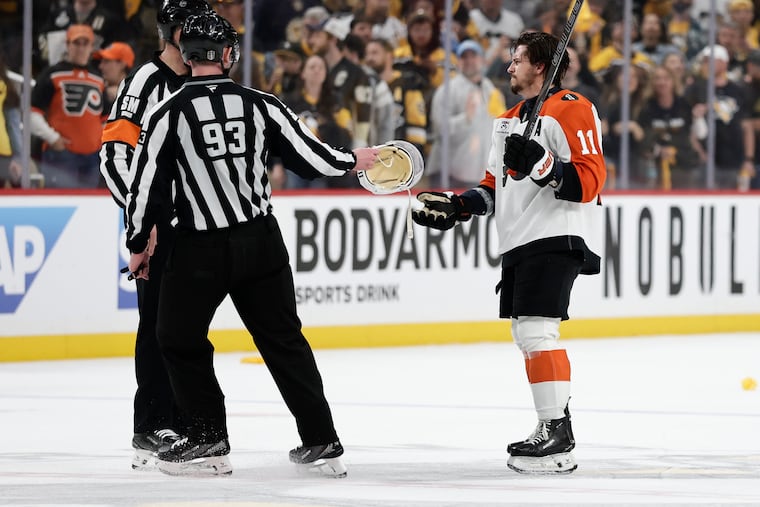
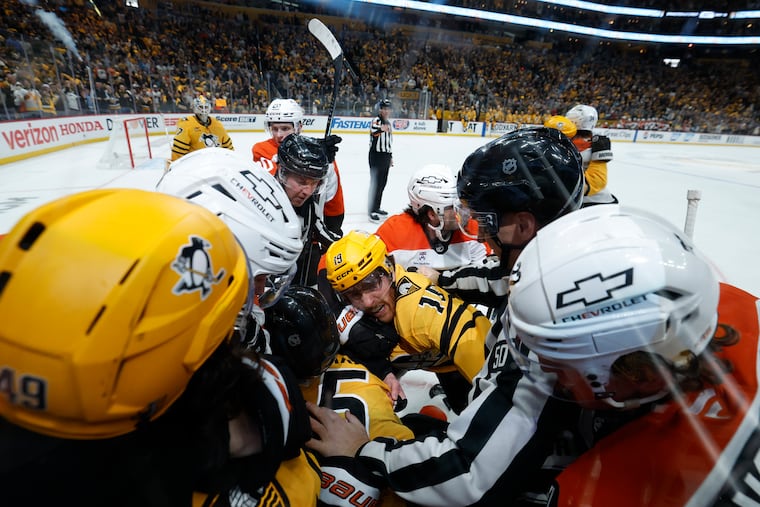
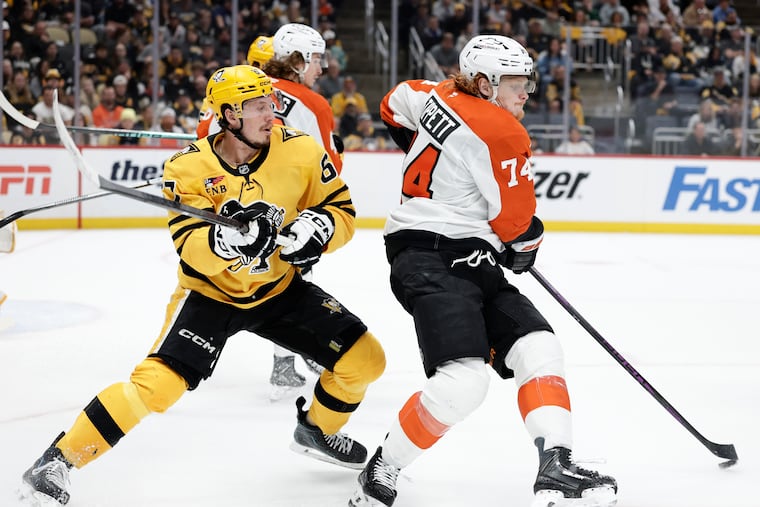
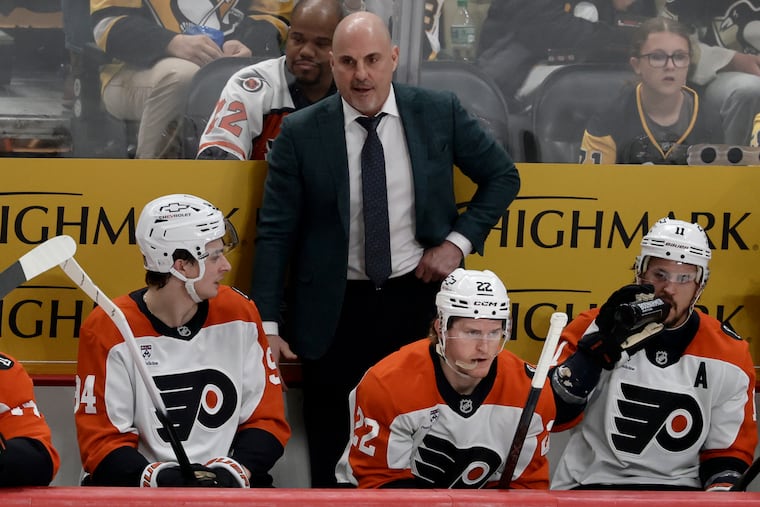
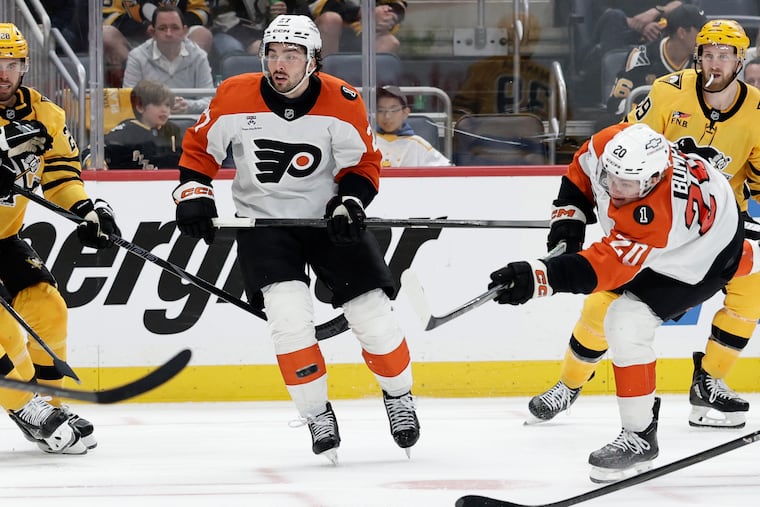


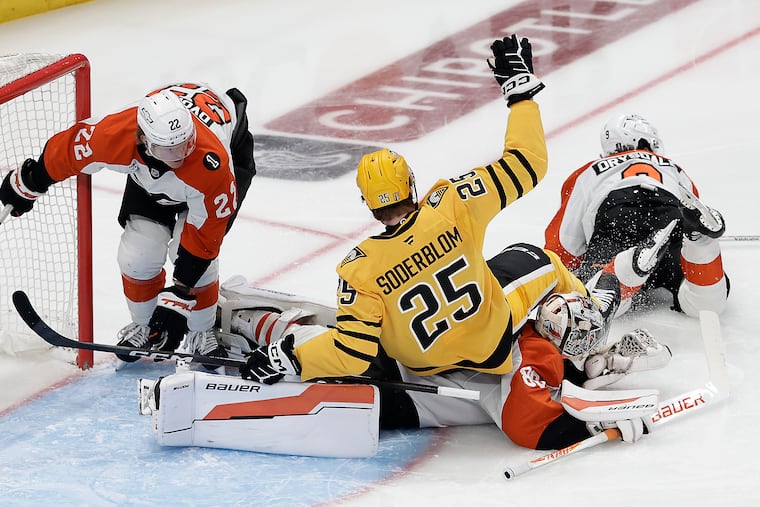
Tocchet, during a Zoom with reporters Tuesday, preached that his team needs to play the same way regardless of the time on the clock. “We’ve got to get in the mode of wanting to make the play, and the guy without the puck wanting the puck,” he added. “I think that’s something that we can get better at. There’s definitely 10 or 15% better at that, which will help our overall game.”
The Flyers need to return to the team that played like their playoff lives were on the line since the Olympic break. As Denver Barkey said after Game 4, “We know their season’s on the line, so they’re going balls to the wall.” The Flyers need to do that too and play the same way from puck drop to the final buzzer, much like they did in Games 1 and 2.
But could the constant stress and playoff-style hockey they’ve been playing for weeks finally be wearing on the young Flyers?
“You’ve got to build that scar tissue, but there’s, I always call it that, you have another reserve tank in you. There’s more in there, for some guys there,” Tocchet said on Tuesday.
“We’ve got to, I call it, break the seal. And I just felt the last two games, we were a little bit too comfortable. We weren’t finishing those checks, like we did. We weren’t getting open for the guy.
“The fundamentals have been a little bit iffy. But it’s hard to do, like it’s a very hard thing to do, grind every day, and we’re getting the baptism. ... I don’t want to say the grind’s getting to us, because we should welcome the grind. It’s all part of playoff hockey, is that grind, to embrace it.”
3. The details matter
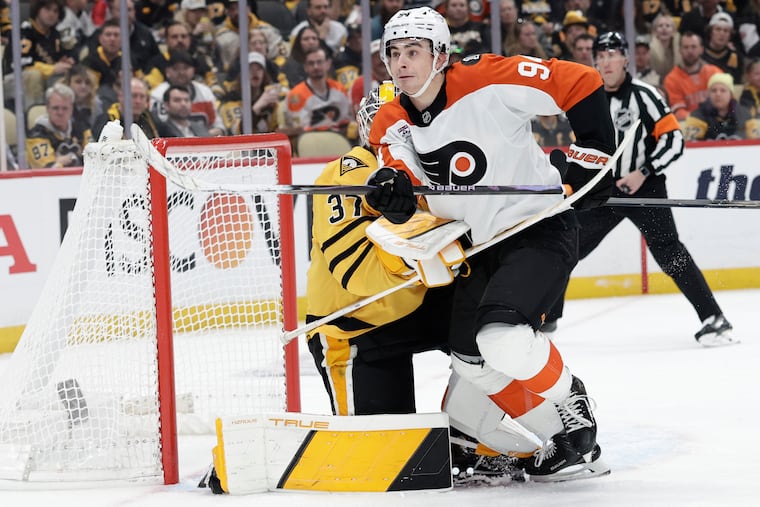
The Flyers have forgotten about the little details, like Ristolainen getting bumped off the puck by Anthony Mantha, leading to Söderblom‘s goal. Or how as a team the Flyers stopped driving to the net and screening the goalie after doing that more in Games 1-3. According to Natural Stat Trick, Artūrs Šilovs only had to make one high-danger save on 20 shots, with 14 coming from low-danger spots.
“It’s a lot of small moments or little plays out there, but they mean a lot, especially this time of year,” forward Christian Dvorak said on Tuesday via Zoom. “So if we clean that up a little bit more, we’ll give ourselves a better chance here to win. And that could be small plays, whether it’s getting pucks out of our zone, getting pucks into their zone, and just getting in on the forecheck, little things like that could go a long way.”
When the Flyers did establish their forecheck, it worked. They need to do more of that, which is one thing that the line of Bump, Noah Cates, and Tyson Foerster accomplished on several occasions Monday, including pinning the Penguins with strong wall work that eventually led to Sanheim’s goal which tied the game, 2-2.
Bump’s wall work was something that Lehigh Valley coach John Snowden challenged him to step up after the fifth game of the American Hockey League team’s season.
“He’s proven that he’s not afraid to go to the interior of the rink at all, so he has that mindset already,” Snowden told The Inquirer on Feb. 27. “It’s now all the other moments of maybe a race on the wall, or a puck battle on the wall, or a breakout on the wall. Are you going to win that battle? How are we going to get out of that battle? We hammer those points.”
» READ MORE: Alex Bump shows he’s ‘built for the playoffs’ after giving the Flyers a much-needed boost in Game 5
The 22-year-old brought that in addition to scoring his first playoff goal.
“I think that in this league, that’s the biggest part to succeed, I guess, and in general, to make a name for yourself is if you’re good on the walls,” he said after Game 5. “I think that’s kind of the biggest part in this league, is being good on the walls and winning the blue lines. But, yeah, I was happy with my wall play today; always can be better, but it was good.”