Three key numbers for the Flyers entering a must-win Game 3
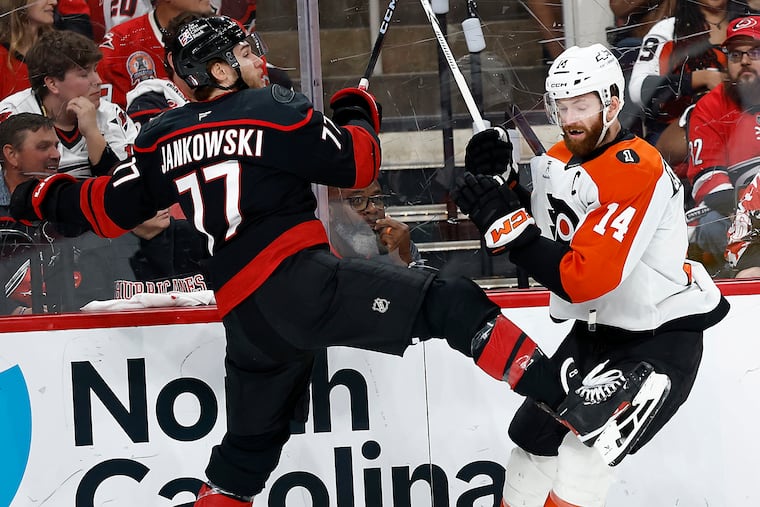
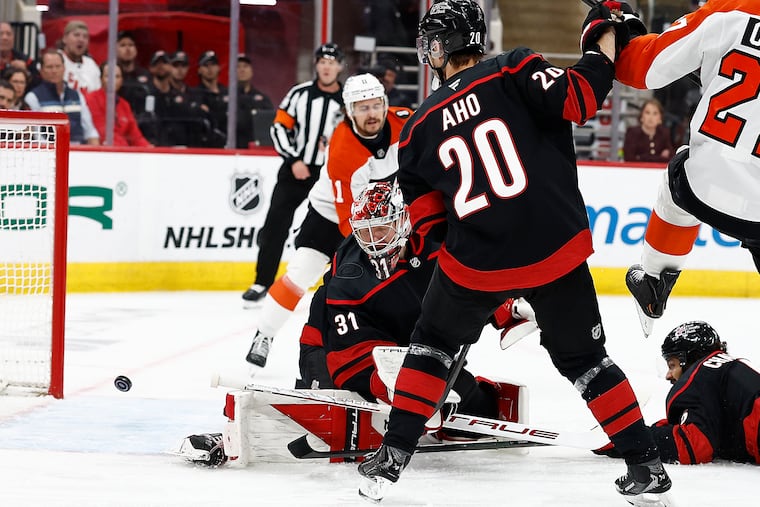
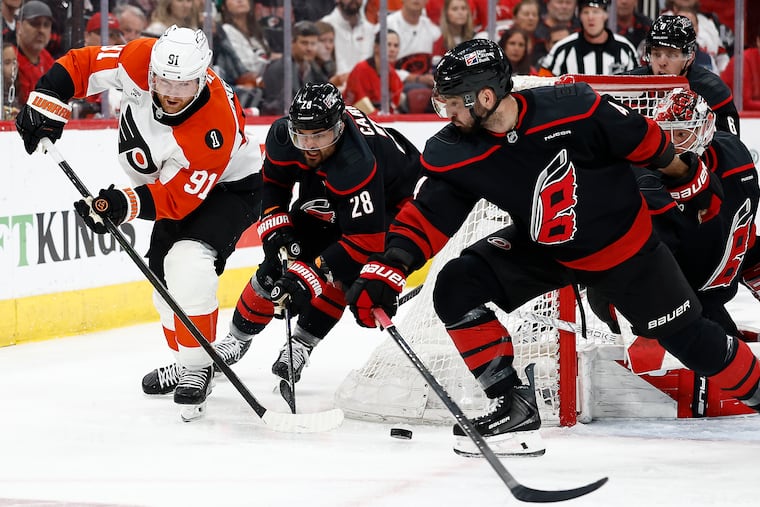
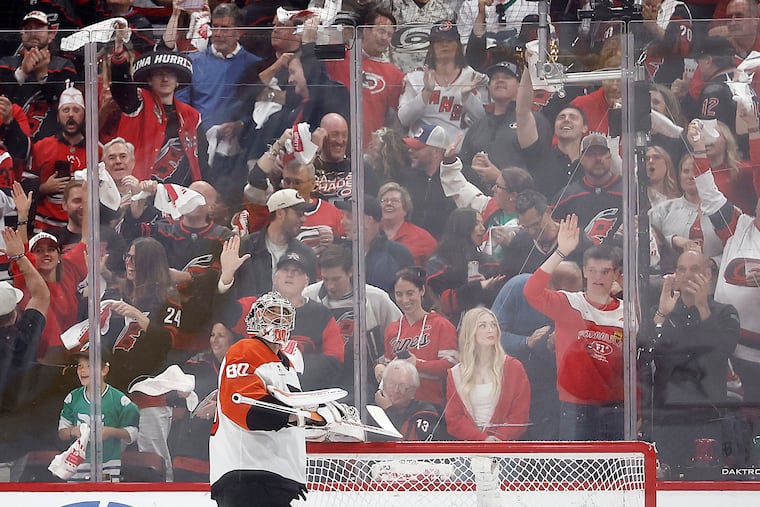
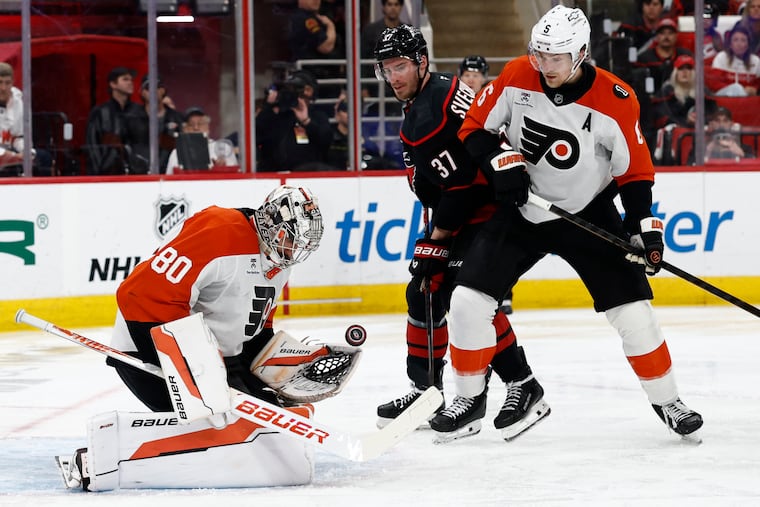
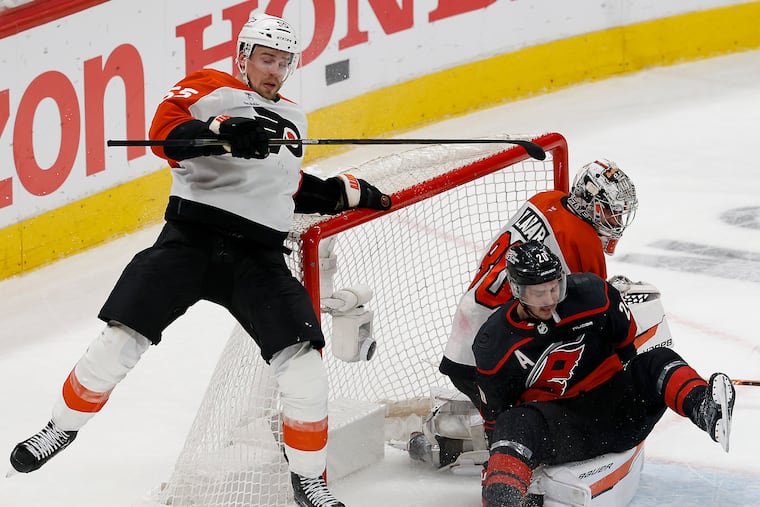
The Flyers are down 2-0 in the series, but Game 2 looked and felt a lot different, especially in overtime when the Flyers took it to Carolina.

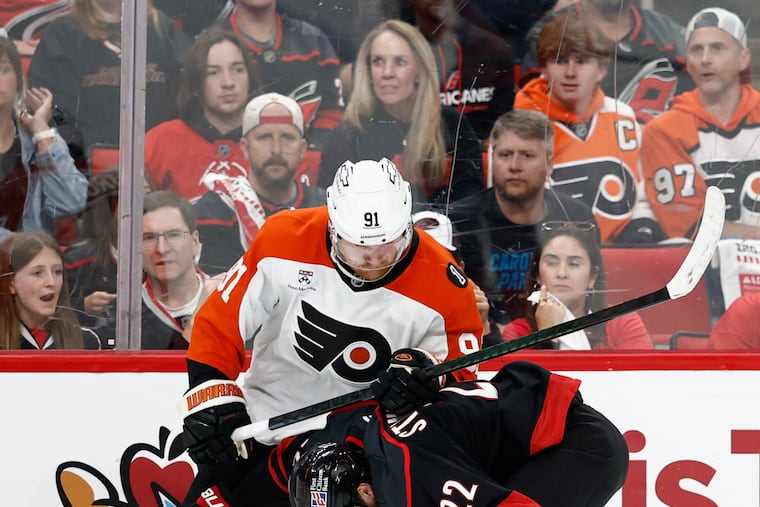
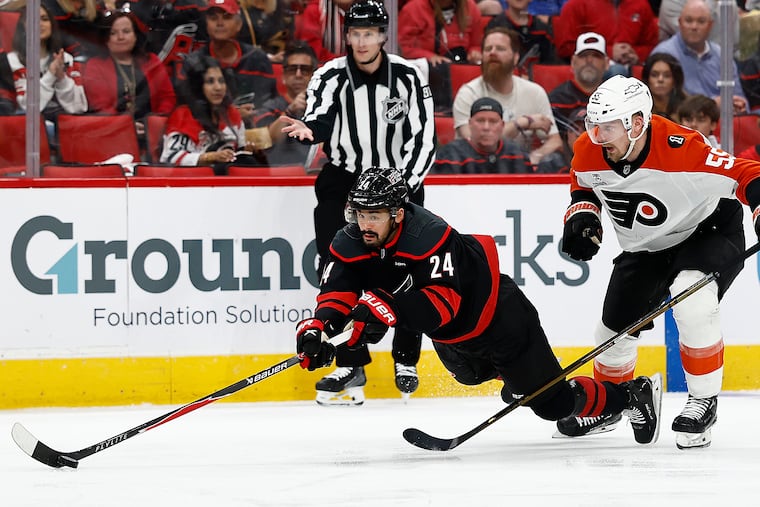
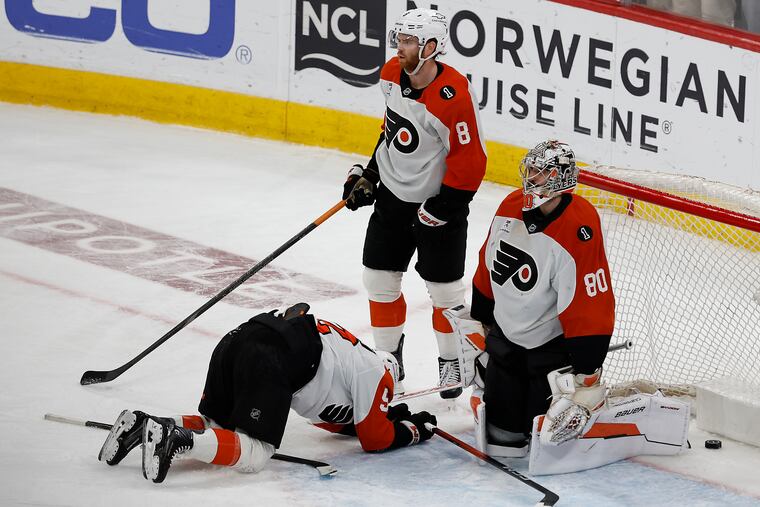
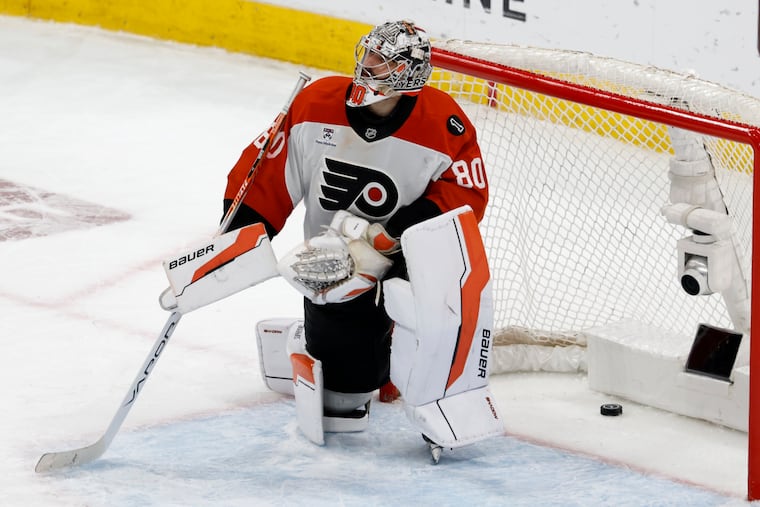
RALEIGH, N.C. ― The Flyers were handed a 3-2 overtime loss on Monday and now trail two-to-nothing in their best-of-seven Eastern Conference second-round series against the Carolina Hurricanes.
Here are three numbers to know.
» READ MORE: Flyers squander two-goal lead, lose 3-2 in OT to fall into 2-0 series hole
39
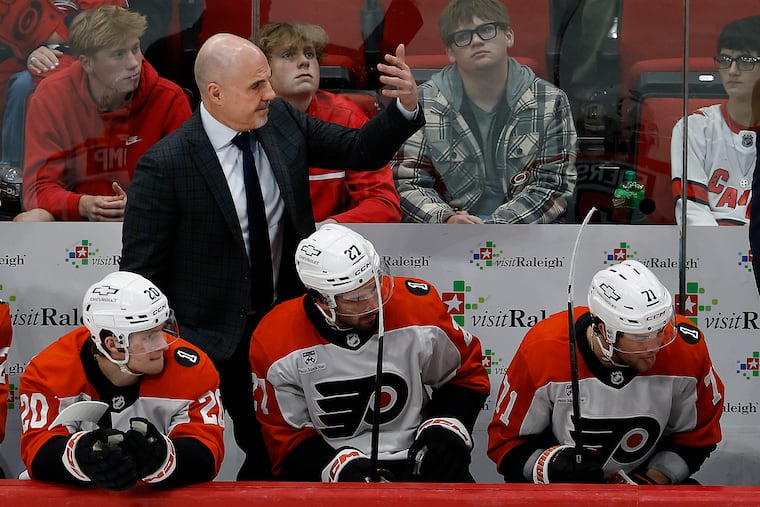
No, this is not about Matvei Michkov. Before the game on Monday, coach Rick Tocchet spoke openly about the Flyers needing to start Game 2 on time. He didn’t want his players to sit back and take it from the Hurricanes as they did in Game 1, when the home team ran amok and not only put the Flyers on their heels with their aggressive forecheck but set the tone that it would be a fast and furious night.
“It’s no different than say, going to a fastball pitcher [where] you need a couple of fastballs that [help you] get the timing,” Tocchet said. “Maybe that last game, for some of our young guys and some of the veteran guys, that pace, we needed to see it and live it, and maybe it’ll slow down for a few guys.”
The game did slow down considerably, and this team did what the bench boss has acknowledged his young group does often: learn from their mistakes. Like clockwork, the Flyers responded with a much better and much more connected start. While Carolina did have a few chances, the pressure was not consistent enough to do much damage.
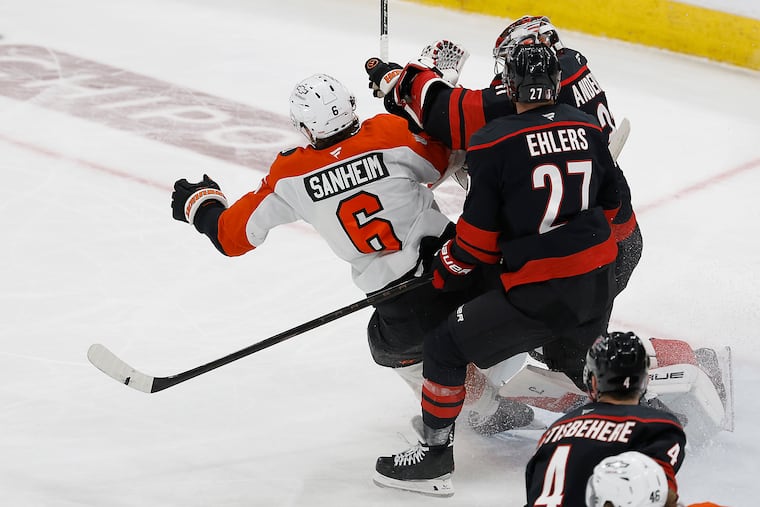
“I think we had our legs a little bit more, quicker on pucks, making better decisions, harder on the forecheck, and turning over pucks, and it allowed us to get more zone time and generate chances,” defenseman Travis Sanheim said.
“With their system, the way that they run around, they have extended D-zone time, eventually you’re getting your looks, and you’re getting pretty good looks. So we’ve just got to continue with that.”
Because of that, after being shut out in Game 1 on Saturday, the Flyers not only got on the board in under five minutes, but they took a 2-0 lead. By becoming the aggressors, they put Carolina in a spot they had not been in all postseason: playing catch-up.
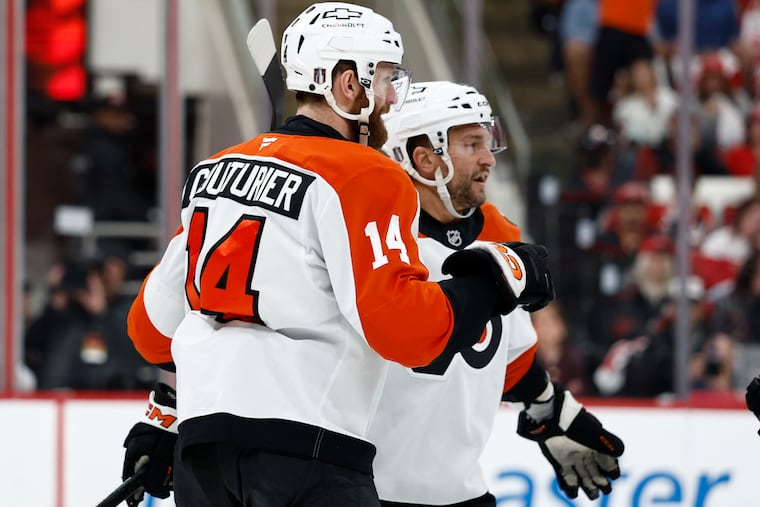
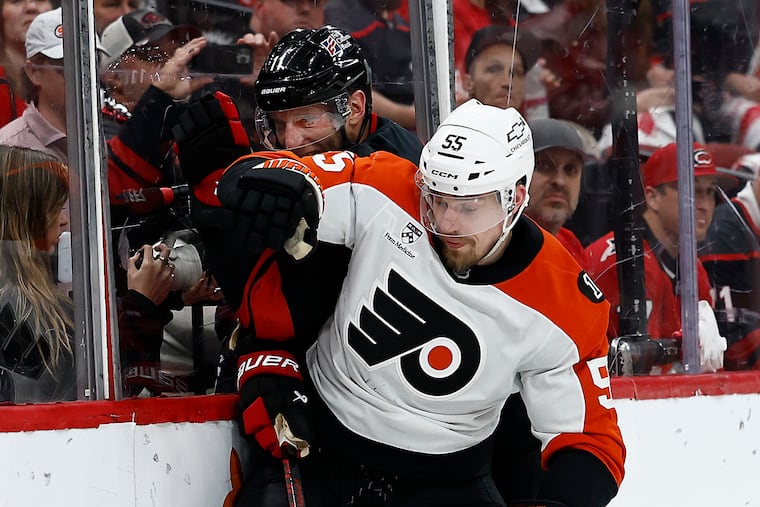
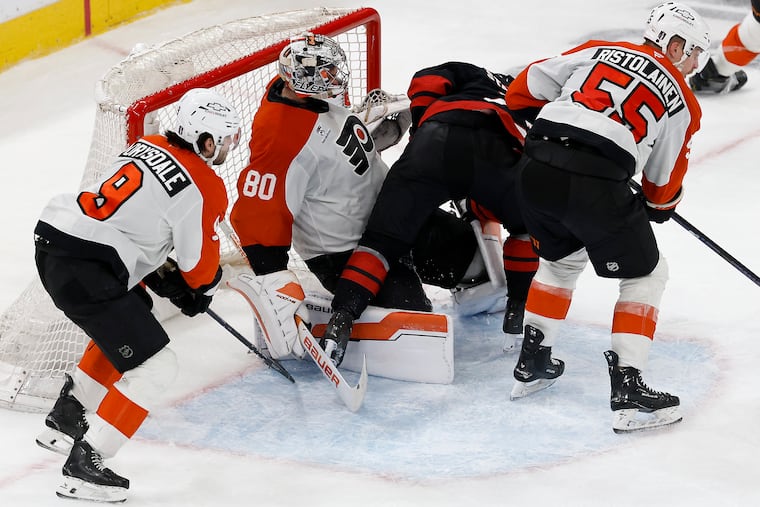
Jamie Drysdale’s power-play goal made it 1-0. But the work that the line of Sean Couturier, Luke Glendening, and Carl Grundström — along with Sanheim and defensive partner Rasmus Ristolainen — did along the boards and with their forecheck leading to Couturier’s goal 39 seconds after Drysdale’s confirmed that the game would be different.
“I think we always thought, and we always believed that we can play with these guys,” Drysdale said. “Every regular-season game, we were right there with them.”
And they did it with more rush chances, something that helped propel them into a playoff spot over the second half of the season, and a strong forecheck — two aspects of their game they could not get going in the series lid-lifter.
“I think it’s just a mindset in terms of hanging onto the puck,” forward Travis Konecny said. “I think in Game 1, there’s a lot of retreating and flipping the puck and kind of just waiting for them to press and dump it in on us. Instead, I think a lot of our mindset was to go forward with it, and I think that helped and showed to work tonight. Just keep learning, keep adjusting, and have a good game plan going into Game 3.”
15
The Flyers had a bad overtime against the Pittsburgh Penguins in Game 6 and won. They had a fantastic overtime on Monday and lost.
“You learn from Pittsburgh, and all of a sudden we have 15 shots, and we dominated the overtime just like Pittsburgh did against us,” Tocchet said. “So these are the learning lessons for young guys. There’s a couple of plays there we’ll talk to certain players about, but I thought that’s a good learning fact. We pressed. We were still calculated, but we pressed, and that’s what we want to do.”
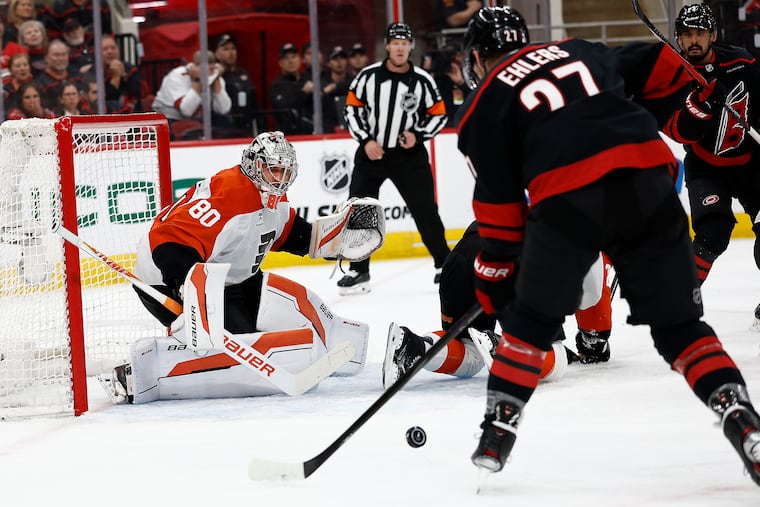
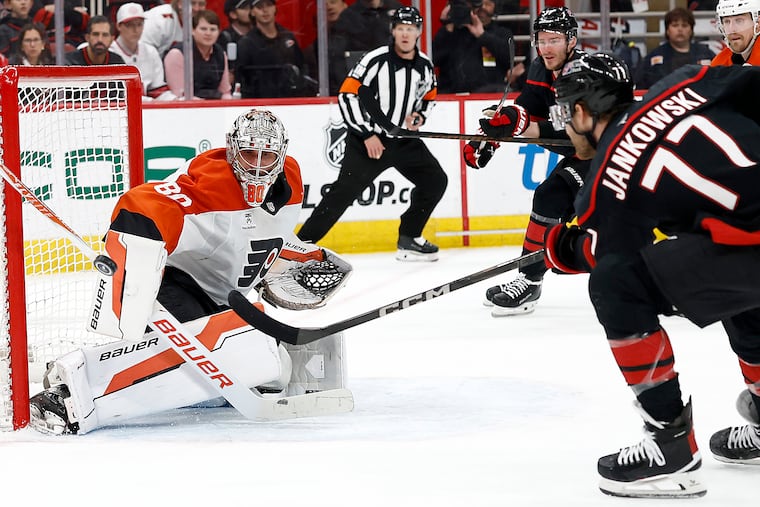
After they stepped back with their attack for the second half of regulation, the Flyers came out like gangbusters for overtime and had 22 shot attempts, including 15 shots on goal.
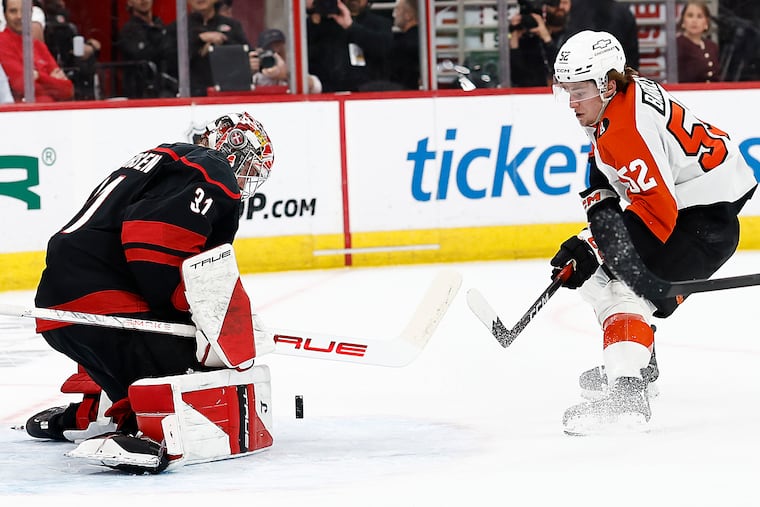
Glendening sent a few wide. Trevor Zegras, Christian Dvorak, and Sanheim all had opportunities around the net. The Flyers had a power-play opportunity — they had zero shots on goal, although Matvei Michkov had a golden opportunity blocked — and Konecny had the best opportunity when he broke in alone after receiving a feed from Zegras off a neutral-zone turnover.
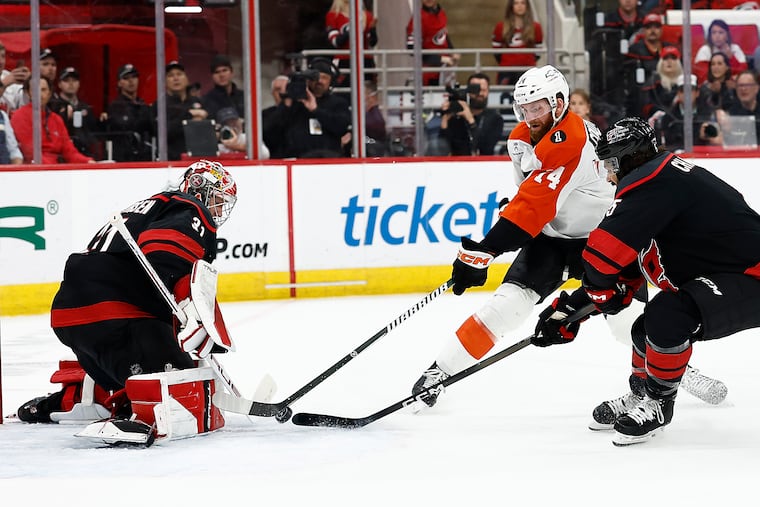
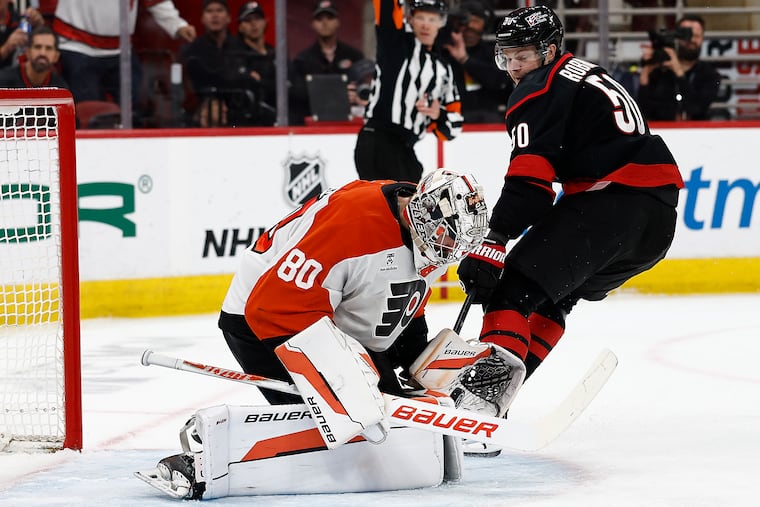
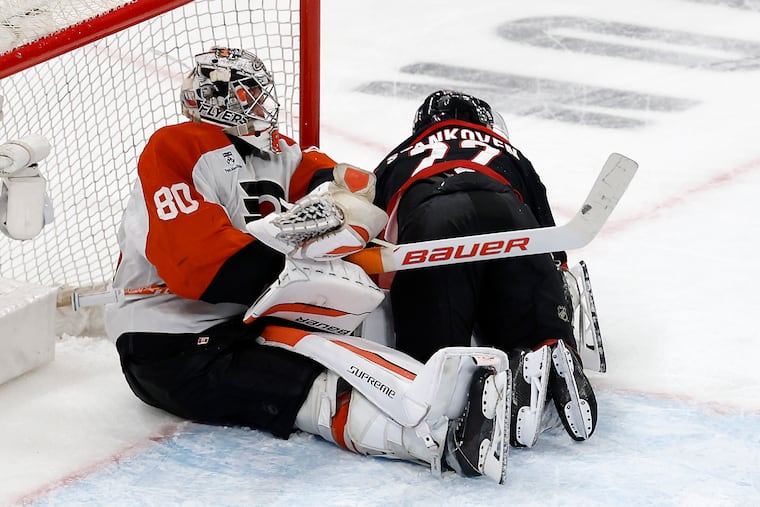
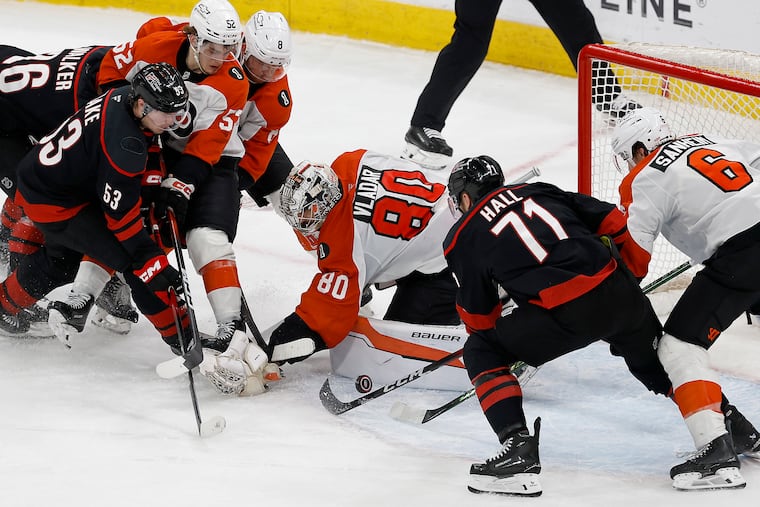
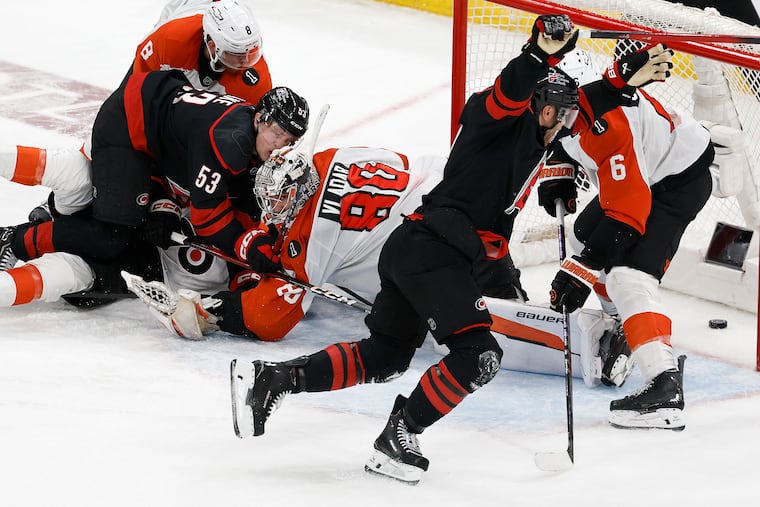
Although the overtime session ended with 1:06 left on the clock, and the Flyers were on the losing end thanks to a Taylor Hall rebound tally, they did have more shot attempts (22-16) and shots on goal than Carolina (15-8). According to Natural Stat Trick, the Flyers also had 11 scoring chances to the Hurricanes’ nine, while both teams put seven high-danger chances on goal — the most by the Flyers in any period.
“We went in there [to the locker room after the third period], and we were talking,” Drysdale said. “We’ve been here. We’ve played in a big one that advanced us here, so be confident, want to make plays with the puck, back each other up when there’s mistakes, and then we go from there.”
» READ MORE: There’s no shame in the Flyers’ Game 2 loss. The Hurricanes are just better.
1-for-7
Look, it’s almost expected at this point, but the facts are still the facts: The Flyers’ power play is a disappointment. They had seven power plays across almost 80 minutes of action on Monday night and mustered nine shot attempts across them all.
The first power play did see Drysdale score on the first shot, after Carolina goalie Frederik Andersen poked it out to him. It felt like maybe on that night, they would use it as the weapon it is intended to be.
» READ MORE: Flyers score a power-play goal in Game 2, but ‘need a little more execution’ to close gap on Hurricanes
Instead, across the next five power plays, one had zero shot attempts, three had one shot attempt, and one had a pair. The final power play of the night came in overtime, and it featured three good shot attempts, but across all seven power plays, the Flyers had three shots on goal — total. They surrendered five short-handed shot attempts on those seven power plays.
“The first few, I thought we actually had a handful of good looks and then maybe got away from the game plan a little bit,” Drysdale said of the power play. “They adjusted for sure as well. I think it’s just throughout a series, same team, same kill, you just got to keep adjusting and reacting. We can definitely be better.”
The Flyers still do not own the worst power play in the postseason, like they did in the regular season, but they have the second-worst one remaining ahead of only Buffalo. Upgrading the man-advantage next season must be a high priority.
“I don’t know the answer,” Tocchet said when asked to assess the power play after the game. “You’ve got to make the play. We had three times where we had, if we just get it over their stick, guy gets a tap-in. You’ve got to make a play. ... I thought the first couple early, I thought we had some looks there, but we get a couple times we passed up a shot.
“But that’s just confidence and stuff like that. So, yeah, we’ll figure that out.”