One reason why the Flyers’ season was successful, and one big reason it was not
The Flyers gave their fans plenty of reasons to cheer in 2025-26. And with one notable fix, the cheers could last longer in future campaigns.
Wayne Gretzky often tells a story about how, after his Edmonton Oilers were swept in the 1983 Stanley Cup Final by the dynastic New York Islanders, they went past their opponents’ locker room. Instead of hearing and seeing jubilation, guys were quiet, sitting with ice bags.
It was a shocking scene to a young Oilers squad, but it sent them a message that they needed to lay it all on the line every night if they wanted to lift Lord Stanley’s Cup. And they did the next season. And the season after that. And three of the next five.
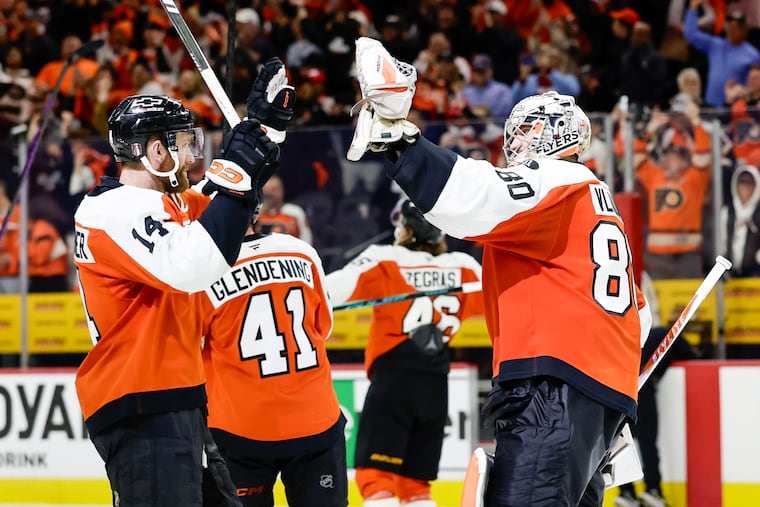
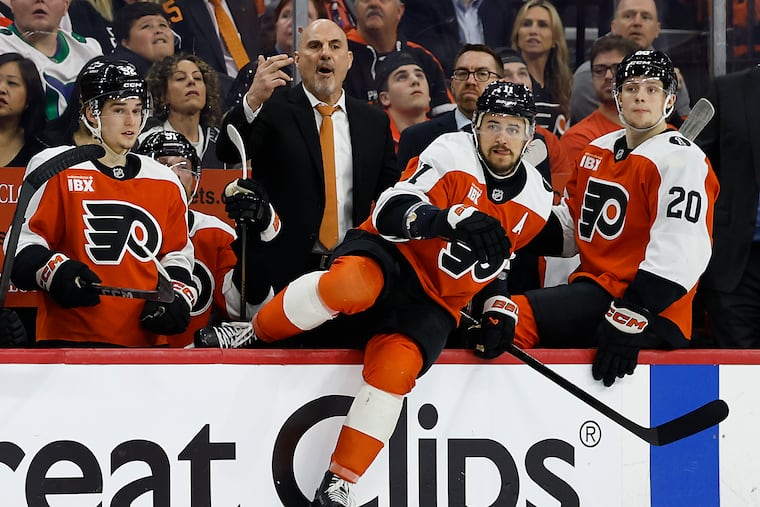
The Flyers aren’t necessarily raising banners next season. Still, after making their first playoff appearance since 2020 and having 13 players make their debut, they certainly learned a lesson on how to play in the high-intensity, high-stakes postseason. They “got a taste,” as coach Rick Tocchet said. “We’ll be back,” as Tyson Foerster was spotted saying to a teammate on the ice.
» READ MORE: Loss to Carolina will pay dividends down the road for the young Flyers: ‘It’s going to make us work harder’
“I think we’re back on the map,” captain Sean Couturier said. “And the expectations are, we’re going to be in [the] playoffs every year with the young group that we have. It’s not easy, can’t take anything for granted. You’ve got to start all over next year.”
Before the page turns to next season — which is now earmarked as a big one for the Flyers — there are things to appreciate, like Dan Vladař’s play or how the team showed resiliency and battled till the end. And while those will help with long-term success, two more things stood out. Here is one reason why the 2025-26 season was successful, and one reason (this is an easy one) it wasn’t.
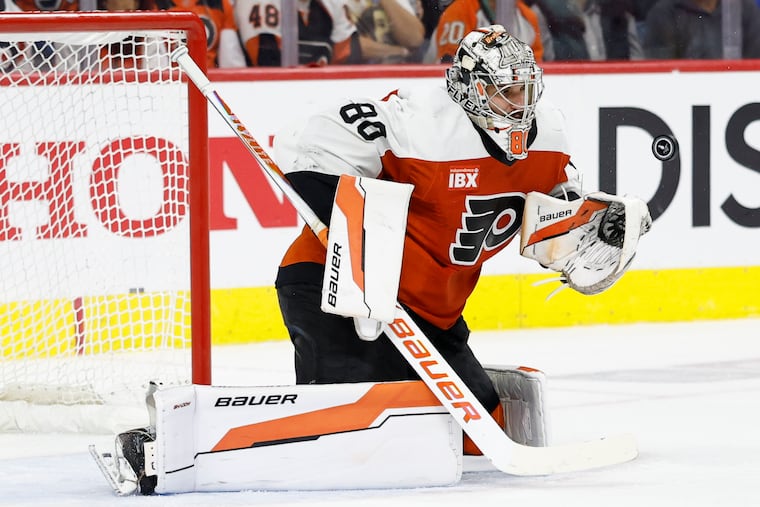
Why was the Flyers’ season successful? Young blood
The Flyers took a big step forward after general manager Danny Brière, president Keith Jones, and governor Dan Hilferty had been preaching patience since Brière and Jones officially took over three years ago Monday. They often spoke about letting the youngsters marinate and develop their skills before becoming key players in the NHL.
Well, in a young man’s NHL, the youth movement is now in full swing in Philly.
After six skaters made their NHL debuts this season — forwards Denver Barkey, Alex Bump, and Porter Martone, and defensemen Hunter McDonald, Ty Murchison, and Oliver Bonk — the Flyers fielded one of the youngest playoff teams in the postseason, with four of those six suiting up at one point.
» READ MORE: Philly fans are still proud of the young Flyers despite sweep by the Hurricanes
Of the 13 players who made their playoff debut, only Rasmus Ristolainen, 31, was older than 27.
“I love that the guys got a little taste of the playoffs this year,” 29-year-old forward Travis Konecny said after their overtime loss completed the Carolina Hurricanes sweep. He is one of just three players remaining from the last time the Flyers made the playoffs in 2020.
“See what the fans are like, see what it’s like playing in this city in the postseason, and keep guys hungry for the offseason.”
There’s quite a bit to reflect on as the youth take over. Eleven players who skated in a playoff game were 25 or younger, with several having career years in the regular season. Trevor Zegras, 25, led the team with six points in the playoffs despite a short dip that saw him come out strong in the last two games. This all came after he scored a career-best 26 goals and 67 points in the regular season.
Bump, 22, and Martone, 19, joined the team in early and late March, respectively, making immediate impacts. They showed off what they can bring to the lineup on a nightly basis next season, with the former a sniper and puck possessor and the latter a pest who drives to the front of the net.
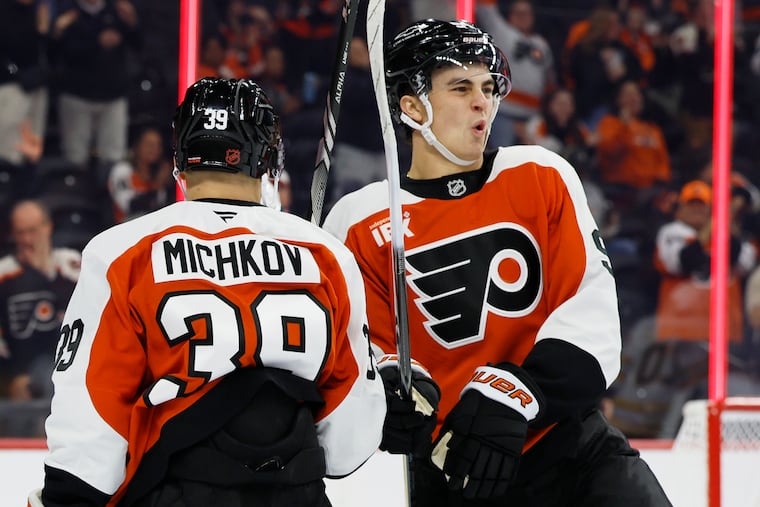
Together with guys like Tyson Foerster, 24, and Matvei Michkov, 21 — who, we can all acknowledge, had an up-and-down season and finished strong after the Olympic break before he was a healthy scratch in the elimination game after struggling with the pace of postseason play — it showed that the Flyers’ strength is on the wing.
On the blue line, Jamie Drysdale, 23, and Cam York, 25, became a formidable duo, and down the middle, aside from Zegras, there is Barkey, 21, who many did not expect to stick around after his December call-up. Yet, there he was, showing off his high IQ not only on the wing but in shifting to center — where he hadn’t played since his early junior days — in the playoffs when Noah Cates went down with an injury.
» READ MORE: Flyers’ Cinderella playoff run ends with a heartbreaking 3-2 overtime loss
“[They’re] some of my best buddies now,” Bump said after Saturday’s loss. “It’s been super cool. Me and Barks were just talking about it on the ice when we were getting that standing [ovation], just how much it means to the fans and how much more it’s going to make us work harder to try and do something for them.”
This list doesn’t even include Jett Luchanko, 19, who played in Game 4 after his junior season ended; Bonk, 21, who looked solid in his debuts in Game 82 of the regular season and Game 4 against the Hurricanes; defenseman David Jiříček, 22, who was acquired at the trade deadline; and forward Nikita Grebenkin, 23, who was injured late in the season but brought some grit. They are all expected to compete for jobs next season.
Asked what the takeaway should be for the young players after getting swept, Tocchet replied: “Be proud of what they’ve done and then what it’s going to take to get to where we want to go.”
Why was the Flyers’ season unsuccessful? The power play.
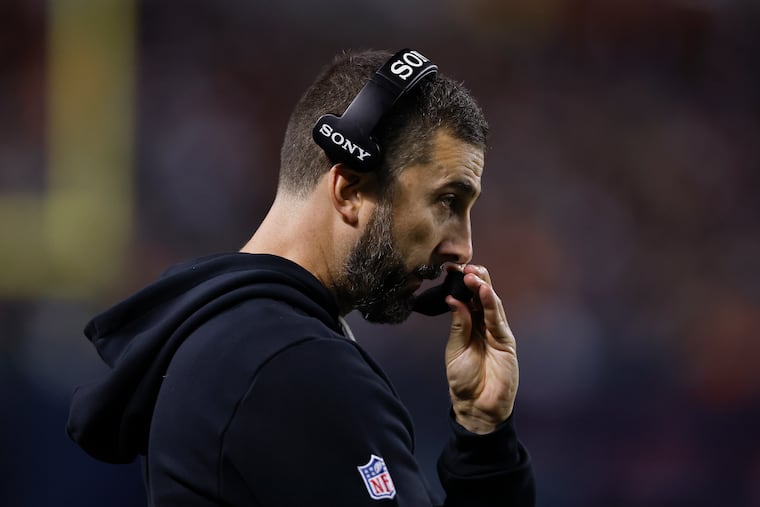
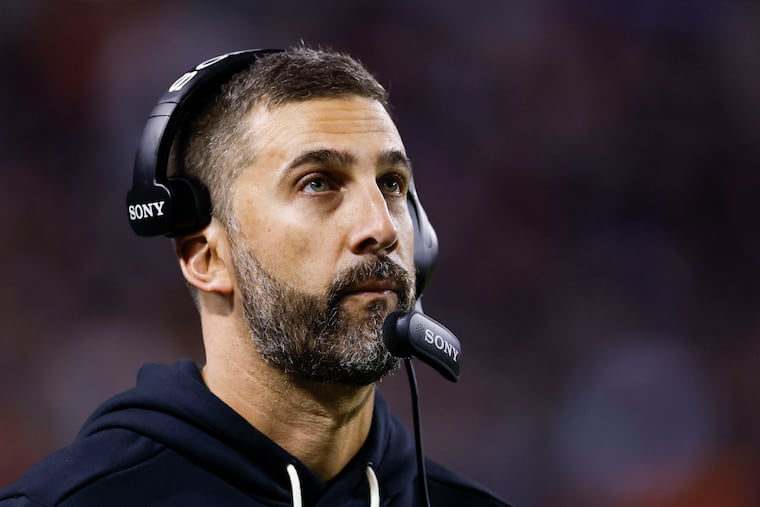
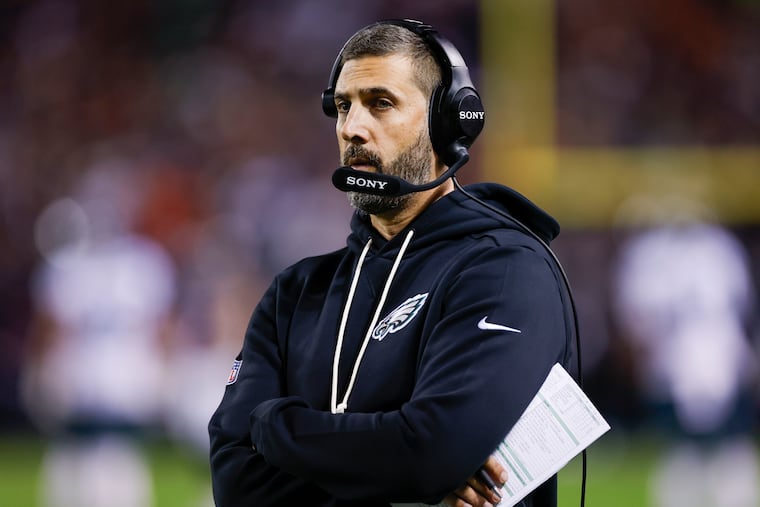
The hope, nay, the expectation, is that if Tocchet had hair, he’d come back in September with it all disheveled, accompanied by bags under his eyes from sleep deprivation. He’ll be carrying a stack of papers shoved into his coaching notebook as he shouts “eureka” down the halls of the Flyers Training Center after solving life’s greatest mystery: the Flyers’ power play.
When he and his staff were brought in around this time last year, everyone thought the power play would be fixed. But, just like under predecessors Alain Vigneault and John Tortorella, the power play stank.
During the regular season, the power play finished dead last at 15.7%. There was a glimmer of hope after the 2024-25 season, when it wasn’t last, but third-worst (15%). But the bottom of the barrel this year is shockingly familiar territory, as they were last in 2021-22 (12.6%) under Vigneault, and last in both 2022-23 (15.6%) and 2023-24 (12.2%) under Tortorella.
» READ MORE: Philly is in peril of an unprecedented double sweep after the Flyers fall to the Hurricanes
In the postseason, they went 3-for-36 (8.3%), but, hey, they won’t finish last. (The also-eliminated Ottawa Senators and Utah Mammoth were worse).
“We’re trying,” Tocchet said after Game 3 against Carolina, when the Flyers went 0-for-5. “There are reads and plays you have to make to be on the power play, and in all fairness, we’ve got some guys playing the power play who probably wouldn’t play a lot of minutes on the power play [on another team], and we’re trying to get these guys to understand certain things. But that’s on us. It’s on me to try to figure it out. It really is.”
Across the summer of 2024, Tortorella said the power play was a focus, with meetings held between him and assistant coach Rocky Thompson, Brière, John LeClair, Dany Heatley, Patrick Sharp, and other former NHLers who knew a thing or two about the power play. It didn’t help, and apologies are owed to Rocky Thompson today.
Because now it’s back again to square one — again — and Tocchet and his staff have three months to figure out something that has been broken for years.
The bench boss has acknowledged that some of the issues are zone entries — sorry, Rick, but maybe noted puck mover Emil Andrae would have helped here. That there are also problems executing — how about Bump, a known sniper who scored 10 of his 37 collegiate goals (27%) on the power play, but played a little over 2½ minutes in the playoffs?
And, as seen last year, especially, quickness in decision-making. And, like the end of last season, we’re having the same conversation about York not being on the power play for the majority of the season despite running high-powered power plays for the University of Michigan and the U.S. World Junior team.
Drysdale did a good job, but that is one unit. Maybe Jiříček will be the answer next season at the point on the other unit. Or “Bumper Bonk,” who got a little bit of time in his lone playoff game, can emerge at the NHL level.
Either way, things need to change and change quickly because, as Couturier said after Game 3, “You can win games with the power play, and you can lose them,” and the Flyers either lost or made wins harder without a good power play. So with expectations high for next season, Tocc, you’re now on the clock.