Pennsylvania starts tracking red meat allergy caused by tick bites as hundreds of cases appear in state
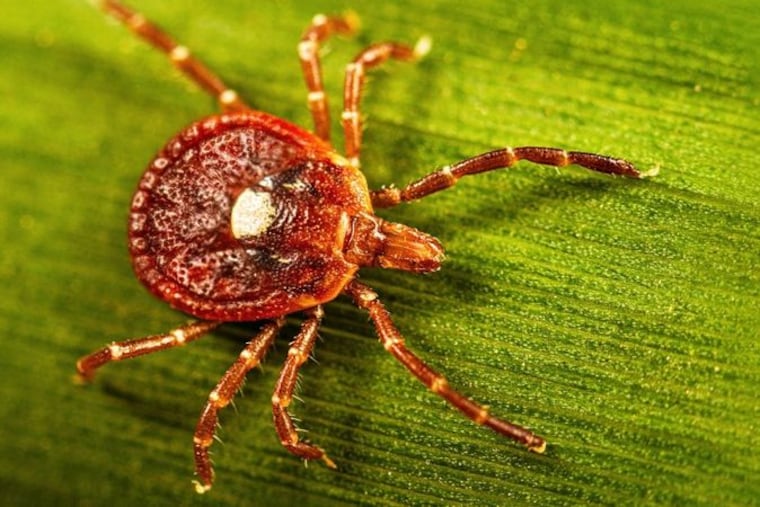
Alpha-gal syndrome, a red meat allergy, is primarily associated with lone star tick bites. Around 300 Pennsylvanians have tested positive each year since 2024, according to voluntary reports.
Pennsylvania health officials want to stay ahead of an emerging tick-related disease that can cause a life-threatening reaction to red meat.
A bite from a lone star tick can cause so-called alpha-gal syndrome. The first documented death from the red meat allergy was reported last year in New Jersey.
Pennsylvania is launching new tracking efforts this year in a state that regularly ranks number one in the nation for reported Lyme disease cases, another tick-borne illness. Health officials began asking testing labs to report alpha-gal syndrome in February, saying they’re aware of about 600 cases in the last two years, based on voluntary reports.
The state department of health anticipates more cases will be identified as testing and awareness of AGS grow.
“DOH is taking action before an outbreak or a worsening trend develops so we remain ahead of any potential issues,” Eli Steiker-Ginzberg, a public information officer for Pennsylvania’s health department, told The Inquirer over email.
The most common culprit behind the serious allergy in the U.S. is the lone star tick, which can transmit a sugar molecule called alpha-gal to a person during a bite. In some cases, this triggers the person’s immune system to react to the molecule, which is also found in beef, pork, lamb, dairy, and gelatin products.
Research published last year found that a New Jersey man who died after eating a hamburger in 2024 was the first recorded fatality from anaphylaxis related to the red meat allergy.
Anaphylaxis, a severe allergic reaction, rarely causes death. One study found only 0.3% of cases in the emergency room are fatal.
» READ MORE: N.J. man is first documented death from tick-related red meat allergy
New Jersey, which has monitored alpha-gal cases since 2022, recorded just under 500 in 2025. The Centers for Disease Control and Prevention estimates nearly 450,000 people in the U.S. may have the condition.
Though native to the eastern United States, lone star ticks were historically restricted to southern states due to deforestation in early America. Forest regrowth, climate change, and growing deer populations have helped them expand their range.
Lone star ticks have surfaced in Pennsylvania, including in Bucks, Chester, Delaware, and Philadelphia Counties, since 2011. A Rutgers study from 2008 found them in every South Jersey county.
“Lone star ticks are present in Pennsylvania, but populations are low,” Steiker-Ginzberg said.
Other species are also capable of causing alpha-gal syndrome, recent research shows.
That includes the black-legged tick (or deer tick), which is the most common tick in Pennsylvania, said Nicole Chinnici, director of the Pennsylvania Tick Research Lab based out of East Stroudsburg University.
“It’s not just the lone star tick anymore,” she said.
Penn’s Woods
Pennsylvania literally translates to “Penn’s Woods” from Latin — a fitting name for a state where more than 50% of the land is wooded.
That statistic means there’s plenty of room for ticks to survive and thrive.
Pennsylvania regularly ranks among the top three states in the nation for tick-related illnesses, and number one for reported Lyme disease cases (spread by infected black-legged ticks).
Chinnici’s lab, funded by the state department of health, provides free tick testing to Pennsylvania residents. While this can find tick-related pathogens, it isn’t useful for alpha-gal since it isn’t a virus, bacteria, or parasite.
Instead, those who suspect they have the syndrome should get allergy testing to see if they react to the molecule.
AGS develops when a person’s immune system starts to see alpha-gal as a foreign threat, after being exposed to it in a tick’s saliva.
“It could occur after one bite. It could occur after several bites, or you may be someone who can be exposed to ticks and never have a reaction at all,” Chinnici said.
The state is asking testing labs to submit voluntary positive reports of AGS cases, seeking to establish a baseline for the prevalence.
The syndrome is not formally a reportable disease in Pennsylvania, Steiker-Ginzberg said, meaning providers are not legally required to report cases.
Chinnici called the move “a good step forward,” but hopes the state will start mandating reporting, as several others have done.
Arkansas, a hot spot for lone star ticks, was the first in 2023, and New Jersey made the move in January. Massachusetts joined last month.
“When we start to better understand how individuals are affected, [we] can better prevent it,” Chinnici said.
How to protect yourself
In Pennsylvania, ticks are out year-round. Tick-prevention practices should be too.
Steiker-Ginzberg recommended treating clothing with permethrin, using repellent, and checking for and removing ticks after being outdoors.
Pets should also be checked.
Chinnici wears a hat and braids her hair when she’s in a wooded area, to keep ticks off her scalp. She also tucks her pants into her socks.
These moves make it easier to spot ticks and capture them before they attach.
“We are the perfect storm for having ticks be a problem in our state,” Chinnici said.