A charity offered free MRIs to screen for brain cancer. Doctors worry they’re not worth the risks.
The Brain Tumor Foundation has been holding free screening events for more than a decade in hopes of promoting early detection of brain tumors. Doctors worry the risks outweigh the benefits.
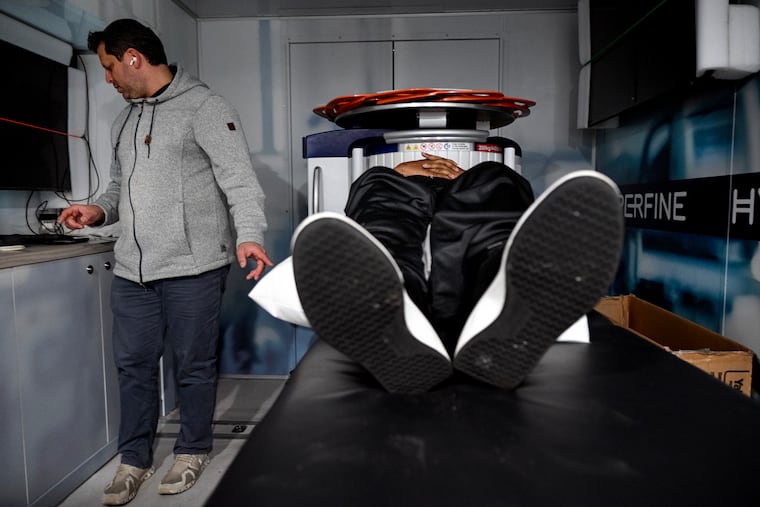
Sherri Horsey Darden has no family history of brain cancer, nor has she been having persistent headaches, seizures, or any other symptoms that could suggest a tumor.
But when she heard the Brain Tumor Foundation, a New York-based charity, was offering free magnetic resonance imaging (MRI) brain scans in Philadelphia, she made sure to get an appointment.
“A lot of times people have things and don’t know,” she said.
She received her scan at Triumph Baptist Church of Philadelphia in North Philadelphia, where the foundation was offering scans last week to the general public. She’ll receive her results within a couple weeks.
The foundation has hosted these screening events for more than a decade, with the goal of promoting early detection of brain tumors.
Using MRI scans for preventive health screening has grown increasingly popular in recent years, with celebrities like Kim Kardashian touting expensive whole-body scans on social media.
But many doctors worry that the risks outweigh the benefits. They say that screening MRIs of the brain could lead to unnecessary surgeries and anxiety, and that catching a brain tumor early wouldn’t always change a person’s outcomes. These scans are not typically covered by insurance if not ordered by a doctor, and can cost anywhere from $1,000 to $10,000.
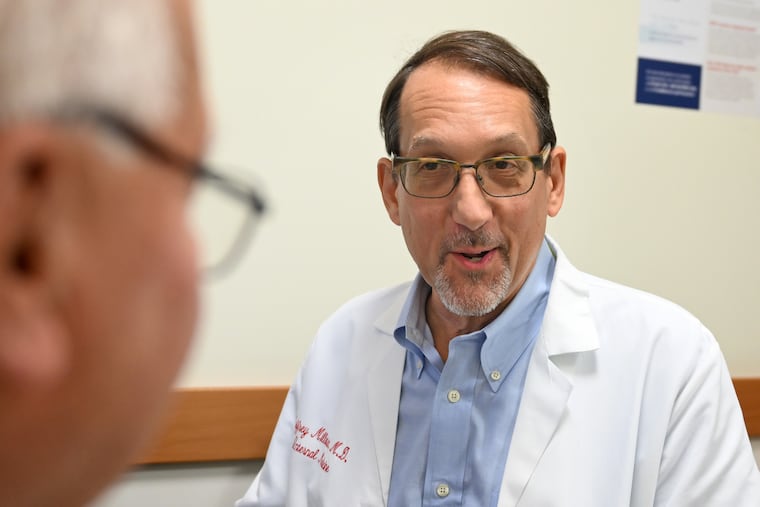
“There, to date, is no data available at all that would suggest that this is a useful approach,” said Stephen Bagley, a neuro-oncologist at Penn Medicine’s Abramson Cancer Center.
In the best scenarios, preventive medical screening can help catch diseases early when they are most treatable, and give people peace of mind. But they can also lead to overdiagnosis, false positives, unnecessary stress, and costly follow-up procedures.
This is why expert panels carefully evaluate which screening tools should be recommended to the general public. Decisions by the U.S. Preventive Services Task Force, considered the gold standard for evidence-based preventive care, weigh the potential harms involved against the likelihood of improving outcomes.
Even the most common screenings for cancer, like mammograms for breast cancer and PSA tests for prostate cancer, have faced controversy and shifting guidelines regarding who should get them and how frequently they should be administered.
There is no medical evidence showing that mass MRI screening is helpful. Still, all spots for the foundation’s multiday screening event at Triumph Baptist Church were claimed. Zeesy Schnur, executive director of the foundation, said they aim to scan 100 to 150 people in each city.
Juanita Young, her husband, and her friend all booked consecutive appointments last week. Though she hasn’t had any symptoms that would make her think she had brain cancer, she signed up “just wanting to know,” she said.
Philadelphia visit
The idea for the early detection campaign came from Patrick Kelly, a now retired neurosurgeon who started the foundation in 1998.
He was frustrated to see the majority of his brain cancer patients die from the disease, and felt that treatment would be more effective if the tumors were found earlier, explained Schnur, who has been at the foundation since 2000.
Kelly envisioned a future where, similar to going through the scanners at an airport security checkpoint, people could get a full scan of their body, “and then this piece of paper would pop out and say, ‘Hey, you have a problem here,’” Schnur recalled.
The foundation offers brain MRIs for free at their events, covering the cost of administering the scan and having a radiologist read it. They use a portable MRI machine that only scans the brain and takes approximately 15 minutes.
The foundation has chauffeured its machine all over the country through its “Sponsor-A-City” program, which allows people to donate the funds needed to bring the unit to a city of their choice. They usually pick cities that are demographically diverse.
The event in Philadelphia was sponsored by Alexandra Schreiber Ferman, who lives in the area, through the more than $50,000 she raised from running the New York City Marathon.
Schreiber Ferman’s paternal grandfather died from glioblastoma and was a patient of Kelly’s. Her family has been involved with the foundation since its inception.
Schreiber Ferman got her first scan five or six years ago, after she had been having headaches. She pressured her parents to get her in for an MRI when the foundation’s unit was in Brooklyn.
“Thankfully, everything was OK. I just was stressed out,” she said.
Having a family history of the cancer makes her and her family more alert when it comes to headaches and other symptoms. Schreiber Ferman received her second scan Tuesday morning at the screening event.
She said her family and people at the foundation feel that these scans should be “something that’s routine,” like mammograms and skin checks.
“My goal would be that getting a brain scan becomes just a routine part of aging,” she said.
Her father, who serves as chairman of the foundation, wants other people to have the chance to get screened and has helped sponsor past city visits.
However, he himself has only gotten one screening since the program first started, and no longer wants any more.
“My dad is adamant that he does not want to get a scan. I think for him, ‘ignorance is bliss,’” she said.
What doctors say
Screening tests have to meet certain criteria in order to become standard practice, explained Richard Wender, chair of family medicine and community health at Penn and former chief cancer control officer for the American Cancer Society.
A national leader in cancer screening, he would not recommend that people undergo MRIs to screen for brain cancer.
The first criteria for a screening tool to be recommended for the general population is that the disease is common, he said. The disease must also come with a high risk of harm or death and must have stages, so that it can be found before it causes symptoms.
Lastly, available treatments for the disease have to be able to reduce the risk of serious outcomes.
Brain cancer is unlikely to ever meet that criteria, Wender said, mainly because it isn’t common enough. There also isn’t sufficient evidence that finding a brain cancer earlier reduces the risk of a person dying from it.
For example, the most common malignant brain tumor, glioblastoma, is so aggressive and invasive from the start, it is always considered a grade four tumor, noted Bagley, who serves as section chief of neuro-oncology at Penn.
These cancers grow so quickly that the time between the tumor developing and someone showing up to the emergency room with symptoms is typically on the order of months, he said.
“You cannot cure it, no matter when you find it,” Bagley said.
A subset of brain tumors called grade two gliomas are slow-growing enough that catching them earlier could give a patient a better outcome. However, “it’s so rare, you’d have to do so many of these MRIs to find those tumors,” he said.
Another issue with screening the general population is that there will inevitably be false positives.
Some abnormalities in the brain might look like possible tumors on MRIs but turn out to be harmless.
Yet, the person would have to undergo a medical procedure, such as a brain biopsy, to prove that it isn’t cancer.
“You end up putting the patient through invasive brain procedures, lots of anxiety, and existential distress for what ends up to be nothing,” Bagley said.
The same goes for benign brain tumors like meningioma, the most common type of brain tumor in adults. Roughly 39,000 cases are reported each year in the United States. A “very tiny percentage” of these ever become malignant, and it’s unknown if catching them early would help the patient in the long run, Bagley said.
It might just mean the patient has to get MRIs every year for the rest of their life, or get surgery to remove a tumor that probably never would have been become a problem.
Some of these patients have ended up seeking follow-up care from Ricardo Komotar, a neurosurgeon who directs the University of Miami Brain Tumor Initiative in Florida, after finding out they had benign tumors from screening MRIs. He tells these “super nervous” patients that it’s nothing to worry about, but now that they’ve found it, he has to follow it.
As of right now, there is no good screening mechanism when it comes to the brain, Komotar said. He recommends only imaging a person’s brain if there’s a reason, such as a seizure, weakness, or migraines, or an injury, such as in a car accident.
“Brain MRIs as screening have not been proven to help and, in my experience, they only hurt,” Komotar said.
More research needed
When the foundation first started offering scans, they were finding potential abnormalities in one out of every 100 people they screened. Those included anything from a brain tumor, to silent stroke, to an aneurysm.
One example was a man from Staten Island who had no symptoms, but through the scan, found out he had a nonmalignant brain tumor. He got surgery to remove it.
“He called us afterward to thank us,” Schnur said.
Their stance is that these MRIs should be part of standard of care, so that anyone who wants one has the option.
The foundation has partnered with Weill Cornell Medicine and NewYork-Presbyterian in New York City for a formal research study using data from their screening events.
John Park, the lead researcher and chief of neurosurgery at NewYork-Presbyterian Queens Hospital, said the study will help assess whether screening MRIs for a general population could be useful. They aim to screen up to thousands of patients.
“We don’t know if it will be effective or not,” Park said.
If the study were to suggest the scans are effective, there would still need to be a large randomized trial to validate those conclusions, Wender said.
Park’s team will also look at demographic information in an effort to identify risk factors for brain tumors and other abnormalities.
Research into risk factors could help justify whether certain populations should get routine screening MRIs, Bagley said. He noted that patients with Li-Fraumeni syndrome, a rare genetic disease that predisposes people to developing cancer, are already recommended to get whole-body MRI scans yearly because they’re known to be at such high risk.
Other than those patients, “we don’t really have any way to say this large group of patients is at high risk for this type of brain tumor,” Bagley said.
A handful of patients have ended up seeking care at Penn from Bagley after paying for a whole-body MRI from a private company. These are people who were “completely fine” before happening to find a brain tumor on their scans, he said.
One of them was diagnosed with glioblastoma.
He isn’t sure yet whether being diagnosed earlier will actually extend the patient’s survival time. It might just mean the patient gets a few months’ head start on treating the tumor.
“It’s totally unclear if he did himself any justice by finding this terrible brain cancer any earlier. It’s incurable either way,” Bagley said.