A cold triggered an autoimmune disease in a Pa. man. Now he’s channeling his challenges into advocacy for people with rare diseases.
Brian Dawson's life changed when he received a misdiagnosis of neuromyelitis optica (NMO). As a patient advocate, he's now helping tackle barriers faced by rare disease patients in Pennsylvania.

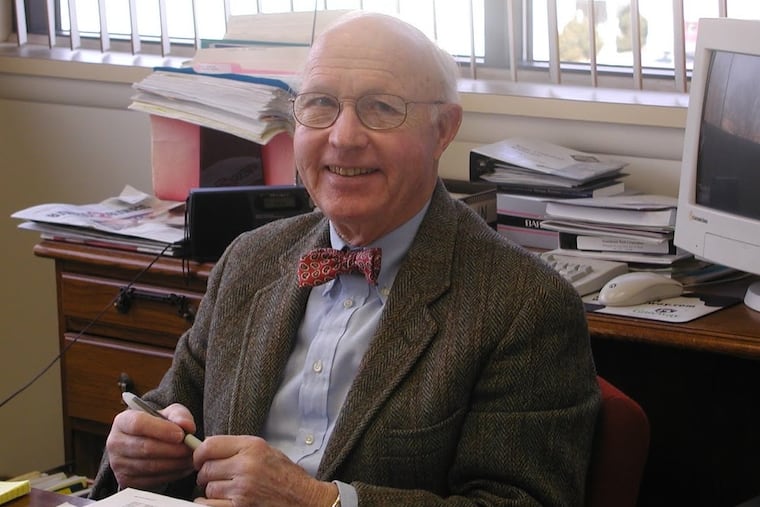
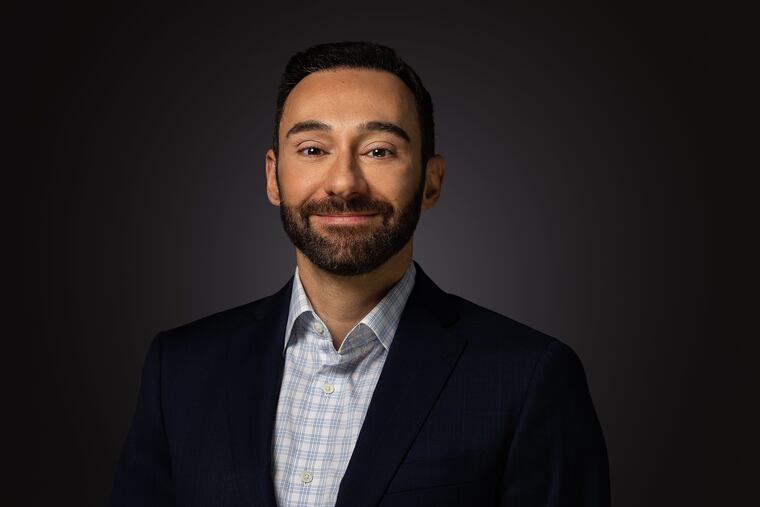
Brian Dawson had just landed his dream job as Pennsylvania’s acting state librarian in 2015 when he came down with a cold.
He tried to power through the sickness. But after a couple of weeks, he still couldn’t seem to kick it.
Doctors at an outpatient clinic diagnosed Dawson with bronchitis and pneumonia, prescribed him antibiotics, and sent him home.
A couple of days later, he developed a sharp pain in his left eye, which doctors attributed to sinus pressure.
A few days after that, Dawson woke up in the middle of the night and told his wife he needed to go to the emergency room.
He was admitted with severe abdominal pain, blurry vision, and trouble walking. In the span of five hours, Dawson would become blind in his left eye and paralyzed from the chest down.
A doctor would tell him he had a rare autoimmune disease called neuromyelitis optica (NMO), and give him five to seven years to live.
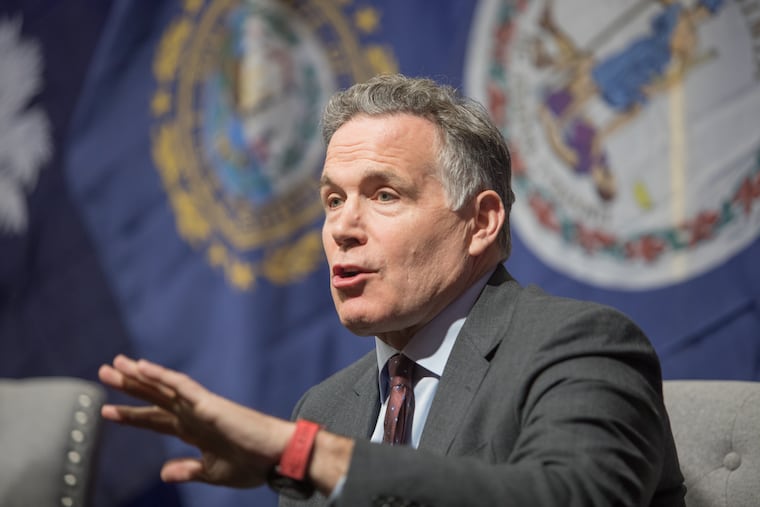
“I was in a really good trajectory in life, and then I got sick and had to pick up the pieces,” said Dawson, who lives in Harrisburg.
Dawson saw his own struggles reflected in a recent survey of 1,214 rare disease patients in Pennsylvania that was spearheaded by the state’s Rare Disease Advisory Council, an advisory body to the General Assembly.
The results, published last month in the medical journal Public Health Reports, painted a “concerning” picture of their lived experiences, said Dawson, the council’s secretary.
For example, nearly half of the respondents waited more than two years for a diagnosis. Almost a third waited more than five years, and 37% received more than three incorrect diagnoses before their final diagnosis.
Many respondents reported high annual spending on costs related to their disease, reduced work and school hours, and difficulty accessing medication or services after diagnosis.
“There was a worse experience overall if there was a longer diagnosis [time],” said Jonathan Sussman, the lead author on the paper, who is working on his medical and doctoral degrees at the University of Pennsylvania’s Perelman School of Medicine.
Misdiagnosed
When Dawson’s symptoms progressed, doctors admitted him to the intensive care unit and started him on steroids.
His vision returned a couple of days later, but he was still paralyzed.
Imaging revealed that the majority of his thoracic spine — the middle section of the spine — was scarred, and his optic nerve was inflamed.
Two weeks into his stay, a neurology fellow walked into his room, “all smiles,” Dawson recalled.
The doctor said proudly they had figured out what he had, then leaned back on a red container on the wall, crossed his arms, and told Dawson that he had NMO.
That meant his immune system was attacking his optic nerve and spinal cord, the doctor explained.
He said Dawson would probably be completely blind in about five years.
“A couple years after that, you’ll get a lesion high up on your spinal column or in your brain stem, you’ll be on a ventilator, and then pneumonia will probably kill you,” Dawson recalled him saying.
The doctor concluded by telling him how many years he likely had left to live, and then walked out of the room.
“The way I was told, it was horrendous,” said Dawson, who was then 42.
Afterward, the hospital discharged him to a rehabilitation facility where he relearned how to walk for about two months.
The next two years after that were a cycle of going on and off steroids with each relapse. He had recurring eye pain and blurriness, and pain in his legs that felt as though someone had poured searing hot coals inside them.
“You grieve for the life that you had, grieve for the things you used to be able to do,” Dawson said.
Dawson’s doctor put him on treatments like rituximab, an infusion meant to knock down his immune system, and gabapentin for nerve pain.
But nothing seemed to work.
In one argument with his neurologist, he told her, “we’re doing something wrong.”
In response, she said, “I don’t know what to do with you anymore,” he recalled.
After that, she referred him to a neurologist at Johns Hopkins, who determined from new blood work that he didn’t have NMO.
Almost three years after Dawson was misdiagnosed, the doctor gave him his correct diagnosis: MOGAD, or myelin oligodendrocyte glycoprotein antibody-associated disease. It was a rare autoimmune disease that was likely kicked off by the cold he had back in 2015.
MOGAD had the same constellation of symptoms as NMO, but required different treatment. It also wasn’t thought to affect a person’s life expectancy.
“This disease is not going to kill you. You’re going to grow old,” Dawson recalled the doctor saying.
Advocacy
The recently published survey was Dawson’s way of collecting data to substantiate trends he had heard of anecdotally.
For example, 37% of survey respondents said they didn’t receive enough information at the time they were given a diagnosis, and 20.5% said they didn’t understand the information provided by their healthcare providers.
As a patient ambassador for the Sumaira Foundation, a Massachusetts-based patient advocacy group for rare neuroinflammatory disorders, Dawson tries to help newly diagnosed patients navigate their own diagnoses, knowing that health literacy can be an added challenge.
Another striking statistic to him was that half of the respondents spent more than $5,000 every year on their care, with others spending well over $10,000.
A quarter of respondents were also unable to access medications because of co-pay costs or a lack of coverage.
“Ninety-five percent of rare diseases don’t have an FDA-approved treatment. So a lot of times people are being treated off-label,” Dawson said.
That means patients face barriers like prior authorizations and “flat out denials,” he added.
Dawson himself just received a second denial from his insurance company for coverage of a medication he has been on for years, since it’s technically off-label for his condition.
He hopes the results of the survey can inform policy to reduce barriers faced by rare disease patients.
“There are people where it’s life or death for them dealing with some of the prior authorization stuff,” he said.
Recovering
When Dawson thought he only had five to seven years left to live, he “always heard the clock ticking,” he said.
“Sometimes you could get distracted and focus on that, but if you’re focusing on that ticking clock, you’re missing everything else,” he added.
He had hoped he could make his job as the acting state librarian into a permanent position, but with his health challenges, he had to let that dream go.
Dawson went back to his previous role as the director of library development under the next state librarian.
For the next few years, he tried to focus on making good memories for his family and minimizing the disease’s impact on them, but the effects inevitably spilled over.
His oldest son quit a good job to move to Harrisburg to spend time with Dawson, thinking he only had a handful of years left.
With Dawson’s new diagnosis, “our life had changed all over again,” he said.
Now that he’s on the correct medication for his condition, Dawson is no longer experiencing the constant cycle of relapses.
However, he still battles fatigue and brain fog from his condition, and has to be cautious about infections, since his immune system might react unpredictably.
Even with his longer life expectancy, there’s always a chance he could relapse and become blind or paralyzed again.
“I don’t hear the clock, but I know that reality is looming out there,” Dawson said.