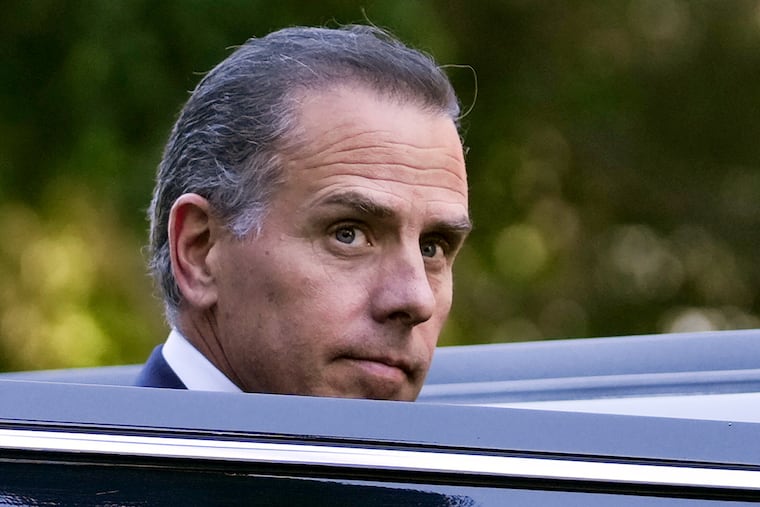
A Philly man didn’t know if he’d ever get off the kidney transplant waiting list. CAR-T made it happen.
A novel use of CAR-T helped Philadelphia resident Andrew Boyd get a kidney transplant. Early results from the clinical trial at Penn were reported in the New England Journal of Medicine on Wednesday.

After his second kidney transplant failed, Andrew Boyd had exhausted his options.
The Philadelphia resident’s highly sensitive immune system almost certainly would reject another donor organ, doctors warned. For seven years, he required dialysis three times a week to replicate the kidney’s blood cleansing functions.
Then doctors offered him an experimental treatment using CAR-T technology invented at the University of Pennsylvania. Developed to fight cancer, the therapy works by supercharging the body’s own immune system.
CAR-T has revolutionized the treatment of blood cancers, with success rates so high that some have called it a rare “cure.”
But since its first use in a 2010 clinical trial involving leukemia patients at Penn, efforts to broaden CAR-T’s applications have advanced slowly. The therapy has not proven effective against solid cancers, although some studies have shown potential.
The idea of using it for transplants did not initially occur to Carl June, a Penn scientist who pioneered its development and has since explored applications for conditions from heart failure to autoimmune diseases.
In a hallway conversation five years ago, June recalled, he spoke with Ali Naji, a Penn transplant surgeon interested in using CAR-T to stop patients’ bodies from rejecting transplants.
Roughly 30% of patients on the kidney transplant waiting list are considered “sensitized,” meaning their immune systems are likely to attack a donor organ. Naji thought CAR-T could be used to desensitize these patients — widening their eligibility for transplants.
Early results published in the New England Journal of Medicine on Wednesday showed this approach helped Boyd and another patient at Penn to successfully receive kidney transplants.
For patients who are highly sensitized, “I think this will be a very exciting option,” said Leonardo Riella, the medical director of kidney transplantation at Massachusetts General Hospital in Boston. He was not involved in the study.
The trial is small and ongoing, with plans to treat at least 10 patients in total. The patients will need continued monitoring to ensure safety and determine if the effects endure. The first patient received his transplant a little over a year ago, and Boyd did roughly 10 months ago.
If the therapy is approved for wide use, it is likely to be expensive. The average cost of a CAR-T therapy in cancer can exceed $400,000, according to a 2024 study looking at 271 patients with commercial insurance.
But dialysis is also costly. Kidney disease spending totals more than $130 billion annually under the government’s insurance coverage for people over 65, or roughly a quarter of Medicare spending.
Researchers hope that CAR-T will be a one-and-done treatment, followed by a transplant.
The lead investigator on the trial, Naji wants to see patients like Boyd able to live their full lives again. “The gratification for us is to see him not being the hostage of dialysis,” he said.
Within a month after Boyd received the CAR-T treatment in early 2025, his immune system became less sensitive, making him eligible for a wider swath of transplants.
“That just told me that there is light at the end of the tunnel,” said Boyd, a 48-year-old call center manager who lives in the Frankford neighborhood.
Targeting the immune system
Behind a highly sensitized immune system is a protein called an antibody.
Antibodies act like the immune system’s soldiers, primed to attack foreign substances. When patients have high levels of them, their bodies are likely to reject most donor organs. B cells and plasma cells in the body function as factories to mass-produce antibodies.
This experimental treatment works much like traditional chimeric antigen receptor (CAR) T therapy for cancer, where the body’s T cells — white blood cells that play a key role in the immune response — are genetically modified to fight cancer. However, instead of targeting a tumor, this treatment trains the T cells to deplete B cells and plasma cells.
“It’s fascinating because it’s the same platform we use for cancer, and then now it’s been repurposed for transplants,” said June, an author of the study.
Of the roughly 30% of kidney transplant candidates considered “sensitized,” a smaller subset — 10% to 15% — are “highly sensitized.” The issue affects more women than men, usually as a result of pregnancy, Riella said.
Similarly, those with prior organ transplants are more likely to be sensitized after exposure to foreign tissues.
That is what happened to Boyd. After his body rejected two kidney transplants, his antibody levels produced a score of 99.99%. Essentially, he was likely compatible with only 0.01% of potential donors.
During his years of dialysis, he repeatedly asked his transplant coordinators if his antibody levels could be lowered, so he could be a better candidate. They always said no.
In previous trials, other potential treatments usually produced only temporary effects, Naji said.
“I didn’t know how long I was going to have to wait, or if I should keep waiting,” Boyd said.
Another chance
Boyd was 7 years old when doctors at Children’s Hospital of Philadelphia diagnosed him with a rare kidney disease, focal glomerulosclerosis, that causes kidney scarring and impairs the organ’s ability to filter waste from the blood.
By age 14, he started dialysis for end-stage kidney disease. Months later, in 1993, he received his first transplant. That lasted until 2005, when his immune system’s antibodies attacked the donor organ.
His body eventually rejected his next transplant, too.
By 2018, Boyd again required dialysis.
Patients who are highly sensitized tend to wait years on the list. “Many of these patients tend to die or get sicker even before they get an offer,” Riella said.
Once Boyd was in the experimental CAR-T trial, his immune cells were collected and engineered in the lab. In May 2025, doctors gave him a low-dose chemotherapy to knock his immune system down, then delivered the CAR-T cells by infusion.
Within a month, his antibody levels had declined.
By two months, his score was 99.567%. That meant he went from being compatible with approximately 0.01% of donors to almost 0.5%.
Three months later, Boyd received the call with an offer of a donor kidney.
On Aug. 13, 2025, he successfully received the transplant.
Riella called it reassuring that no serious adverse events were reported, but said a bigger trial with longer-term data will be needed to assess potential side effects.
He was excited at the prospect of having this option, and noted that a similarly aimed treatment (involving an enzyme instead of CAR-T) had also recently shown promise.
Boyd remains healthy nearly 10 months later.
With this new kidney, he hopes to live a happy, fulfilling life, seeing friends and traveling with his wife, Leslie Boyd.
Without the research team, “who knows where I would be right now,” he said.