Drexel’s medical school will offer an accelerated three-year degree for future doctors
Drexel announced plans to launch an accelerated MD program, joining a growing movement of schools launching three-year pathways.
Drexel University College of Medicine wants to give students a path to becoming doctors in three years, shaving a year off the traditional route to a medical degree, officials announced Tuesday.
The medical school is joining a growing but still limited movement of schools offering an accelerated M.D. program. Drexel plans to enroll its first three-year students in 2028 or 2029, eventually growing the program to more than 50 students.
Accelerated programs offer an option to curb the cost of a medical education at a time when U.S. doctors are graduating with an average debt in excess of $200,000.
The concept also aims to address physician workforce shortages. Many accelerated programs focus on primary care, a field that pays less than some specialties and can struggle to recruit doctors.
Drexel’s accelerated program will emphasize family medicine, pediatrics, internal medicine, and possibly obstetrics/gynecology and psychiatry.
The University City-based school intends to become “one of the largest three-year programs in the country,” said Leon McCrea, vice dean for educational affairs at Drexel’s College of Medicine and a family physician.
With more than 1,200 students, Drexel’s medical school already ranks among the biggest M.D. degree-granting institutions in the U.S., and the largest in the Philadelphia area. It plans to launch an accelerated program with two to three students and scale up.
“There sometimes are even more effective ways to deliver medical education,” McCrea said. “Longer isn’t always better.”
Interest has rapidly grown in three-year M.D. programs since Texas Tech University Health Sciences Center School of Medicine created a modern-era program in 2010. As of this year, more than 30 programs offer the option, research shows.
Rowan University’s Cooper Medical School in Camden launched its three-year program in 2016, with a focus on family medicine, internal medicine, and pediatrics.
In January, the University of Pennsylvania’s Perelman School of Medicine announced changes to its curriculum that could also accelerate learning. School leaders told The Inquirer at the time that they would explore the possibility of a three-year path, but they had not yet made any decisions.
» READ MORE: Penn’s medical school received an $8 million gift to redesign the way it trains doctors
Drexel has recently started a three-year planning phase focused on designing the curriculum and admissions process.
The Independence Blue Cross (IBX) Foundation, a private charitable foundation based in Philadelphia, is helping to fund the effort, providing a $425,000 grant for the first year with more expected in subsequent years.
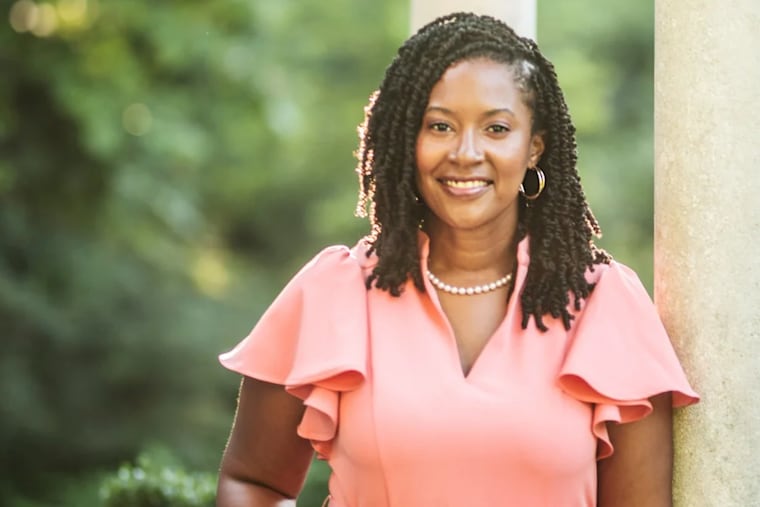
“It’s a really exciting time to be part of transforming medicine and the way that medical education is delivered,” said Heather Major, executive director of the IBX Foundation.
Building a three-year pathway
The accrediting body for medical schools, the Liaison Committee on Medical Education, requires students to receive at least 130 weeks of instruction — the equivalent of 2.5 years.
“The fourth year of medical school has never been a robust year in anyone’s curriculum,” said Joan Cangiarella, a national leader in medical education reform who has researched the rise of three-year programs nationally.
She designed New York University Grossman School of Medicine’s accelerated program, which began in 2013, and currently serves in leadership at NYU Langone Health.
Accelerated students and their traditional counterparts at NYU have shown similar outcomes overall.
Drexel will work over the next few years on figuring out how to compress its curriculum, looking to other accelerated programs that have reduced time in school without compromising learning or skill development.
For starters, the school plans to reclaim time previously allocated for breaks.
Students currently get 10 weeks of summer break between their first and second years. Those in the accelerated pathway would instead apply that time to program activities, such as research and clinical exposure.
The school may also change how it assesses students’ readiness to move forward.
“Readiness should really be based on, ‘Have you demonstrated the skills necessary to accomplish whatever it is to be a physician?’” McCrea said. “That isn’t just time-based.”
The accelerated track would benefit students who come to medical school already knowing they want to practice family medicine or internal medicine and serve in their hometowns, he said.
“Why shouldn’t we work to get those people back to those communities as effectively and as efficiently as possible?” McCrea said.
A growing trend
The number of schools offering accelerated programs has increased every year, with now roughly 20% of M.D. schools in the U.S. having or developing a pathway, according to a 2025 journal article authored by Cangiarella.
The trend has drawn the attention of healthcare leaders — even in organizations that have not yet created accelerated tracks. On a McKinsey & Company podcast last month, Kevin Mahoney, the CEO of the University of Pennsylvania Health System, was asked how clinician training could change. He said he thought medical school would shrink to three years.
NYU’s Cangiarella believes the three-year track will “become a very normal, usual pathway.”
In 2023, NYU changed its curriculum so that the entire class of roughly 100 students now has the option to graduate in three years. About half have opted in, she said.
Other schools are experimenting with much smaller programs, graduating one to two students a year.
One challenge in getting more schools involved is figuring out how the school can adapt to losing a year of tuition, she said. But this pathway will become more important for students with new federal student loan limits taking effect July 1.
In recent years, Drexel has ranked among the top 10 medical schools where students incur the most debt on average, with $275,735.
Reducing the cost of medical school “is a positive consequence,” McCrea said, adding “but I do want to say that the reason for this is not solely to decrease debt burden.”
Some accelerated programs have leaned on the debt reduction to attract students to primary care specialties, especially in underserved areas. In Pennsylvania, for example, 461,015 people live in federally designated healthcare shortage areas.
Caroline Roberts, a family medicine doctor who directs the accelerated program at University of North Carolina School of Medicine in Chapel Hill, recently talked with a student who was passionate about practicing family medicine but was considering pursuing a specialty with higher earning potential since he would need to support his family.
The accelerated option made him more confident that he could commit to family medicine, knowing he would be able to take out fewer loans and earn a full income sooner.
“He felt more comfortable committing to his passion as opposed to committing to something for a financial reason,” Roberts said.