Why you should invest in a home blood pressure monitor | Expert Opinion
Allowing patients to check their readings at home and report them makes it easier to find when something may be amiss. Here are some of the features to look for when choosing.
A patient in our primary care network recently was struggling to control his blood pressure (BP), so his doctor suggested something new: Using text messaging to capture and respond to blood pressure readings taken at home.
Usually, patients with uncontrolled blood pressure leave the doctor’s office with a medication adjustment or a new medication, then are expected to return for a blood pressure re-check in a few weeks. Many patients find scheduling a challenge and inconvenient. With the Text BP program, recently launched across Penn Medicine, blood pressure can be measured at home in a familiar and (hopefully) less stressful environment and reported through our patient portal. A care team composed of physicians, nurses, and pharmacists reviews the readings and makes treatment suggestions.
The patient portal is an example of asynchronous care — when patients and care teams exchange information at different times, rather than having to coordinate a specific appointment time. This care approach has the potential to ease barriers to office care and improve access — addressing an ongoing pain point in primary care.
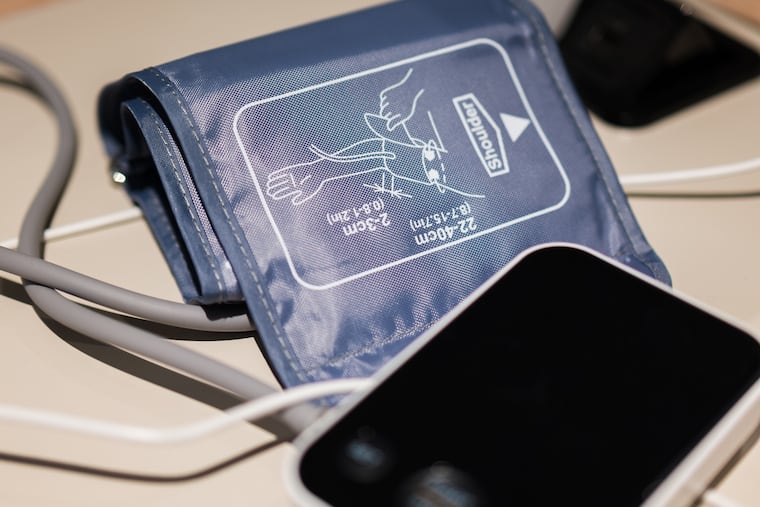
Home blood pressure monitors are reasonably priced — usually between $40-$100. Some insurers or clinics supply free monitors. In general, I tell patients to look for one that has a validated upper arm cuff and comes fully automated with memory storage. It is important that the cuff is the right size, since improper fit can give an inaccurate reading. A primary care office can help with cuff sizing and proper blood pressure measurement technique. Patients should also keep in mind that it is normal for heart rate and blood pressure to fluctuate throughout the day, and stress can influence readings.
Even people without chronic health conditions may want to keep a blood pressure monitor on hand to check pressure now and then. High blood pressure has no warning symptoms. Too often, a stroke, heart attack, or kidney failure is the first sign of an issue. The key to treatment and prevention of high blood pressure is detecting it in the first place.
What about smart watches? These have grown in popularity and can provide physiologic measures like heart rate, atrial fibrillation detection, and oxygen saturation with reasonable accuracy, but are not yet reliable for measuring blood pressure.
The latest technology takes home blood pressure monitoring one step further, with Bluetooth enabled monitors that can upload readings directly into the electronic health record. But these are expensive, with limited reimbursement from insurers, creating significant barriers to equitable distribution. The extra workload for the care team expected to review incoming patient data is a concern too, which may soon be mitigated by use of artificial intelligence technology to interpret data and perhaps even adjust medication dosages.
Why do I focus so much on blood pressure control? Next to smoking cessation, controlling blood pressure has the greatest potential to reduce premature deaths of any medical intervention studied. Because the positive impact is profound, blood pressure control has become a highly ranked metric used to evaluate the quality of primary care practices.
I find the opportunity to prevent severe illness complications one of the most rewarding aspects of my work as a primary care physician. Controlling blood pressure with home blood pressure monitoring can take clinician-patient collaboration to the next level.
Jeffrey Millstein is an internist and regional medical director for Penn Primary and Specialty Care.