What Medicare can learn from Best Buy and Walmart | Expert Opinion
Medicare's drug payment plan is a good deal for seniors, but few know about it.

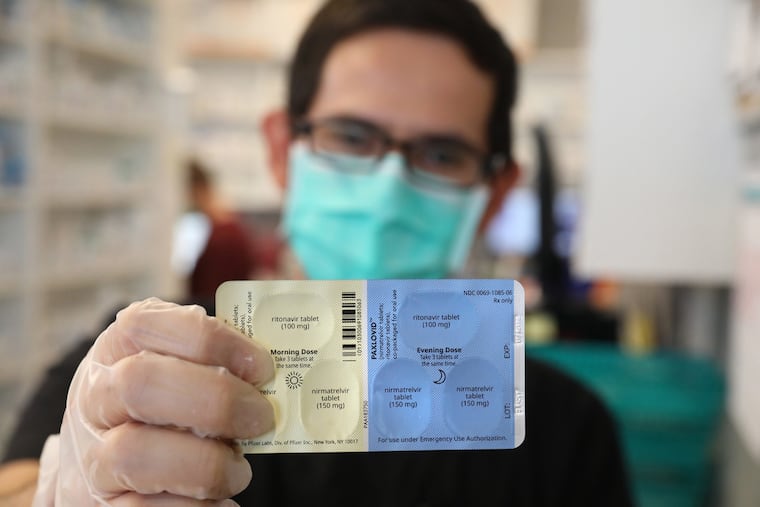
Imagine you are a 70-year old patient sitting in your oncologist’s office, processing a life-altering diagnosis. Your doctor prescribes a pill for your cancer that offers the best chance of survival. You arrive at the pharmacy, expecting a co-pay, but the bill looks more like a mortgage payment. “That will be $2,000 for the prescription,” the pharmacist says.
Now, imagine Medicare offers a payment plan to soften the blow. There’s just one catch: You need to know the program exists so you can sign up for it — which itself can be tricky. The Medicare Prescription Payment Plan (MPPP) may be the program’s best-kept secret, one that could help you or someone you love afford life-saving drugs. But most Medicare patients don’t know about it.
For millions of seniors, high costs for prescription drugs aren’t a hypothetical nightmare; they are a structural failure built into the Medicare Part D drug program. For years, the rules on coverage for the costliest drugs — for conditions like cancer, rheumatoid arthritis, and multiple sclerosis — have been an open scandal. Just a few years ago, many cancer patients had to pay $20,000 out-of-pocket annually for their medicines.
The Inflation Reduction Act (IRA) was designed to fix this. The law capped annual out-of-pocket drug costs at $2,000 in 2025 for all Medicare patients. This translates to an astounding 90% discount for many cancer patients. This annual maximum will slowly rise in future years.
On paper, this appears to be a long overdue fix. In reality, a critical flaw remains. While the total amount a patient owes in a year is lower, the timing of that expense can still be crippling. A patient needing an expensive cancer drug may owe their entire $2,000 annual maximum for a single prescription fill at the pharmacy.
Unless they pay upfront, patients must forgo treatment.
Our recent research reveals how the IRA’s annual out-of-pocket cap on its own falls short as an affordability fix. In 2024, as initial IRA protections phased in, fewer than half of Medicare patients filled their cancer prescription through their insurance. Nearly a decade ago, our team at Penn had warned that even with an annual cap, patients would still be hit with “too much too soon.” We proposed the idea that Medicare let patients “smooth” out these costs more evenly across the year.
Retailers like Best Buy and Walmart know how to make big-ticket items like televisions, laptops, or refrigerators affordable for consumers. They prominently advertise payment plans alongside any big purchase, allowing consumers to seamlessly enroll at the point-of-sale and spread the costs over longer periods.
Why hasn’t Medicare done the same?
To its credit, Medicare has created a payment plan as well. The Medicare Prescription Payment Plan (MPPP) allows members to spread prescription drug costs over the remaining months in the calendar year. Instead of a $2,000 lump sum for a single prescription in January, members could pay as little as $167 a month over the course of the year. In some ways, the MPPP beats out payment plans from many retailers, with 0% interest and no fees.
The problem? Medicare’s MPPP is buried in fine print. Unsurprisingly, surveys show that 75% of seniors have “never heard” of the new payment option, or don’t know enough about it. In the first half of 2025, among Medicare patients using expensive specialty drugs, enrollment was only 6%.
We have built a financial bridge for patients but failed to put up signs directing them to it.
Patients must be informed about the MPPP and allowed to enroll at the point of purchase. If this level of convenience to improve affordability is standard for consumer products, it should not be out of reach for life-saving medications.
In the meantime, patients needing expensive medications can enroll in the MPPP through their Part D plan, either online, by phone, or through the mail.
The earlier in the year a patient enrolls in the MPPP, the more months they have to spread out the costs. Enrolling in January means 12 smaller payments. Enrolling in November divides the payment by just two.
If they miss it, thousands of patients can expect sticker shock at the pharmacy counter, and too many will walk away without life-saving medication.
John Lin, MD, MSHP is assistant professor in the Department of Health Services Research at The University of Texas MD Anderson Cancer Center. Jalpa Doshi, PhD, is a senior fellow at the Leonard Davis Institute of Health Economics and is the Leon Hess Professor of Internal Medicine at the Perelman School of Medicine at the University of Pennsylvania.
Editor’s note: This story has been updated to note the role of a University of Pennsylvania team in proposing the idea behind Medicare’s payment plan.