A routine test during pregnancy caught my cancer and saved my life | Expert Opinion
A pediatrician's pregnancy was challenged by chemotherapy, fatigue, and worry after a routine prenatal blood test caught her early-stage cancer.
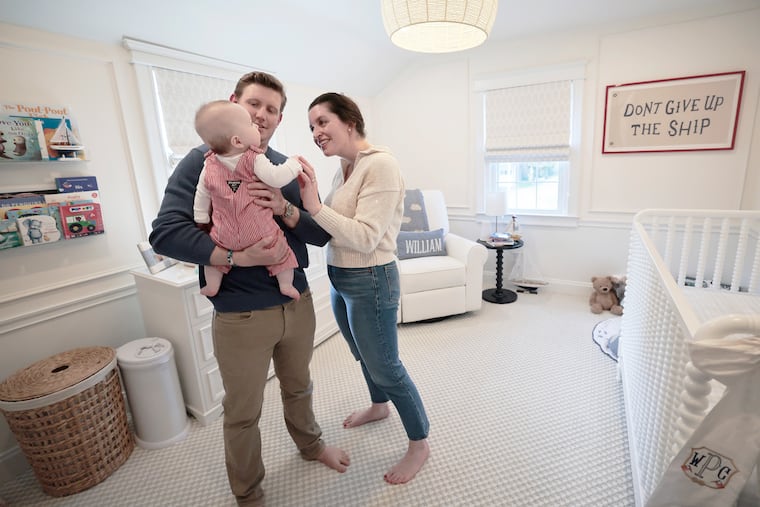
As I sit here nursing my newborn son, my eyes fill with tears. Like any new mother I am filled with joy, hope, and gratitude; but my fears and frustrations are not those of other new parents. Every pregnancy comes with challenges: Mine started when I was 18 weeks pregnant and diagnosed with cancer.
My journey began with my non-invasive prenatal test (NIPT), a simple blood test used to screen for Down syndrome and other chromosomal conditions. My first two NIPTs in April 2025 returned results that were “inconclusive.” I was becoming more concerned about the baby’s health, but I never knew I had to be worried about myself.
While my husband and I waited for an amniocentesis to confirm the health of our baby, I requested a third NIPT from a different lab. The results took longer, and with each day my anxiety grew. I am a pediatrician, currently finishing my training in Philadelphia. In my spare time, I researched what could be causing these results.
I found a few studies and case reports about inconclusive NIPTs uncovering a cancer diagnosis for the mother. It was rare but documented. An ongoing study at the National Institutes of Health (NIH) published in December 2024 was investigating similar findings.
My third NIPT again came back labeled “inconclusive,” but this time the report gave more context: “aberrant findings were observed for multiple chromosomes. Similar data has been associated with maternal neoplasia,” or tumors. It mentioned the specific study that I had stumbled upon in my research, the IDENTIFY study. Now I was terrified.
We met with our genetic counselor the next day, and she immediately contacted Amy Turriff, the IDENTIFY study’s genetic counselor. The IDENTIFY study focuses on women who receive inconclusive NIPTs, specifically when the pregnancy is otherwise progressing well. The study had found that about 50% of women with inconclusive NIPTs had cancer.
Turriff called me the same day and invited me to enroll in the study, which came with a full panel of blood work and a physical exam with an oncologist. Most importantly, I would also receive a full-body MRI, the most diagnostic of the tests available, which can cost several thousand dollars out-of-pocket. It’s nearly impossible to get insurance companies to cover a full-body MRI for a patient with no specific symptoms. Many of the women who have been diagnosed through the IDENTIFY study, myself included, are asymptomatic due to the early stage of their disease, or because their symptoms are vague enough to be attributed generally to pregnancy.
I was eager for my appointment at the NIH, but was told I would have to wait six weeks. I feared the delay was due to recently imposed federal funding cuts at the NIH, specifically impacting studies on women and children. The IDENTIFY study’s lead researcher, Diana Bianchi, directed the National Institute of Child Health and Human Development and had been placed on administrative leave during the agency’s layoffs. I was in danger of missing a crucial window in my pregnancy in which I could start and finish chemotherapy before my baby’s birth.
Almost every part of my identity and purpose had been stripped away in a matter of weeks.
My residency program directors at the Children’s Hospital of Philadelphia (CHOP) were instrumental while I waited to be seen at the NIH. They connected me with an oncologist at the Hospital of the University of Pennsylvania (HUP), and we began building a team to care for me in an abundance of caution. We met with Penn physician Sunita Nasta — who was very familiar with the IDENTIFY study, and who would later become my oncologist.
In the waiting room of her office, I burst into tears upon realizing that I was the youngest person there, and the only pregnant woman. I almost threw up as we walked back to the exam room, where Nasta assured me that she had treated pregnant women before and could do it again.
Fortunately, an appointment at the NIH’s clinic in Bethesda opened up a month and a half prior to my originally scheduled appointment. That day was a whirlwind. I spent six hours getting blood drawn, meeting with an oncologist, laying in the MRI machine, and anxiously awaiting results.
As I was walking back to the hotel with my husband and mother, I received a phone call from the oncologist. My MRI showed a mass in my chest — measuring 7 by 9 cm, or about the size of a baseball. This raised concerns for Hodgkin lymphoma, a cancer affecting the immune system. I broke down in the middle of the street, thrusting the phone to my husband to finish the call. I cried the whole way back to our hotel room. I was simultaneously relieved and in shock: I had a diagnosis and could make a plan, but could I make it through pregnancy with cancer?
Support from CHOP and my early connection to Nasta at Penn enabled me to quickly see a thoracic surgeon for my biopsy. I was terrified to receive general anesthesia and undergo chest surgery, but the teams were incredible. The surgeon made an incision between my ribs near my breastbone, cutting through cartilage and muscle to access my tumor.
The procedure overall went well, but recovery was incredibly painful. It hurt to breathe, cough, move, or lay flat. I powered through five excruciating days with only ice and Tylenol, concerned about exposing my son to stronger pain medications. Two days later, my surgeon had my pathology results: Stage 2A unfavorable Hodgkin lymphoma.
Without the IDENTIFY study, it is likely that my early-stage cancer would have gone undetected for another 12 months, or more, and that delay in treatment could have been deadly. The IDENTIFY study saved my life — with the help of my son, given that pregnancy led to my diagnosis when my cancer was most treatable.
By now, I was just shy of 20 weeks pregnant and about to start intensive chemotherapy. Every other week for four months, my husband packed up our cooler with popsicles (to prevent mouth sores), and my mom gathered the snacks to help me through my six-hour infusion days.
My best friends from residency snuck over to sit with us and distract me from the pain of the medications burning through my veins. They made me laugh through tears and feel somewhat normal, talking about anything but cancer. But I did have cancer. I was being injected with life-saving poison that left me with debilitating fatigue.
Some days, I needed help to simply get to the bathroom or drink water. I was so nauseated, with such horrible appetite loss, that my husband had to force me to eat a few crackers before bed. I started supplement shakes for nutrition, because I wasn’t gaining enough weight for my pregnancy. I experienced a migraine with vision loss, my head throbbing so horribly that I thought I was having a stroke. I experienced piercing bone pains and superficial blood clots in my arms. And, I lost a lot of hair.
The side effects were awful but missing out on life — time with friends and family, weddings, birthday parties, concerts — was the worst part.
Through all this, our loved ones rallied around us with never-ending texts, outdoor meet ups, handwritten cards, and daily FaceTimes. My best friend, her mom, and her aunt made more than 150 bracelets with our son’s initials for our friends and family to wear as a show of support. My cousins video called us every day to “hang out,” while we lived essentially in quarantine to protect me from getting sick as the chemotherapy wiped out my immune system.
My husband and parents wore masks outside the house to prevent them from bringing an infection home. I have never felt such love in my life, so powerful that it overshadowed chemotherapy.
I was 30 years old, unable to celebrate my pregnancy, see friends, or practice medicine. Almost every part of my identity and purpose had been stripped away in a matter of weeks. When I wanted to quit and my body was getting tired of all of the poison, my husband would remind me what I was fighting for: myself and our baby, Will.
The overwhelming fatigue, the hair loss, the general crumminess? It meant the chemo was working, and that I was doing it: I was fighting cancer while pregnant. I smiled through lots of pain and sadness and changes, but I cried a lot, too … and then I cried about crying, not wanting our baby to feel these emotions. I cried because of the pain and frustration. I cried about needing others to pick up and fight for me. I cried for other cancer patients for whom I now felt a deep sense of empathy.
And, I cried a lot about losing my hair. I never knew I cared so much about it, but I did not want to meet my new baby looking like Angelica’s doll from “The Rugrats.” I consider myself lucky that I did not lose it all (mostly because I stubbornly refused to shave my head). There were clumps in the shower, there were clumps in bed, and there were clumps in my hand every time I touched my hair. It was jarring. I covered the large bald spots with silk scarves, and I even got a wig (for which I am still awaiting payment from my insurance company). It brought a sense of normalcy and many laughs as my mom tried it on, and my husband helped to style it in our bathroom.
The single most important part of this battle was our son, or “Baby Will” as everyone calls him. He brought me joy and positivity well before he was even born. Knowing that he was coming on the other side of chemo was the reason I was able to make it through many days with a smile and hope.
Our son entered the world quickly, a month before his due date. We named him William after my dad, William Reilly, and later learned the name means “strong-willed warrior” and “resolute protector.” Our son had a brief NICU stay at CHOP, but he was overall healthy — my tiny warrior. He got his mom through chemo and came out unscathed.
My doctors believe that I went into preterm labor because my body was simply worn out from the hard-fought battle of the months prior. His birth was a fresh start for me, one I prayed would be free of cancer.
I received my first posttreatment PET scan on Oct. 15. My scan showed no evidence of disease, only the scar tissue inside my chest, a sometimes painful reminder of my disease. But, I had no active cancer.
That same week, I learned that Dr. Bianchi’s appointment at the NIH had been officially terminated. When a principal investigator leaves the NIH, their lab typically closes. I feared for the fate of the IDENTIFY study. The news brought me to tears.
As a physician, I was angry, and as a patient, I was sad and scared. What about the other women who would not have the opportunity to travel to the NIH for a workup that many insurance companies would refuse to cover? What about all of the new moms who may face a cancer diagnosis at a later stage? What about all of the babies whose moms would be going through chemotherapy or radiation that could have been completed before their births?
I can’t think of what could happen without the work of this study. My son saved my life, but it would not have been possible without the science — the people, the resources, the money — behind the research.
Many people are shocked by my story: diagnosed with cancer while pregnant and able to undergo and complete chemotherapy before delivery? My story underscores the importance of the work being done at the NIH. Work that has nothing to do with politics, but is now at the mercy of the political climate due to federal cuts for scientific research under President Donald Trump’s administration.
The mission of the NIH is “to seek fundamental knowledge” that enhances health. To me, the IDENTIFY study epitomizes this mission to advance how medicine — including new therapies, alternative treatment regimens, diagnostic tools, and vaccines that prevent disease — are made. We must continue to listen to, learn from, and support this life-saving work.
My baby, Will, is just shy of 7 months old and thriving. I have recently resumed my training as a pediatric resident and hope to pursue a fellowship in pediatric emergency medicine. My next oncology follow-up looms at the end of this month, almost one year to the day from my first conversation with Turriff about enrolling in the IDENTIFY study.
Each appointment, lab draw, and scan reignites the fear of my cancer returning but I am bolstered by the love that surrounds me, my faith in God, and my trust in science.
Curran Reilly Peacher is a pediatrician in the third year of her residency training at the Children’s Hospital of Philadelphia.