The burden of prior authorization as a surgeon and a patient | Expert Opinion
A surgeon encounters the same roadblocks insurance companies put in front of patients under the guise of saving money. But most patients do not have the expertise to fight back like the writer did.

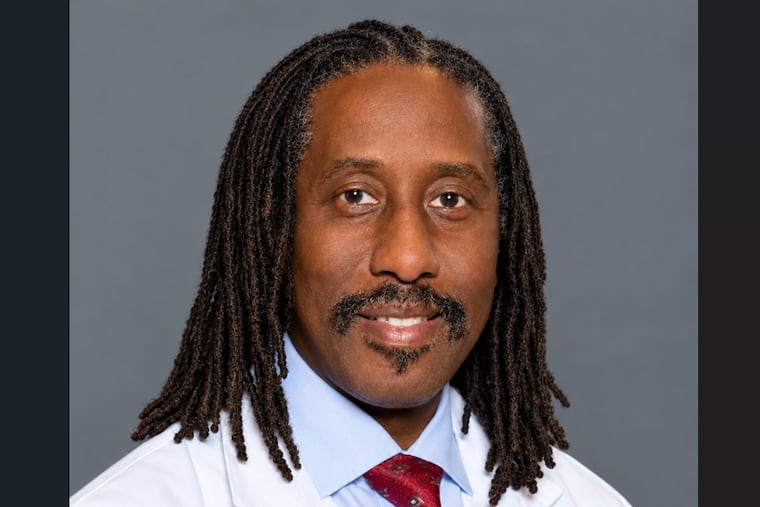
As a surgeon and leader at Rothman Orthopaedics, I have spent years studying the real-world failures of prior authorization. This expertise didn’t prepare me for the recent experience of dealing with prior authorization from the other side of the exam room table, as a patient battling a brain tumor.
Prior authorization is the term that insurers coined for a practice originally designed to curb unnecessary or overly expensive care. In practice, I find it has become a bureaucratic obstacle course that rarely saves money and frequently harms patients.
Then I underwent an MRI as part of a routine workup last spring. The high-tech imaging scan found a completely unrelated mass on my brain’s left frontal lobe. I feel grateful to my fantastic team at Penn Medicine that got me to the operating room to remove the tumor within six weeks, and back to work caring for my own patients a month later.
I was diagnosed with a grade 2 astrocytoma, a slow-growing brain tumor. My cancer involved a genetic mutation called IDH, which represents a unique target for treatment. Modern cancer therapy has advanced so much since I was in medical school – treatments can now be tailored to my brain cancer’s specific molecular mutations, similar to advances improving outcomes in breast cancer, leukemia, and lung cancer.
First, I needed cancer genetic testing to determine if I had inherited any of the mutations, or could pass them down to my two daughters. But my insurance company outright denied this testing, despite my pathology results and specific recommendations from my oncologist.
As a physician who has spent countless hours on the phone justifying care for my patients, I knew how to push back. I requested a peer-to-peer review — and performed it for myself. Fortunately, the test was approved – and results were negative. But most patients do not have the expertise to fight back like I did, or to do their own peer-to-peer reviews.
I brought to my own medical care the lessons learned from my research as the division chief of joint replacement at Rothman, one of the nation’s highest-volume joint replacement centers. In a study we published in the Journal of Arthroplasty, we found that prior authorizations were used to deny patients recommended care in 4 to 6% of the more than reviewed 27,000 hip and knee replacements at Rothman. Nearly all of these denials were eventually overturned.
The process generated mountains of administrative work for denials that were ultimately upheld in fewer than 0.5% of cases.
I have spent countless hours in Washington D.C. talking about how the current system delays care, inflates costs, and frustrates both physicians and patients. This is a daily reality for thousands of Americans needing elective but medically necessary procedures. Now the issue had become an obstacle to my own care.
My care team decided that I should start taking vorasidenib, a pill that targets IDH-mutant brain tumors. The Food and Drug Administration approved the therapy in 2024 after data demonstrated it delays tumor recurrence, while postponing the need for radiation and chemotherapy.
I was a month into this treatment when I received a notice from my insurer with a new plan identification number. My insurance company had not changed, this was simply due to annual enrollment processes. As a result, my request to refill a drug with a $30,000 per month price tag was denied. After appeal and providing additional documentation from my clinical team, I received approval — but only for 15-day increments. This led to a two-day lapse in which I went without a single pill, an interruption that could carry real risk.
Countless cancer patients face identical or worse interruptions. Insurance companies tout prior authorization as a safeguard against waste, yet it shifts costs onto physicians’ offices (which now employ armies of staff solely to battle denials) and pharmacies. In my practice, I see patients with severe arthritis waiting weeks or months for approval of a joint replacement that will dramatically improve their quality of life. With cancer care, those delays can be measured in tumor growth.
We can do better. State and federal legislation is urgently needed to standardize rules across payers and protect patients when they change insurance plans. We should also require clear, evidence-based rationales for every denial, and impose real accountability.
Pennsylvania took an important step in 2024 by passing a law aimed to streamline the prior authorization process. The law requires insurers to post their medical policies subject to prior authorization on public websites, establishes review standards, and prohibits its use for emergency services. But the law suffers from weak enforcement mechanisms.
At the federal level, the Improving Seniors’ Timely Access to Care Act has repeatedly passed the House with overwhelming bipartisan support to regulate prior authorizations in Medicare Advantage plans. Yet it has been held up for years, most notably by an unfavorable Congressional Budget Office (CBO) score that projected it could increase the cost of healthcare by $16 billion, since it would result in greater use of medical services.
I believe policymakers should also expand and simplify prior authorization exemptions for high-performing practices and automatically approve FDA-approved treatments backed by strong evidence.
My diagnosis has given me a new outlook on advocacy, with renewed urgency. No patient, surgeon or otherwise, should ever have to choose between fighting their disease and fighting their insurance company.
P. Maxwell Courtney is the division chief of adult reconstruction at Rothman Orthopaedics, an associate professor of orthopaedic surgery at Thomas Jefferson University, and chair of the American Association of Hip and Knee Surgeons (AAHKS) advocacy committee.