Why can’t this teen stay awake during his classes? | Medical Mystery
The 14-year-old's grades were beginning to suffer. Steps toward better sleep hygiene weren't helping the teen, who had put on weight over the last few years.
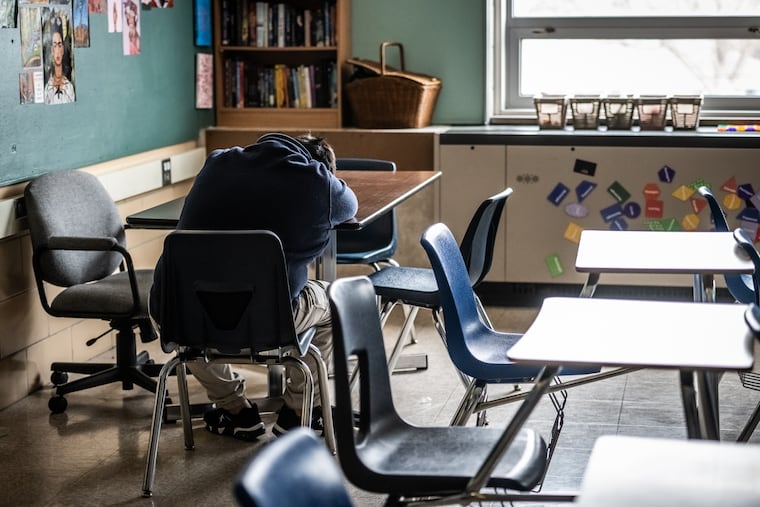
A 14-year-old boy and his mother went to his pediatrician because the teen had just been placed on a three-day suspension. The reason? His loud snoring was disrupting his classes.
His doctor asked many questions to understand what was going on, and learned his patient had been frequently falling asleep in class over the last several months. He told the doctor that no matter how much he tried to stay awake, he couldn’t help dozing off. Previously he had received As and Bs in his classes, but since he was missing so much in class, lately he had been getting more Cs and even a D. He and his mother were both worried about this. He was also embarrassed over his loud snoring making him the center of attention in class.
His sleepiness was also causing problems at home. He and his mother agreed that waking up in the morning was a nightmare because he kept falling back asleep after his alarm sounded. His mother said that it often took up to an hour to get him out of bed.
The doctor reviewed his medical history and saw that he was a generally healthy teen who didn’t have any chronic conditions or take any daily medications. He had his tonsils and adenoids removed eight years prior for a reason his mother did not remember. His pediatrician noted that he had gained a significant amount of weight over the last two years and his body mass index (a ratio of weight to height) was now in the obese range.
His doctor then asked more questions about his sleep. Generally, he went to bed at 10 p.m. and woke up around 6:30 a.m. for school. He had already tried measures to improve his “sleep hygiene” which are the habits around sleep. He left his phone charging outside his room in the hallway so he wouldn’t be tempted to scroll all night long. He tried to pick a consistent sleep and wake up time, even on weekends.
He didn’t typically have problems falling asleep, and he didn’t wake up at night. He denied having restless legs that interrupted sleep. His mother told the doctor that he snored loudly enough that she could hear it outside the door. One or two times she had also noticed that he paused in breathing during sleep for a few seconds, without waking up. The doctor asked if the teen ever had muscle weakness when having a strong emotion. Both he and his mother were amused by the question but didn’t think this had ever occurred; the doctor explained that she was describing “cataplexy,” which can be seen in people with a neurological problem with sleep called narcolepsy.
The doctor then asked to speak with the teen one-on-one. She was worried that his sleepiness issues might be indicative of a problem like depression, anxiety, or drug use. The teen denied symptoms like a loss of pleasure in doing things or feeling worthless. He told her that his favorite thing to do was play in the band, where he played five different band instruments. Unfortunately, he had been kicked out of his band due to his declining grades and his suspension. He wasn’t someone who was easily anxious and he didn’t have anxious thoughts at night keeping him up. He had never tried alcohol, vaping, marijuana, or other substances.
The doctor invited the teen’s mother back in the room for the physical examination. She assessed his blood pressure, heart, thyroid, lungs, abdomen, and neurological system and did not find anything abnormal.
Answer:
The doctor referred the teen to a pulmonologist, or lung specialist for a sleep study to see whether the teen may have narcolepsy or obstructive sleep apnea. For the sleep study, also called polysomnography, the teen slept overnight in the hospital while his oxygen saturation, breathing patterns, and brain activity were monitored.
Due to many episodes of apnea (pauses in breathing during sleep) and hypopnea (partial decrease in air flow during sleep), he was diagnosed with severe obstructive sleep apnea. Obstructive sleep apnea (OSA) is a condition where the throat becomes closed or narrowed during sleep, causing pauses or decreases in air flow, which can cause oxygen levels in the body to drop.
This causes the body to wake up, even if the person doesn’t notice it. If this happens throughout the night, the person cannot get restful sleep and can be very tired during the day. Risk factors for OSA include male sex, obesity, and having large adenoids and/or tonsils.
The teen was grateful to understand that his sleepiness was not his fault or a sign of laziness. He started treatment with continuous positive airway pressure (CPAP) overnight to help keep his airway open. Once his daytime sleepiness improved, he was able to do more physical activity during the day. The best part was that his school let him back into the band, and he decided to challenge himself to learn another instrument.
Take home points
Teens generally need 8 to 10 hours of sleep to best support their health.
Daytime sleepiness is common in adolescents and can affect their schoolwork, relationships with peers and family, and daily activities.
Common methods to improve sleep hygiene include a consistent schedule of going to bed and waking up (even on weekends), avoiding screens in the bedroom, having a consistent bedtime routine, and being active daily but avoiding heavy exercise for at least an hour before bed.
In some cases excessive daytime sleepiness may be an indicator of an underlying health condition, such as obstructive sleep apnea. Be sure to talk to your child’s doctor if you have these concerns — OSA is becoming more common in children due to obesity, though it can have other causes as well.
Samantha Starkey is a third-year pediatric resident and Hayley Goldner is a pediatrician in the adolescent medicine department at Nemours Children’s Hospital, Delaware