A healthy teenager suddenly faced severe chest pain | Medical Mystery
He had a mild cold for a few days with a runny nose and cough but no fever. He had also been elbowed in the chest the prior week while playing sports, but did not have pain from the injury.
A 17-year-old basketball player started having chest pain when he lay down to sleep one night. The pain worsened throughout the night, so he told his parents in the morning and was brought to the emergency department.
He felt sharp pressure along the left center of his chest, like someone punching him. This pressure worsened with deep breaths but improved when he leaned forward.
Prior to the onset of the pain, he had a mild cold for a few days with a runny nose and cough but no fever. He had also been elbowed in the chest the prior week while playing sports, but did not have any significant pain after that injury. In the emergency department he had normal vital signs but worsening pain, rating it a 7 out of 10 in severity.
What was the cause of the pain?
The emergency room doctors had a few thoughts. Heartburn, or reflux, can cause transient chest pain in the lower part of the chest that typically feels like a burning discomfort. The patient initially thought his pain was reflux as it started shortly after dinner, but when it did not improve with his reflux medication, he realized it might not be heartburn after all.
Problems with the lungs can also cause chest pain. Asthma attacks can cause chest tightness, and pneumonia (an infection in the lungs) can cause pain in the area of infection as well. Tall, thin young males like this patient are also at higher risk of an air leak (called a pneumothorax) causing the lung to collapse, which can happen after injuries to the chest such as this patient’s sports injury or spontaneously. However, in this case the doctors heard normal breath sounds and an X-ray of the chest showed normal lungs.
Ribs can be painful if they are fractured, bruised, or if the cartilage is irritated. Bruising or fracture can happen with traumatic injury, and cartilage can become inflamed with a persistent strong cough. If a rib was causing the chest pain it would be tender to the touch, but his pain did not worsen when the doctors pushed on it.
Anxiety can also be experienced with a sensation of chest tightness, especially during a panic attack. It may worsen during significant life stressors, poor sleep, or high caffeine consumption. This patient did not report any significant anxiety or history of panic attacks.
Solution
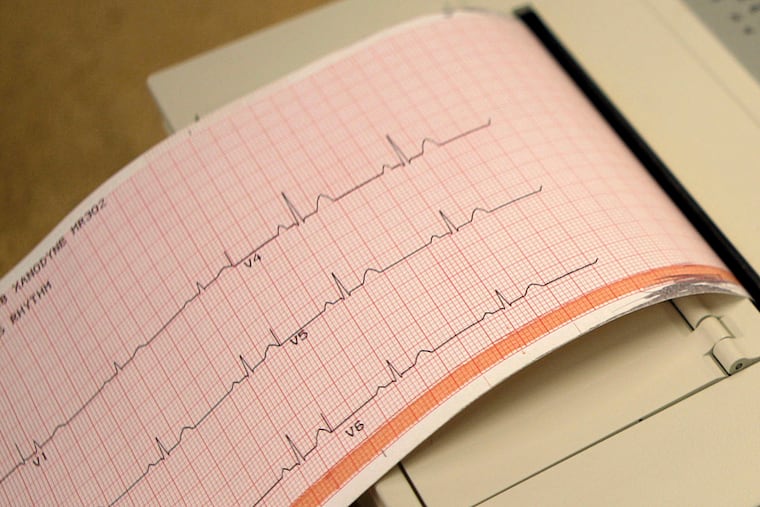
The source of this teenager’s chest pain was found with an electrocardiogram, or EKG, in the emergency department. An electrocardiogram is done with a set of wires connected to stickers which are placed on the chest to measure the heart’s electrical activity.
An important part called the ST segment should be flat, but is elevated or depressed when there is injury or inflammation. In this patient, the ST segment was elevated throughout the entire electrocardiogram indicating pericarditis, or inflammation of the thin layer which surrounds the heart. When the doctors listened closely to his heart they also heard a “friction rub”, which can be heard with pericarditis. His pain rapidly improved with a dose of ketorolac, an anti-inflammatory medicine.
The patient had additional tests done to check for complications of the pericarditis or involvement of other parts of his heart. Troponin levels in the blood rise when there is inflammation or injury of the heart muscle itself, and his troponin was normal. An ultrasound of his heart showed normal heart function as well. The rest of his blood tests were all normal, aside from a slight increase in the number of white blood cells which were likely elevated to fight the virus which led to his pericarditis.
While pericarditis can sometimes be due to underlying medical conditions, the vast majority of cases happen spontaneously or due to a viral illness. Typically, they resolve after a brief treatment with anti-inflammatory medications but can worsen or present complications. This patient took ibuprofen for two weeks, recovered completely, and was cleared by his heart doctor to return to his usual sports.
Our advice: Children and teenagers with persistent or severe chest pain should treat it as an emergency and see a doctor to help identify and treat the source of the pain.
Noah Kelleher is a second-year pediatric resident and Hayley Goldner is a pediatrician in the adolescent medicine department at Nemours Children’s Hospital, Delaware.