Telehealth is not a substitute for in-person physician visits | Expert Opinion
Despite reducing waits and travel times, virtual doctor appointments can miss important diagnoses. One doctor offers his solution for a better use of telehealth.
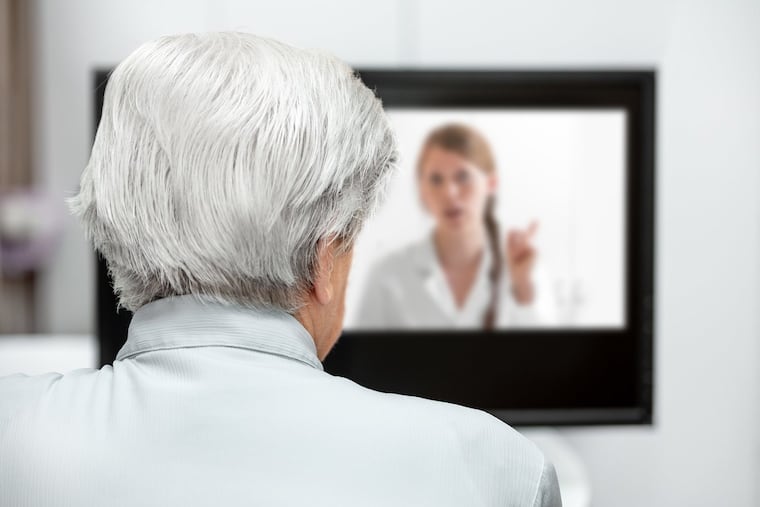
On the day of Philadelphia’s massive snowstorm in February, I was scheduled to see 18 patients. Our hospital administration directed all physicians to switch from clinic appointments to telehealth, but when I reviewed records for those patients, I determined that nearly all required in-person evaluations. Offering them anything less would have been unethical: good for my productivity, but bad for their quality of care. I switched two to virtual appointments and rescheduled the rest.
When my health system adopted a telemedicine program, doctors like me were asked to complete an online training. It mostly covered logistical and regulatory concerns, but also discussed which types of conditions might be appropriately evaluated using virtual care. The physician in charge of the training offered this guidance: “We’ll leave it to our patients to let us know.” At the time, I hadn’t yet performed a telehealth visit, but this response seemed problematic. I felt that patients would naturally be drawn to telemedicine for its convenience. However, primary care physicians like me know what we can and cannot accurately assess over a computer screen. We ought not to let dangle an implied equivalence between virtual and in-person evaluations.
I’ve been practicing medicine for 25 years and don’t much like telehealth. I prefer “old timey” physical examinations to virtual evaluations. But many physicians seem to have more modern sensibilities. A 2024 survey by the American Medical Association showed that over 40% of doctors use telehealth to treat acute conditions. What’s more, nearly one in six doctors surveyed reported that telemedicine visits comprised 20% or more of their schedules. On that snowy day when I was told to convert all my patient visits to telehealth, I decided to investigate what we know about the modality’s utility and accuracy. I learned the answer is complicated.
I found several studies indicating that telehealth works well for managing chronic diseases like heart failure and diabetes, though much of that work involves interpretation of data like blood sugar readings for which physicians haven’t traditionally sought compensation. I read other studies that found telemedicine has also helped to reduce travel and wait times for medical appointments in rural and other areas underserved by healthcare providers.
I read two studies that interrogated telehealth’s accuracy, and the results worried me. A review of telehealth visits performed in a family medicine department in Florida affiliated with the Mayo Clinic showed that over 16% of patients presented within 30 days of their virtual visit for in-person evaluations that were not originally suggested by their physician. When those patients saw a doctor in person, 60% of those visits resulted in a change of diagnosis. Many were insignificant, but cases of pneumonia, fracture, cellulitis, and peripheral vascular disease were among the serious conditions initially missed during telehealth workups. In a separate study of telehealth visits in another Mayo-affiliated multispecialty practice, 13% of virtual diagnoses were found to be incorrect. Nearly 12% of those 313 misdiagnoses had resulted in harm, with three patients dying (1% of the inaccurate diagnoses).
The issues identified in these studies resonate with me. Three of my patients who recently sought after-hours telemedicine evaluations (without my involvement) were badly misdiagnosed. A pneumonia was mistaken for a viral infection, an acute bowel obstruction was diagnosed as “constipation,” and cellulitis was treated as a muscle strain.
I have chatted with colleagues who are similarly troubled by inappropriate use of this technology. A couple pointed out, however, that my patients’ outcomes may have been no different had they come into the office for their initial evaluations. Many physicians either don’t examine their patients or do so in a cursory manner. For this reason, my peers suggested that in-person evaluations may not have yielded better results. I shudder at that possibility.
Telehealth is useful for managing certain chronic diseases and providing healthcare services to underserved regions. Among my own patients, I have found it effective for medication management, as well as for evaluating and treating depression and anxiety. However, I think physicians owe our patients greater transparency about what we can and cannot offer through virtual visits. We need to be more direct about which conditions we cannot safely assess.
No one should ever be scheduled for telehealth when a proper physical examination is required, and leaving it to our patients to determine which visit type they’d prefer seems irresponsible. Additionally, no one should ever pay for a telehealth appointment only to be told that they need a more thorough physical evaluation.
Some of my peers find during virtual visits that they need to bring people into their office. They don’t charge for the initial telehealth consultation and expedite an in-person appointment. This is an ethical solution, and one that I hope you will demand. Patients are also owed candor about telehealth’s intrinsic diagnostic inaccuracy. There is always uncertainty in medical practice, but I suspect far fewer people would seek virtual primary or acute care if they were warned about the risk of misdiagnosis and harm.
I understand why patients are drawn to telehealth — not because of its diagnostic superiority, but rather due to its convenience. Physicians must facilitate our patients’ efforts to obtain timely and accessible care. But we also have to ensure that the care we offer them is accurate, appropriate, and worth their while.
Mike Stillman is a primary care physician in Philadelphia.