FDA reverses course and will review Moderna’s mRNA-based flu shot
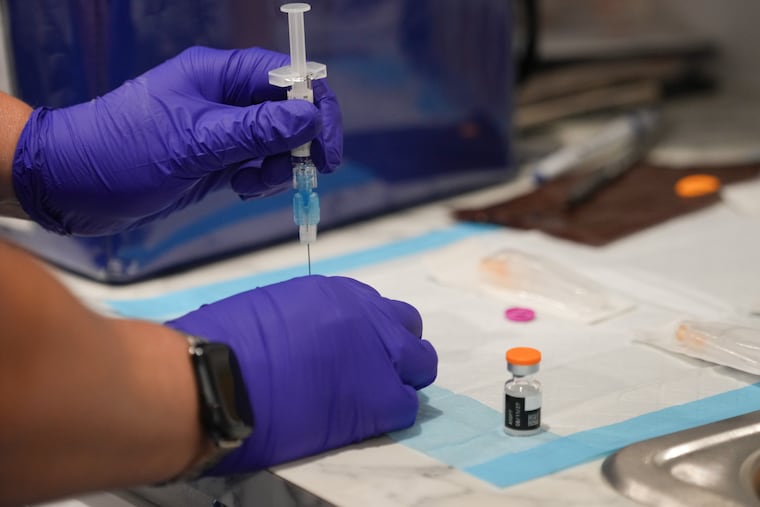
Moderna announced that the FDA agreed to review its application for a mRNA-based flu vaccine after it agreed to further study in older adults.
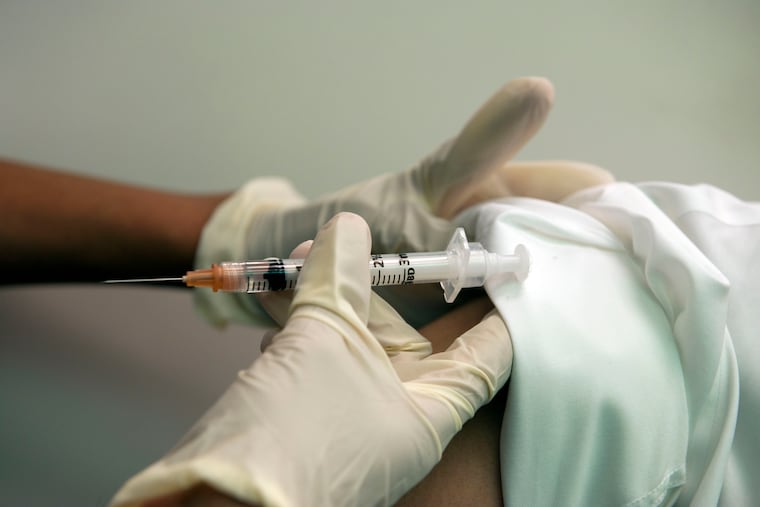
The Food and Drug Administration has reversed course and agreed to review Moderna’s application for the first mRNA-based flu vaccine under a revised approach, company and federal officials said Wednesday.
Last week, Vinay Prasad, the agency’s top vaccine regulator, declined to review the vaccine, a rare move that shocked the company and that public health experts saw as the latest example of the Trump administration’s hostility toward immunization. Federal health officials argued that Moderna lacked an “adequate and well-controlled” study and should have used a high dose flu shot for adults 65 and older in a large clinical trial.
The company met with the FDA and proposed seeking full approval for the vaccine for adults 50 to 64 years of age and accelerated approval for adults 65 and older, along with a requirement to further study the vaccine in older adults, according to Moderna.
“We appreciate the FDA’s engagement in a constructive Type A meeting and its agreement to advance our application for review,” Moderna CEO Stéphane Bancel said in a statement. “Pending FDA approval, we look forward to making our flu vaccine available later this year so that America’s seniors have access to a new option to protect themselves against flu.”
The target date for completing the review and making a decision is Aug. 5, according to Moderna. If approved, the vaccine could be on the market for the next flu season.
The Department of Health and Human Services confirmed it held a formal meeting with Moderna, and it had accepted the company’s new approach.
“FDA will maintain its high standards during review and potential licensure stages as it does with all products,” Andrew Nixon, an HHS spokesman, said in a statement.
FDA Commissioner Marty Makary personally sought a quick resolution but was not involved in the regulatory decision for the new approach, according to a person familiar with the matter who spoke on the condition of anonymity to share private details.
Katalin Karikó and her Penn colleague Drew Weissman won the 2023 Nobel Prize in medicine for their messenger RNA research, which paved the way for COVID-19 vaccines that are credited with saving millions of lives.
MRNA vaccines are faster to develop than traditional vaccines. Medical experts hope such technology could help vaccine makers respond more rapidly to changes in the flu strain. Flu vaccines are updated annually, and their effectiveness varies every season depending on the quality of the match.
But Health Secretary Robert F. Kennedy Jr. and other health officials in the Trump administration have criticized the use of the technology for respiratory virus immunization and have pulled federal funding for mRNA research, including for flu vaccines.
Vaccine experts had raised concerns over Prasad’s initial decision to refuse to review the vaccine, saying that shifting guidance from the FDA could deter future investments in pricey clinical trials. For the Moderna vaccine, Blackstone, a private equity company, invested $750 million into conducting a large-scale clinical trial and potential licensure of the vaccine.
Companies conduct clinical trials in consultation with the FDA. According to Moderna, the FDA in April 2024 told the company that its trial design for the mRNA flu vaccine compared with a standard flu shot was “acceptable.” The FDA recommended comparing the mRNA flu vaccine against a higher-dose flu shot for those 65 and older, but the recommendation was not binding.
Moderna conducted two late-stage trials — one of the final steps before seeking approval of its mRNA flu vaccine — enrolling more than 43,000 adults ages 50 or older. In one trial, more than 40,000 participants received either a dose of the experimental mRNA flu vaccine or a standard dose of an existing flu shot. In a smaller trial, participants received a dose of the mRNA vaccine, a standard shot or a high-dose influenza shot recommended for adults 65 and older.
The administration had defended the decision to decline to review the shot. In a statement last week, Nixon said that “Moderna exposed participants aged 65 and over to increased risk of severe illness by giving them a substandard of care against the recommendation of FDA career scientists.”
In an interview last week, Moderna president Stephen Hoge said the company was “surprised” and “confused” by the refusal. He said the agency had not identified any issues around the safety or efficacy of its product.
At an event Tuesday held by the major industry lobby organization PhRMA, Makary said the company was given “pretty clear guidance.”
“The application was reviewed, and that letter, in my mind, is part of a conversation where you’ll see a dialogue between the company and the agency,” he said.