A gene therapy lowered cholesterol in early trial results. It has a Philly backstory.
In a recent study, Verve's gene-editing therapy reduced cholesterol levels by 62% in patients receiving the highest dose. Penn cardiologist Kiran Musunuru was central to its origin story.

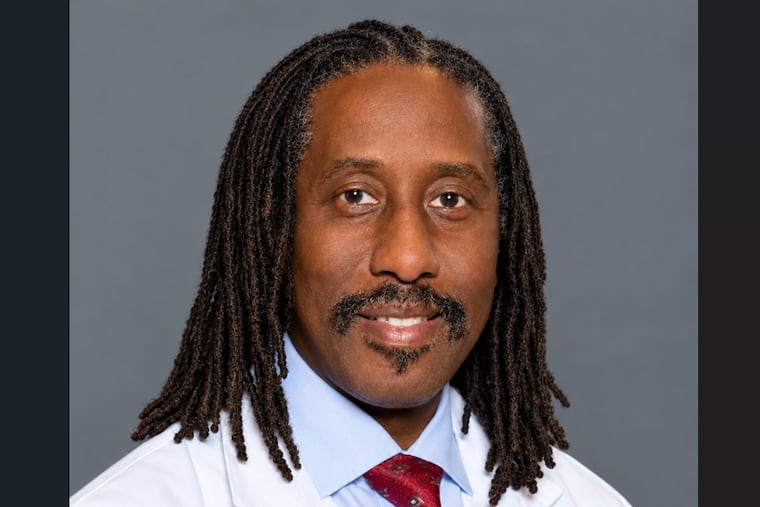
Like countless Americans urged to take medicine every day to control high cholesterol, University of Pennsylvania cardiologist Kiran Musunuru frequently forgets to take his pills.
But unlike most patients, he has dedicated his career to trying to do something about it: develop a one-and-done gene therapy that would fix the condition without the daily hassle.
The company he co-founded, Verve Therapeutics, this week announced progress in early clinical trial results showing its gene-editing therapy had within a month reduced cholesterol levels by 62% in patients receiving the highest dose.
Although the numbers treated so far are small — the clinical trial included 35 participants — the early results were considered significant enough to be published in the New England Journal of Medicine. Those with the strongest results were studied for up to 90 days, with evidence of durable effects, while those at the lowest dose have been studied up to 18 months.
The patients involved either had heart disease at a younger age than usual, or a genetic disorder that increases the risk of heart disease.
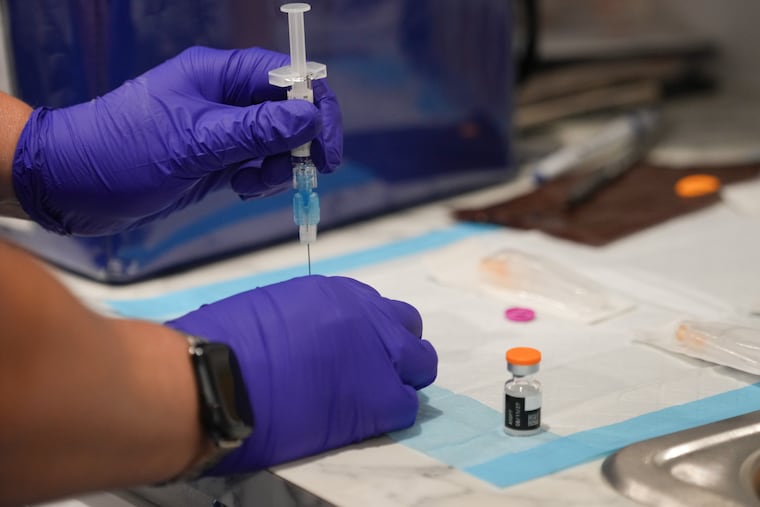
The therapy, called VERVE-102, works by introducing a specific mutation into a gene in the liver called PCSK9 — much like changing a letter in a string of words.
One to three percent of people naturally have these “good misspellings” that turn the gene off and confer “dramatic protection against heart disease,” said Musunuru, who was not involved in the trial, but helped to develop the therapy’s concept in its early stages.
Pharmaceutical giant Eli Lilly obtained the therapy last year in a $1 billion buyout of Boston-based Verve Therapeutics. Musunuru serves as an adviser, but is not employed by Verve and no longer has a stake in the company.
Now focused on developing personalized gene-editing therapies, Musunuru was part of the team behind last year’s first-of-its-kind treatment for Baby KJ at Children’s Hospital of Philadelphia. The novel therapy targeted a genetic mutation in the infant with a rare metabolic disease.
More than a decade ago, he conducted experiments that were central to VERVE-102’s origin story.
Musunuru found that inactivating the gene in mice led to substantial drops in levels of bad cholesterol. People who naturally had the gene turned off also had these benefits with seemingly no adverse health consequences.
This made the gene “the perfect drug target,” he said.
Independent researchers called the recent trial results exciting, telling STAT News and the New York Times that while they appeared to be lasting, more safety data was needed. The Food and Drug Administration generally expects patients in gene-editing trials to be followed for 15 years.
Larger trials will be needed to ensure the therapy is safe and effective, Musunuru said. He was not an author on the published study.
If it can permanently reduce cholesterol levels as hoped, “it will push off heart attacks and strokes by decades on average,” he said.
One-and-done for high cholesterol?
When too much cholesterol — a fatlike, waxy substance — builds up in the body, it can clog arteries and reduce blood flow to the heart.
That’s why high cholesterol is considered a major risk factor for heart disease, the leading cause of death in America.
Musunuru is one of millions worldwide who take daily statins to lower their cholesterol. Other options include monoclonal antibodies taken every few weeks and injections every six months.
Gene therapy potentially could mean permanent protection.
Research has found that only two in five patients who are prescribed a statin after a heart attack are still taking it as directed two years later. Others lowered or skipped doses, or stopped taking it altogether.
“Drugs don’t work if you don’t take them,” Musunuru said.
He saw the gene-editing approach used in his earlier experiments last for a lifetime in mice, but they live for only two to three years.
Safety also needs to be evaluated in much larger study populations.
No major adverse events related to the therapy were reported in the latest study, but a trial for Verve’s previous therapy candidate was paused after a patient developed elevated liver enzymes. This led to a safer reformulation of the delivery vehicle for the current therapy, Musunuru said.
If the therapy does prove safe and effective, he envisions a world where everyone could receive the gene therapy to prevent heart disease, not just those at high risk.
That’s not to say everyone will actually want gene therapy.
The field of gene editing is still relatively new and experimental. The first FDA-approved therapy that edited DNA using CRISPR technology was approved for sickle cell disease in 2023.
Cost and accessibility are other commonly cited challenges. Gene therapies can be prohibitively expensive, with prices reaching the millions. That’s compared to statins, which are relatively cheap. Lilly’s chief scientist told the New York Times they intended for a product that could be widely accessible.
“The more options you have, the better it is for everyone,” Musunuru said.