As prior authorization requirements expand, consumers need help fighting denials
Initially, prior authorization requirements were circumscribed attempts to contain healthcare costs. Yet, as they've expanded, they've impeded necessary care, especially for marginalized populations.
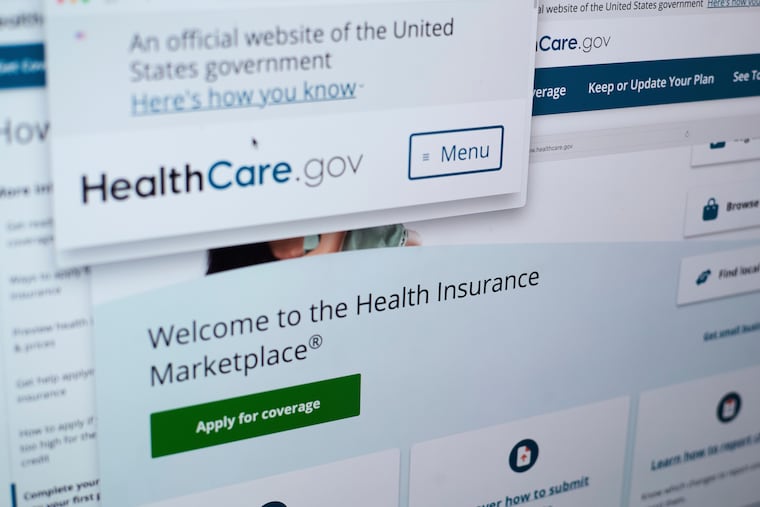
On April 3, the Pennsylvania Insurance Department issued a news release touting the relief provided by a new external review process that offers consumers recourse when their health insurance providers refuse to cover treatments.
The program launched in 2024, and utilization tripled between 2024 and 2025. Half the consumers who engaged the review process last year saw their health insurer’s decision overturned by the independent review organization.
Yet, while the program is a success story of sorts, it only handled 1,353 cases in a state of over 13 million people.
There’s a pivotal reason for this low utilization: The Pennsylvania review process — as is true in nearly every other state — requires that patients first exhaust any potential internal remedy that their health insurer offers. While this might seem reasonable, a requirement that aims to prevent patients from challenging appropriate denials of coverage, including when plans don’t cover a particular type of care for anyone, it actually functions as a major barrier to access.
» READ MORE: Pennsylvanians drop health insurance as prices soar
Health insurers employ burdensome and complex internal review processes, which demand a high degree of health insurance literacy to navigate. Data suggests that most consumers either can’t or don’t want to jump through these hoops. In cases involving plans purchased on the health insurance exchanges, for example, consumers appeal fewer than one percent of denied claims.
The end result is that when insurers refuse to cover medical care, patients often have no access to an external review process. That’s a problem because of the dramatic expansion of prior authorization requirements. Originally, policymakers intended for them to be a narrowly circumscribed cost-containment measure. Over time, however, concerns about increasing healthcare spending have led to prior authorization becoming an almost ubiquitous hurdle patients must cross before getting care.
That has deepened inequality and kept necessary care out of reach. Given how broadly these requirements apply, if policymakers truly want to provide consumers with recourse, they need to design external review processes with far fewer hurdles to access. A widespread requirement demands far more widespread external review.
For close to a century, liberals have tried — and failed — to enact a national health insurance system in the U.S. That has left consumers at the mercy of a private insurance companies focused on cost containment.
During and after World War II, Americans came to rely on employer-sponsored private insurance. Having coverage increased their ability to take advantage of new treatments as medical technologies advanced. Yet, as treatments proliferated and patients lived longer, the price tag for healthcare also jumped. That prompted insurers to search for ways to limit costs.
During the 1950s, health insurers began undertaking some limited review of whether hospital payments were necessary. But they only did so after the fact. The hunt for effective cost containment measures accelerated in the early 1960s. Many Blue Cross plans started to review the medical necessity of hospital admissions or to require doctors to certify the need for a patient’s continued hospitalization after a certain number of days had passed. Nonetheless, while physicians largely reviled these efforts — which they saw as intruding on their professional autonomy while impeding quality patient care — the requirements still only applied fairly narrowly.
In the late 1960s and early 1970s, however, costs for the new Medicare and Medicaid programs drastically outstripped projections. Simultaneously, healthcare inflation rose.
Policymakers began to see managed healthcare plans as a viable solution to rein in these costs. These plans provided fixed payments per patient per month, as opposed to a fee-for-service model in which physician payments rose with extra tests and treatments. In his 1972 Special Message on healthcare, President Richard Nixon spoke to the need for “direct cost-control procedures,” and a greater focus on how money was being spent in the healthcare system, even as he acknowledged the need to better protect patients from high medical costs. Specifically, Nixon called for “[r]eviews of claim samples and utilization patterns” in Medicaid and advocated for the adoption of health maintenance organizations (HMOs).
In 1973, Congress answered the President’s call by enacting the Health Maintenance Organization Act, which sought to curb healthcare costs by encouraging the development and expansion of managed healthcare plans. The new law ended up changing the trajectory of American healthcare by funneling patients into HMO plans, which are restrictive because they contract with a specific network of physicians or medical groups to offer care. The number of HMOs exploded, and by 1980, 9 million Americans were enrolled in one of 236 HMOs.
Soon thereafter, health insurance companies introduced the more flexible preferred provider organizations (PPOs), offering another managed care alternative, albeit with poorer cost control mechanisms. Reliance on these plans grew rapidly, from 1.3 million enrollees in 1984 to 16.5 million in 1986.
This transition was important, because managed care programs used prior authorization requirements as a key mechanism to contain costs, ensuring that care was medically necessary before delivery. Insurers saw this as a method of guarding against the “unhealthy politics” that fueled overprescribing of tests and treatments. Many patients believed that more care equated to better care. Simultaneously, physicians were risk averse and worried about both malpractice liability and patient ratings. Further, some medical practices had become entrenched before studies demonstrating their effectiveness. All of these things contributed — and continue to contribute — to doctors prescribing costly care that might not improve patient outcomes.
The debate didn’t center on whether overprescribing occurred. It did and does. Rather, the question was how to determine what care was truly necessary, and whether this overprescribing could be sufficiently addressed with a scalpel as opposed to more aggressive regulation.
Addressing overprescribing was important for both cost control and patient safety. Yet, thanks to discretion-laden clinical guidelines, it wasn’t always easy to differentiate between necessary and unnecessary care. All too often, patients got caught in the middle, and prior authorization requirements ended up imposing additional barriers to necessary care.
As reliance on managed care programs continued to balloon, it fueled a backlash that emphasized the inappropriate denials of coverage, and the damage they did to patients. Advocating for the passage of a Patients’ Bill of Rights in 1998, Sen. Ted Kennedy (D-Mass.) characterized unaccountable health insurers as having “license to maim and kill.” Though the legislation did not advance, concerns about wrongful delays and denials of coverage have persisted over the last quarter century, reverberating across the nation, perhaps most notably following the murder of UnitedHealthcare C.E.O. Brian Thompson in 2024.
Today’s prior authorization requirements would look relatively unrecognizable to the architects of the initial prior authorization systems in the 1960s. Insurers require patients to get authorization before receiving costly prescription drugs (and even some lower-cost drugs) or undergoing many kinds of surgeries, procedures and high-tech imaging. Oftentimes that means that patients can’t pick up prescriptions for a few days or more, delaying important treatment, or leaving them waiting weeks to schedule scans to help identify the cause of pain or the progression of cancer. And in stark contrast with how traditional Medicare has historically operated, a whopping 99% of Medicare Advantage enrollees now have prior authorization for at least some medical services.
In light of the proliferation of prior authorization processes in virtually every corner of healthcare delivery, it is little wonder why a January 2026 KFF poll found that seven in 10 insured adults in America characterized prior authorization as a burden, including a third who labeled it a “major burden.”
Utilization controls have a place in the American healthcare system: some have estimated that as much as 25% of America’s high healthcare spending could be characterized as “waste,” which includes overtreatment or low-value care. The debates over precisely what care is necessary and what care is driven by other factors like fear of lawsuits persist today. Even so, prior authorization has dramatically exceeded the scope of what policymakers intended, imposing extra barriers for patients — especially marginalized patients — seeking most care.
Enter independent medical review processes, designed to police coverage denials and eliminate mistakes. Yet, as Pennsylvania reveals, requiring patients to have the know-how and patience to jump through the hoops necessary to be eligible for outside review leaves too many barriers in place. Too often, red tape gets in the way of meaningful relief.
Health insurance delivery has evolved over the decades, and appeal mechanisms need to evolve with it. Although guardrails on care may be defensible, guardrails on recourse are not.
Miranda Yaver is a political scientist and Assistant Professor of Health Policy and Management at the University of Pittsburgh. She is the author of Coverage Denied: How Health Insurers Drive Inequality in the United States.
Made by History takes readers beyond the headlines with articles written and edited by professional historians. Opinions expressed do not necessarily reflect the views of the Inquirer.