What to know about the hepatitis B vaccine schedule debate
The nation's top vaccine advisory panel is expected to debate on Thursday whether to delay the first dose of the hepatitis B shot.

The nation’s top vaccine advisory panel is expected to debate whether to delay the first dose of the hepatitis B shot on Thursday.
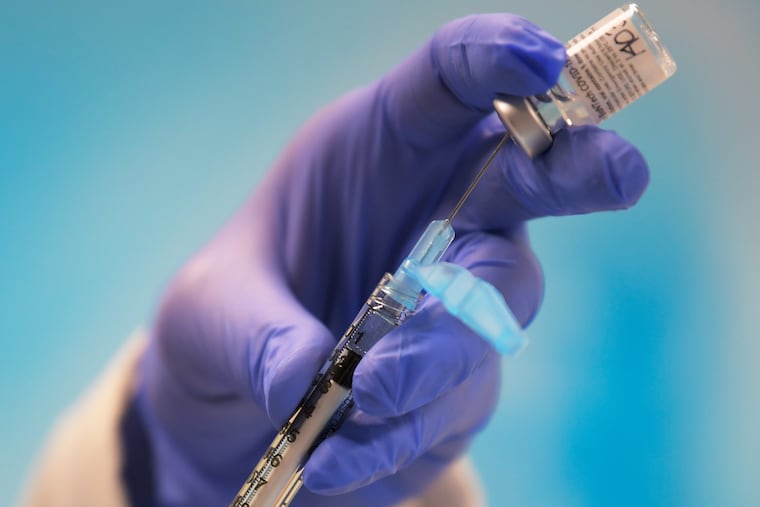
The immunization, developed in Philadelphia and long recommended for all U.S. infants at birth, protects against a disease that can do permanent damage to the liver, and for which there is no cure.
The shot is widely considered safe and effective, but who should receive it, and when, has come under scrutiny by President Donald Trump’s administration.
The Advisory Committee on Immunization Practices (ACIP), an independent panel of experts reconstituted this past summer to include several vaccine skeptics, had tabled a vote on this topic in September. It is now scheduled to spend Thursday discussing the vaccine, according to a draft agenda of the group’s two-day December meeting.
Vaccine experts and patient advocates have previously advocated against delaying the birth dose, citing concerns that unvaccinated children could be at risk of contracting the highly contagious virus.
Here’s what to know about the vaccine.
» READ MORE: The hepatitis B vaccine, a 'Philadelphia story,’ is being scrutinized.
It’s recommended for all newborns at birth.
Starting in 1991, the first dose of the hepatitis B vaccine has been universally recommended for all newborns within 24 hours of birth. Rates of infection among children and teens have since dropped by 99%.
Prior to the universal birth dose recommendation, about half of infections in children were acquired from mothers infected with the virus, the Centers for Disease Control and Prevention found.
The virus spreads through contact with blood and other body fluids.
The virus can be transmitted from mother to baby, as well as through a variety of household sources, such as personal items like toothbrushes and razors that become contaminated with blood.
The virus cannot be spread through casual contact such as hugging, touching, or sharing utensils, but it can be spread through open wounds.
The disease is incurable.
Hepatitis B is the most common chronic viral infection in the world. Over time, the disease can cause cirrhosis or severe scarring of the liver, liver failure, and liver cancer.
Patients can take antiviral treatments to help control the virus, but there is no cure.
The panel has previously considered delaying the birth dose until one month of age.
ACIP previously debated delaying the first dose of the vaccine until one month of age for most babies.
Some members had suggested the dose for newborns should instead be given only to the populations most at risk.
The ACIP considered recommending doctors vaccinate only those newborns whose mothers test positive for the virus, and having the other babies wait a month for their first dose.
Trump separately stated in a news conference, without citing scientific evidence, that he thinks newborns should no longer universally receive the shot and children should wait until age 12. Experts criticized Trump for incorrectly suggesting that hepatitis B is only transmitted sexually.
Experts are concerned about a potential change to the guidelines.
Leading medical societies and infectious-disease experts say there is no scientific evidence for changing the current guidelines.
Experts worry that delaying the vaccine could affect its ability to prevent transmission of the virus from mother to baby. “If you wait longer than 24 hours, then the vaccine doesn’t work as well,” Chari Cohen, president of the Hepatitis B Foundation, told The Inquirer in an interview earlier this fall.
Even if the ACIP were to recommend vaccinating only babies whose mothers have the virus, some cases could be missed. Universal testing for the virus has been recommended since the 1990s, but 15% to 16% of women still do not get tested.
Such a policy also would not account for other exposures. Su Wang, a New Jersey physician who treats patients with hepatitis B and herself has the disease, told The Inquirer earlier this year that she likely caught hepatitis B as a child living with her grandparents. Her parents tested negative. “There are a lot of exposures that we aren’t testing for,” she said.
The vaccine is a Philadelphia success story.
The hepatitis B virus was first discovered by Baruch Blumberg, a scientist at Fox Chase Cancer Center, in 1967.
He went on to win a Nobel Prize for that work, and later cocreated and developed the vaccine, which continues to be manufactured in and around the region.
The Hepatitis B Foundation is also locally based, in Doylestown.