A virus gave a man an aggressive blood cancer. Philadelphia doctors want people to know about it.
A Jefferson patient died from a cancer caused by HTLV-1, a little-known virus first discovered in 1979.

The quarter-sized lump on Dennis Bladen’s buttocks puzzled his doctors at the Veterans Affairs medical center in Wilmington.
For six months, they considered one diagnosis after another: They tested the lump for fungi. It came up negative. They tried antibiotics and steroid creams. It didn’t respond.
At one point, they thought it could be a cancer called Kaposi sarcoma, known for causing skin blotches. After ruling that out, they thought it could be lupus, an autoimmune disease.
The lump kept growing “bigger and uglier” by the day, said Bladen’s wife, Joyce. By the end of 2023, it covered almost his entire right buttocks, and doctors still couldn’t come up with a diagnosis.
“I’ve had enough. I want answers,” Joyce recalled thinking.
Her 77-year-old husband was eventually transferred to Thomas Jefferson University Hospital in Center City, where doctors screened for a little-known virus affecting fewer than 1% of people in the United States.
His test came back positive.
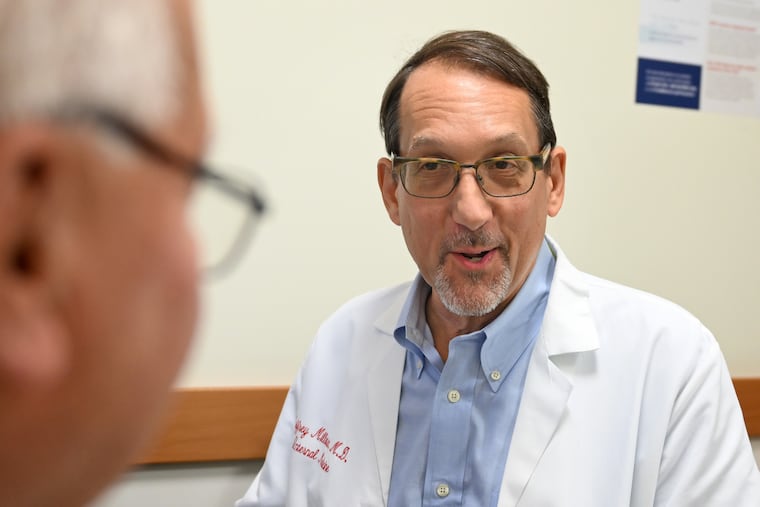
He had an aggressive cancer caused by human T-lymphotropic virus type 1 (HTLV-1). Bladen’s oncologist at Jefferson, Pierluigi Porcu, estimates that Philadelphia-area hospitals see between 15 and 20 cases of the HTLV-1-associated cancer annually. Most patients don’t survive longer than a year.
“We know that there are no great treatments for this cancer,” Porcu said.
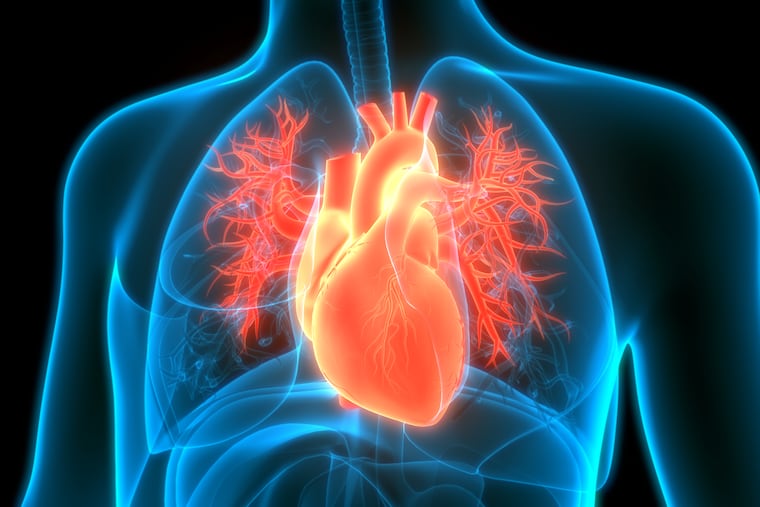
HTLV-1 is an oncovirus, meaning a virus that can cause cancer. A better-known example of this is human papillomavirus, or HPV, which causes most cervical cancers.
People with HTLV-1 will not experience symptoms for decades. About 1 in 20 develop an aggressive form of blood cancer. Patients usually don’t know they have the virus up until this point, which allows the virus to spread unnoticed.
Philadelphia is emerging as a hub for expertise on the virus, with an international conference for HTLV-1 and related viruses being held here next June. It’s the first time in 23 years that the conference, launched in 1988, will be held in the United States. Efforts are underway locally to raise awareness, especially in the African and Caribbean communities most at risk.
While there’s no cure or treatment for the virus, doctors hope that getting people screened will give them a fighting chance of stopping the spread.
A silent threat
HTLV-1 is a retrovirus, meaning it can integrate its genetic material into a host’s DNA. If you think of your DNA as a stack of papers, the virus is an extra page snuck in between. Every time you go to copy that stack of pages, the virus is copied, too.
Most of the time, people get HTLV-1 in infancy, when breastfed by an infected mother and their immune system is not yet strong. The virus can also be passed through sexual contact and shared needles.
“This virus is the closest cousin of HIV,” said Pooja Jain, an HTLV-1 researcher at Drexel University, noting that both spread through body fluids and infect a type of white blood cell known as T cells.
However, unlike HIV, which destroys T cells, HTLV-1 causes them to proliferate.
The cancer develops when the virus takes control of an infected T cell and forces it to make clones of itself, multiplying uncontrollably.
“They kind of elbow out all the normal T cells,” Porcu explained.
Eventually, the clones transform into large cells that look like flowers. These “flower cells” are a hallmark of an aggressive cancer, adult T cell leukemia/lymphoma (ATLL).
The cancer usually only develops after decades of having the virus, which affects an estimated 10 to 20 million people worldwide and is endemic in Japan, sub-Saharan Africa, South America, and the Caribbean.
HTLV-1 has been around for thousands of years although it was only discovered in 1979. More than 90% of people infected with the virus won’t experience any symptoms or adverse health consequences. However, up to 10% do develop a disease, usually ATLL or a neurological condition called HTLV-1-associated myelopathy.
In Philadelphia, Jefferson hematology and oncology specialist Sean Reilly has been working with the African Cultural Alliance of North America, a local nonprofit, to spread awareness of the virus among the area’s African and Caribbean communities.
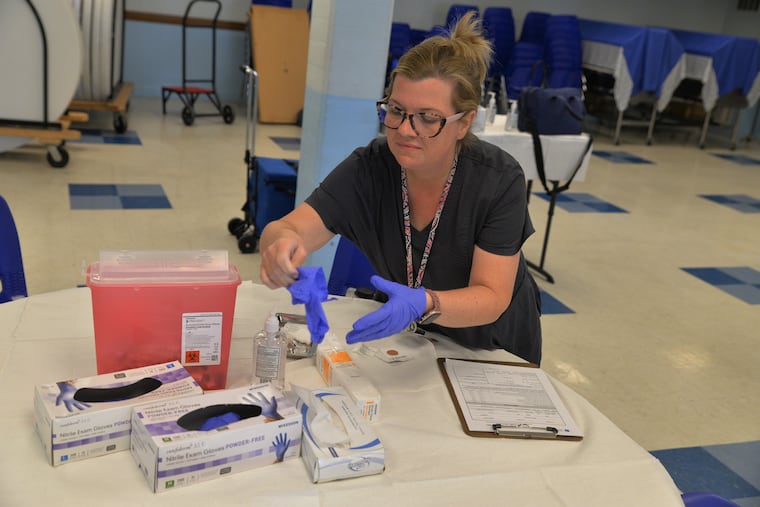
So far, they’ve hosted two information sessions and hope soon to provide testing using Jefferson’s mobile screening van, starting either end of summer or the fall.
If someone tests positive, doctors can’t do much beyond monitoring them. But the knowledge could still help someone take precautions to stop the spread. A woman could avoid breastfeeding her child, for example. (Brazil, for instance, provides free infant formula to mothers with HTLV-1.)
“Stopping spread to an infant could then spare them this horrible, deadly cancer,” Reilly said.
No one knows how Bladen got the virus. He was adopted and never found out his heritage. As far as his family knows, he wasn’t breastfed as a baby. Though he was born and raised in the United States, it’s possible he encountered the virus when he served abroad in the military for a few years in Asia.
Regardless of how he got it, it must have been in his body for decades, silently multiplying.
Fighting the cancer
When Bladen was diagnosed, his cancer seemed to be contained to the skin. Usually, ATLL is more spread out.
Bladen started radiation therapy in February 2024, followed by chemotherapy. When he finished treatment that August, doctors were hopeful.
“Everything looked great, and supposedly he was cancer-free,” Joyce, his wife, said.
In October, he went to Jefferson for a PET scan to see if he was in remission. His original lump was gone, but the cancer had spread to his lymph nodes, leg muscles, and multiple organs.
“It just ravaged his whole body,” Joyce said.
Doctors tried more chemotherapy, but it didn’t work.
Over the next few months, Bladen became weaker and thinner each day. In January, doctors transitioned him to hospice care.
“What we didn’t know was how quickly it would happen,” Porcu said.
Bladen told his family and doctors that he wanted to die at home. So Joyce packed up his things and prepared a hospital bed for him at their house in Newark, Del.
She thought he would have another month or two, but then he stopped eating and drinking.
“I realized he was slipping away from me,” she said.
Joyce slept beside him on a chair for four days. On the last day, she woke to him squeezing her hand. He smiled at her and then shut his eyes.
On Jan. 17, Bladen died at age 78.
Joyce wants her husband, who went by “Skeeter,” to be remembered for being a jokester who could get along with anyone.
“He would be the lively one at your family party. Everybody waited for Skeeter to get there because they knew it was going to be fun,” she said.
She was with Bladen for 50 years. She misses him most at dinnertime.
“We never missed a meal together,” she said.
Soon she will have to spend their wedding anniversary without him for the first time. Every year on Aug. 11 they’d celebrate by eating lobster tail. This year, she’ll continue that tradition with a friend.