Black Americans face disproportionately high rates of kidney disease. Penn researchers are developing a blood test to identify those most at risk.
Black Americans are disproportionately affected by kidney disease, partly due to genetics. A Penn team is developing a way to better predict a person’s outcome.
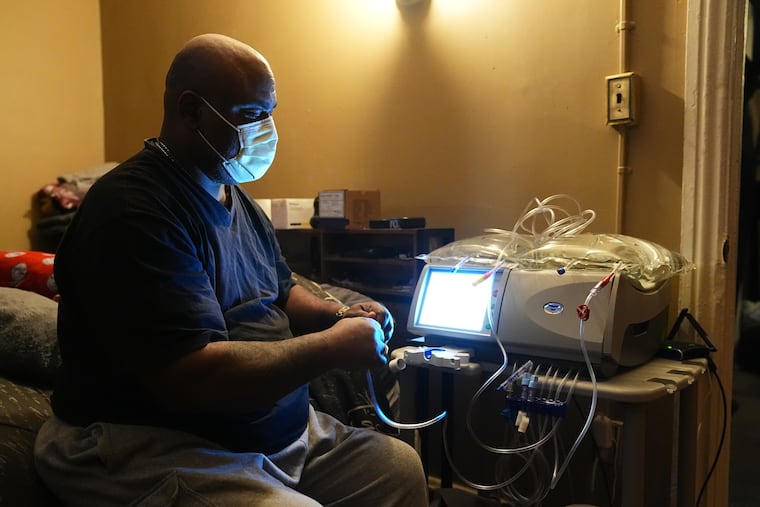
University of Pennsylvania researchers are developing a blood test to better predict the risk of kidney disease in Black Americans, a group that is disproportionately affected in part due to genetics.
Their test was able to predict kidney outcomes with more than 80% accuracy among Black individuals at increased genetic risk of disease, according to results published last week in the scientific journal Nature Medicine.
Black people represent a third of Americans on dialysis, a treatment for kidney failure, despite constituting only 13% of the population. Some potential drivers of the disparity are socioeconomic factors and the prevalence of other risk factors like hypertension and diabetes.
But another major contributor is variation in a gene called apolipoprotein L1 (APOL1).
Certain versions of the gene are more prevalent in those with African ancestry and carry a higher risk of kidney disease, especially if someone carries two copies (almost all our genes come in pairs).
Roughly one in eight Black Americans are thought to have two copies of the so-called risk variants, which accounts for roughly six million people. This comes with a lifetime risk of kidney disease of at least 15%, by some estimates.
This “is a very large number, but still it means the majority of the people will not end up on dialysis,” said Katalin Susztak, the study senior author and co-director of the Penn-CHOP Kidney Innovation Center.
She wanted to develop a way to make the genetic diagnosis more useful for patients.
Her team used the Penn Medicine BioBank, a repository for health-related data used for research, to analyze samples from more than 1,000 patients of African ancestry who had the high-risk variants.
» READ MORE: Black and low-income patients face disparities in access to genetic testing, Penn study finds
They found that a combination of nine specific proteins in their blood could help to predict kidney disease development.
Those whose blood samples were in the upper 20th percentile of risk scores based on levels of these markers had a roughly 60% chance of having a kidney issue in the next 10 years, while those in the lowest quintile had “almost zero chance” of developing disease, she said.
The test is still in the research testing stage, Susztak emphasized, and will have to pass many hurdles before it can be available for patients.
“We’ve got a big step forward, but there are other steps,” she said.
The Inquirer spoke with Susztak, a practicing nephrologist and scientist, about her blood test in an interview lightly edited for length and clarity.
What is APOL1?
The main function of APOL1 is to protect us from a parasite that causes a disease called African sleeping sickness [or African trypanosomiasis]. This parasite has lots of variants, including one that is present in West Africa, mostly in Ghana and Nigeria.
The risk variant [versions of a gene linked to increased risk of disease], which is called either G1 or G2, developed because it protects people in that area from this specific subtype of trypanosomiasis.
Basically, if you have this risk variant, you don’t die of African sleeping sickness. But if you have two copies of this variant, some people will develop kidney disease. That’s why there are so many people with this particular variant.
What are the current options available for carriers of the risk variants?
People are treated using the generic kidney disease treatment. Some specific subgroups receive prednisone and steroids, but there is no specific treatment for people who have the APOL1 high-risk genotype.
What inspired you to develop a blood test?
One of the biggest racial disparities in disease is actually in kidney disease development. It was an unimaginable discovery that genes could be causing such a major disparity.
We now have multiple clinical trials [testing potential treatments], which could have a very massive effect on APOL1-associated kidney disorder. But the issue is, there are 100 million people in the world with the APOL1 high-risk genotype. So even if we develop a cure, we cannot treat 100 million people. The drug would have to be extremely cheap, have zero side effects, and so on.
And the majority of the people with the high-risk genotype will not end up on dialysis, so it would not be potentially useful for them to take any drug.
So we got interested in this specific question: Could we identify additional factors that explain disease development in people who have the genotype?
How do you hope the blood test is used?
If any of the clinical trials are positive, people will be asking the question, ‘Should I be on the drugs?’
I think there are two groups we could potentially identify now: one group which has a very high chance of ending up on dialysis and definitely should be treated. And another group who has virtually no chance of ending up on dialysis and probably should not be treated.
How far along is your blood test?
This is a research test at this moment.
We would love anybody to help us to make it clinically actionable, and make it available and tested in clinical trials. But there are lots of hurdles involved in developing clinical tests that the FDA would approve.
How does your perspective as a nephrologist who also treats patients influence your research?
Right now, it’s very hard to tell my patients that they should be tested for this genetic variant. Testing is basically opening a can of worms, and can cause incredible anxiety for everybody in your family. It’s like ‘We cannot do anything about it.’
It’s tough. I try to tell them that the reason they should potentially get tested is that, if we have a positive clinical trial, they could be the first one to receive treatment. So, that hope is very, very important.