‘Seeing my dad cry, that’s how I know it’s something’: Inside a Jefferson student’s Match Day experience
Kevin Carolina has dreamed of becoming a doctor since high school, when he learned there were fewer Black men entering medical school in 2014 than 1978.

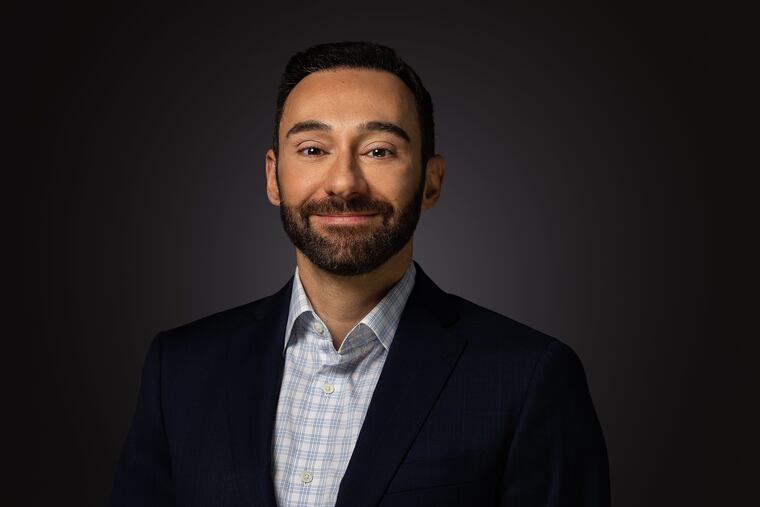
All eyes were on the envelope in Kevin Carolina’s hands, as he huddled with his parents, girlfriend, and physician mentors.
The 26-year-old from Piscataway, N.J., had dreamed about this moment since high school, when he learned there were fewer Black men entering medical school in 2014 than 1978.
Now the fourth-year student at Thomas Jefferson University’s Sidney Kimmel Medical College was seconds away from finding out where he would begin his career as a doctor and an advocate for expanding the ranks of Black men like himself in medicine.
He ripped through the envelope’s seal: “Maryland,” he said, to an eruption of cheers.
Carolina had matched into the University of Maryland Medical Center’s internal medicine residency in Baltimore.
His father, Wayne, cried as they hugged. “Seeing my dad cry, that’s how I know it’s something,” Carolina said.
Becoming the first doctor in his family made the experience more emotional, Carolina said.
With what he called “tears of joy” running down his face, Carolina joined hundreds of his Jefferson classmates and more than 38,000 aspiring doctors selected for U.S. residency programs on Friday, according to data released by the National Resident Matching Program. In an annual tradition known as Match Day, fourth-year medical students simultaneously learn where they’ll complete residency training after graduation.
In Carolina’s words, the event is “exciting, nerve-wracking, life-changing.”
Carolina went into the process hoping to match into internal medicine residency at Jefferson. It was where he had found mentorship from service-minded physicians and built a community advocating for minorities in medicine.
But whether in Philadelphia or in Baltimore, what mattered to him was becoming the physician he felt he had “been called to be.”
Carolina exchanged hugs with all the supporters gathered to watch him reach this milestone, then he turned to his mother, Dorothy.
“That’s where God wants you,” she told him.
“That’s where God wants me,” Carolina replied.
Black men in medicine
Growing up, Carolina thought he’d follow in his mother’s footsteps and go into nursing.
He admired the way she cared for people — whether assisting people in the grocery story or making sure people got their flu vaccine.
Carolina had noticed how the lack of diversity in medicine could contribute to poor health outcomes in minority communities, including his own.
His grandfather, who had diabetes, didn’t trust doctors, and would instead try to manage his condition on his own.
That led to toe amputations, and ultimately his death from diabetes-related complications when Carolina was a sophomore at Rutgers University.
Carolina’s barber, who was also a Black man, thought COVID-19 was a conspiracy.
During the pandemic, he ended up in the hospital on a ventilator, “fighting for his life,” he said.
Those situations showed Carolina, “how deeply ingrained a lot of this mistrust is,” he said.
He enrolled at Jefferson’s medical school in 2022 and the next year founded Pennsylvania’s first chapter of Black Men in White Coats, a national organization that aims to increase the number of Black men in medicine.
While a couple doctors at Jefferson had wanted to start a school chapter before, they hadn’t had the number of students they needed.
That was until Carolina’s year, when he and several of his classmates worked together to form the organization.
The group mentors Black men interested in the field, assists with community screening events, and has hosted a clothing and food drive.
Clock strikes noon
Jefferson’s Match Day ceremony began in the auditorium with speeches from faculty and student leaders.
“The opportunity to serve, learn, and grow awaits you,” Said Ibrahim, dean of the medical school, said to students.
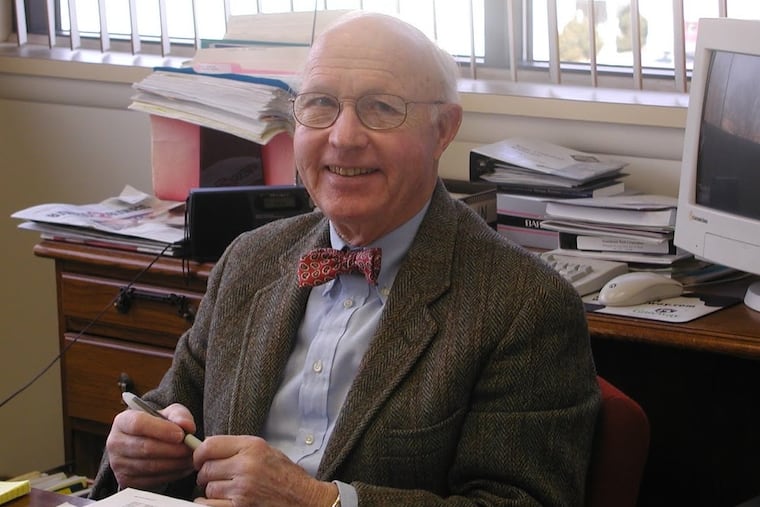
During the superlatives section that followed, Kevin Carolina — sporting a signature bow tie — was voted “Best Dressed.”
Faculty distributed the envelopes to students around noon — when they were finally allowed to learn their results.
The results are closely watched to track the future of the physician workforce.
At both Jefferson’s Sidney Kimmel Medical College and Penn’s Perelman School of Medicine, 35% of students are staying in Pennsylvania.
That figure’s higher at Temple in North Philadelphia, where 45% matched in the state and more than a quarter are staying in Philadelphia.
» READ MORE: On Match Day, Temple med students share tears, hugs, and sighs of relief
In South Jersey, primary care specialties were especially popular at the Cooper Medical School of Rowan University, where more than half the class matched into those residencies.
Thirty-two percent of Cooper’s graduates will remain in New Jersey, alongside nearly half of Rowan-Virtua School of Osteopathic Medicine’s graduates.
The Philadelphia College of Osteopathic Medicine said family medicine remained a top specialty for its graduates, while interest in Physical Medicine & Rehabilitation and psychiatry has been rising.
Serving the community
When Carolina graduates with his medical degree in the spring, he looks forward to helping his community parse out misinformation and build trust in medicine.
As part of his instruction at Jefferson, he and his classmates spoke with the descendants of the Tuskegee syphilis experiment — an unethical study conducted between 1932 and 1972 in which researchers withheld treatment from hundreds of Black men with the infection.
That history informs how doctors should approach certain populations, he said.
Carolina ultimately wants to continue his studies post-residency to become a cardiologist.
He found a role model while at Rutgers, when an interventional cardiologist from Mississippi came to speak with students about screenings and health education. The doctor, who was also a Black man and Rutgers alum, talked about how his work promoting the preventive measures substantially reduced limb amputations from peripheral artery disease.
It’s a common complication seen in patients with diabetes, which disproportionately affects Black Americans.
The summer after his first year of medical school, Carolina interned with the Jefferson Community Health Collaborative to assist with health screening events.
He saw how such outreach can help patients feel comfortable seeking care — and hopes to be someone that minority patients in particular can relate to through shared experiences.
“It’s really just taking the time to sit down and talk with people,” Carolina said. “Because unfortunately, medicine can be another language that needs to be deciphered.”