Philadelphia scientists will receive more than $6 million in funding from RFK Jr.’s new autism research center
Children's Hospital of Philadelphia, University of Pennsylvania and Drexel University research teams were among 13 funded nationally by Health Secretary Robert F. Kennedy Jr.’s autism data initiative.

When Judith Miller heard that President Donald Trump’s administration was making available $50 million in new funding for autism research, she scrambled to channel her three decades of experience studying the condition into a proposal.
Miller, a psychologist at the Children’s Hospital of Philadelphia, joined dozens of other scientists across CHOP and the University of Pennsylvania on a daily call at noon to exchange ideas on what datasets to use and research questions to ask.
At one point, there were 30 people involved in discussions, with experts on genetics, environmental exposures, prenatal history, policy, services research, and basic science.
They specifically needed a project idea on the causes of autism, with an emphasis on “exposomics,” or the impact of environmental exposures on people’s health.
Exposomics is a key focus of Health Secretary Robert F. Kennedy Jr.’s new Autism Data Science Initiative, announced in May and housed under the National Institutes of Health. Kennedy has repeatedly vowed to find the “environmental toxins” that he believes are behind the rising rates of autism in the United States. This research center will leverage large private and public datasets to advance his mission to uncover all possible causes of autism.
Scientists were initially concerned about what research the center would choose to fund, said Kristen Lyall, an autism researcher at Drexel University.
Kennedy’s $50 million pledge to study the causes of autism followed the new administration’s unprecedented cuts to federal funding for academic research, which included a wide range of promising autism studies.
A longtime anti-vaccine activist, Kennedy has also claimed that vaccines cause autism, which is not supported by scientific evidence. The renewed discussion around this topic made some scientists concerned that this new institute would shovel research dollars toward redundant studies, Lyall said.
But she was pleased to see the grants announced last week awarded to researchers who have dedicated their lives to studying autism. Her project and Miller’s CHOP-Penn project were among the 13 to receive funding.
“I think everyone is eager to support rigorous science and glad to see it moving forward,” she said.
The original call for proposals sought those that would study “contributors to autism diagnosis and increases in prevalence of the condition” and effective interventions and services. The chosen projects look at a wide-ranging set of environmental factors, including pesticides, air pollutants, and maternal nutrition and diet.
Miller’s project was awarded $4.3 million to analyze a comprehensive set of genetic and environmental factors using a dataset of more than 100,000 children.
Lyall’s project received more than $2 million to study how diet, chemical exposures, and maternal pregnancy complications could contribute to the development of autism.
“We are really impressed with the scope of the projects and the teams that were awarded the funding,” Alycia Halladay, chief science officer at the Autism Science Foundation, told Reuters.
Beyond genetics
Numerous studies have established genetics as the primary contributor to a person’s risk of autism, with estimates suggesting the condition is between 50 and 90% heritable.
However, these studies don’t always take into account how the environment could impact genetic risk.
“We know even when conditions are 100% genetic, environment still matters,” Lyall said.
She gave an example of a condition not related to autism: a rare metabolic condition called phenylketonuria is 100% genetic and “can be entirely remediated” by avoiding eating the amino acid phenylalanine.
Autism is not that simple, she emphasized. There is no single cause, research suggests, but rather a confluence of factors that together could contribute to the development of the condition.
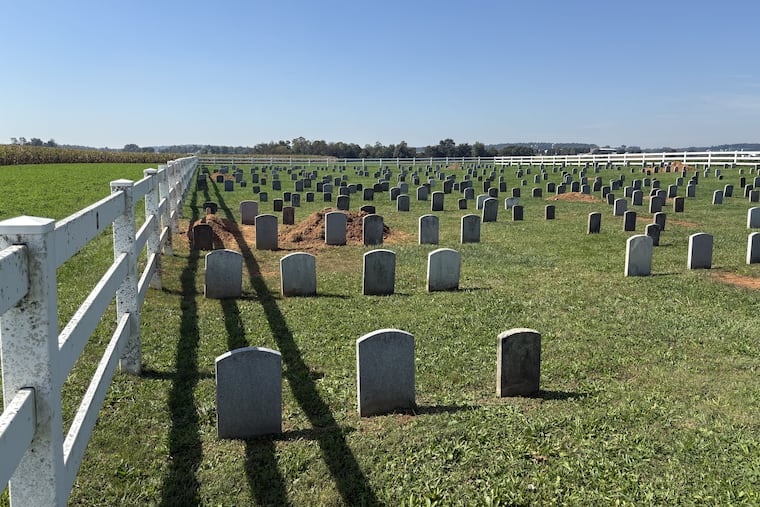
» READ MORE: Autism does exist in the Amish, says expert who works with Lancaster community
Lyall has previously published research that found associations between nongenetic factors and risk of autism, looking at prenatal exposure to air pollution, the prenatal diet, certain chemical exposures like pesticides, and pregnancy complications like gestational diabetes.
Her project will dig deeper into these factors, particularly the prenatal diet and exposure to common chemicals. She’s using data on up to 10,000 pairs of mothers and children from a large U.S. program called the Environmental influences on Child Health Outcomes (ECHO) consortium.
Another angle of her project will be understanding the underlying biology of how these exposures could be linked to a higher risk of autism.
Since “correlation is not causation,” she said, they will need to validate whether the factors are actually causing autism, and not just an unlucky convergence.
She’s working with Wei Perng, an associate professor at the Colorado School of Public Health, to use a technique called metabolomics to study blood samples collected during pregnancy.
One dietary factor Lyall’s particularly interested in is a mother’s intake of polyunsaturated fatty acids such as docosahexaenoic acid, or DHA.
DHA is important for brain development, especially in the latter half of pregnancy. She thinks dietary factors could interact with other exposures, such as air pollution or pesticides, to impact biological pathways related to brain development.
That, combined with the strong genetic component to autism, could then impact one’s risk, she hypothesizes.
“What can we learn when we put these puzzle pieces together and look at this whole set of factors?” Lyall said.
She’ll also be studying nutritional deficiencies that children with autism could be experiencing and how those could impact their health.
Her project is slated to take two years. The maximum length allowed by the initiative is three years, “which is not the norm,” Lyall said, adding that most could probably be five-year long projects.
“It will be very ambitious to do the amount of work that we propose, but we have a great team to do it and a really great dataset that’s ready to go,” she said.
Building a prediction model
Miller’s project is slated to take three years, and officially commenced on Monday.
She’s utilizing a dataset collected at CHOP that includes 4,000 children with autism and 100,000 children without. Her team will evaluate hundreds of genetic and environmental variables to try to understand the statistical contribution of each to one’s risk of developing autism.
They will be open-minded in what variables they look at. For example, medications the mother was on during pregnancy, the diagnostic criteria that were used, and access to early intervention could all be included.
Vaccines are another variable they will consider. While there’s a lot of research showing that vaccines don’t cause autism, Miller said, it is still a concern among some members of the public.
“We should include that as a variable and look at that, so we can contribute even more science about it,” she said.
Kennedy himself, through the anti-vaccine group he founded, Children’s Health Defense, had previously pushed claims that vaccines cause autism, and, most recently, backed Trump in linking Tylenol use during pregnancy to autism, a claim that experts decried.
The CHOP and Penn researchers aim to come up with a model that can be used to predict risk of autism. They expect several models may emerge from their work in collaboration with other scientists, clinicians, and people with autism and their family members.
Miller said her team’s research could eventually be applied to other disorders like asthma, ADHD, rare diseases, and cancer.
“This is going to be a unique Philadelphia resource that I think is going to both teach us a lot about autism, but also be a resource for studying a lot of other conditions,” she said.