Have that nasty stomach bug? It hit one South Jersey school hard. Here’s how to avoid it.
Norovirus is highly contagious and can spread through contaminated surfaces and food. Proper handwashing and disinfecting can contain the spread.
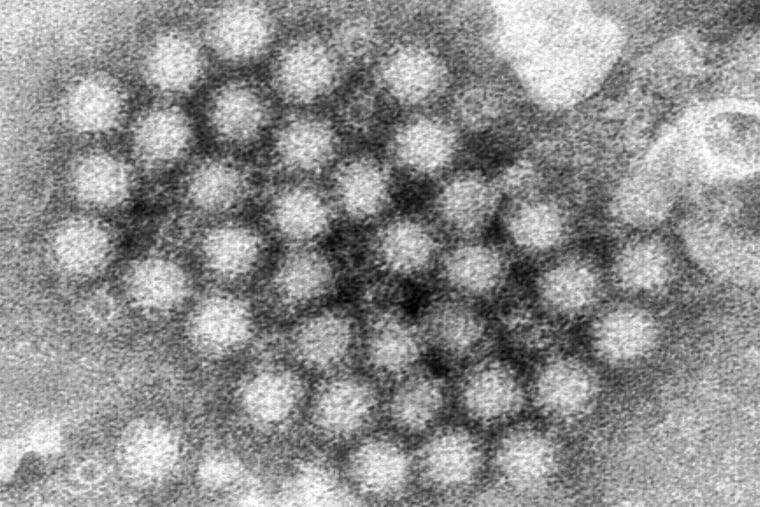
A South Jersey school was hit with an outbreak of gastrointestinal illness last week, as cases of norovirus, a common stomach bug, recently surged nationwide.
Camden County officials could not definitively say the illness was norovirus, since no lab testing has been done. However, they noted it was a candidate.
“The symptoms, infectious period, and incubation periods seem to be consistent with norovirus,” said Caryelle Vilaubi, director of the Camden County Department of Health and Human Services.
The school in Haddonfield, which officials declined to identify further, first reported a spike in gastrointestinal symptoms among students on Dec. 10, followed by an increase the next day.
Cases have since fallen dramatically, Vilaubi said, as outbreak control measures — including use of disinfectants, sending sick students home, and promoting proper hand hygiene — have been put into place.
They’re hoping to end the outbreak in the school community as early as next week, if they can go without new cases for four days, she said.
A variety of sources can cause gastrointestinal illness, including viruses, bacteria, and parasites. Norovirus is one of the common culprits this time of year.
“We typically see a spike from November through April, not just in Camden County, but throughout the state, and often throughout much of the country,” Vilaubi said.
The highly contagious virus can spread through close contact with an infected person or with contaminated food, water, and surfaces. Symptoms usually include nausea, vomiting, diarrhea, and stomach pain, and start 12 to 48 hours after exposure.
Most people will feel better after one to three days.
Here’s what to know about the virus:
How can you protect yourself against norovirus?
Norovirus is a “hardy and resistant virus,” Vilaubi noted, making it especially hard to clean off. Hand sanitizers are not effective against it.
People should instead wash their hands frequently with soap and water, and use bleach-based disinfectants (or any Environmental Protection Agency-registered disinfecting product against norovirus) on hard surfaces, according to the Centers for Disease Control and Prevention.
How long does norovirus stay on surfaces?
Norovirus can survive on surfaces for weeks.
It is also relatively resistant to heat, able to survive temperatures up to 145°F.
People should make sure to regularly disinfect high-touch surfaces such as doorknobs, keyboards, and light switches.
How long does norovirus last in adults?
Though people will usually feel better after one to three days, they are still highly contagious for a few days after.
“If your child begins to show symptoms, please keep them home until at least 48 hours after symptoms resolve to prevent further spreading the illness,” Virginia Betteridge, liaison to the Camden County Department of Health and Human Services, said in a Dec. 12 news release.
Those infected with norovirus should avoid contact with others as much as possible during this period.
How to treat norovirus at home?
There is no cure or specific treatment for norovirus. The advice generally is to let the virus run its course.
To ward off dehydration, people should make sure to drink lots of fluids to replace what’s lost from vomiting and diarrhea. Taking small sips of water and sucking on ice chips may be easier on an upset stomach.
People can also consider drinking clear broths, noncaffeinated sports drinks, and oral rehydration solutions, which are available over the counter.
Drinks that contain a lot of sugar, including soft drinks and certain fruit juices, can make diarrhea worse and should be avoided.
How does norovirus spread from person to person?
Norovirus is considered highly contagious, as only a small amount of virus is needed to infect someone.
People contract it by accidentally touching tiny particles of stool or vomit — where the virus is primarily shed — from an infected person and getting them in their mouths.
These particles easily contaminate hands, surfaces, food, or water.