Penn launches Lynch syndrome center as cases of the cancer-risk condition have nearly tripled
An estimated 95% of people who have Lynch syndrome, a genetic condition that raises the risk of several cancers, are undiagnosed.
Nearly 1,000 patients seeking care at Penn Medicine have a genetic condition known as Lynch syndrome — a diagnosis linked to higher risks of several cancers.
That’s almost triple the number diagnosed with the condition six years ago. The health system expects to continue identifying new cases with the launch of a comprehensive center dedicated to raising awareness of the condition and advancing research, education, and patient care.
Lynch syndrome affects one in 279 people in the U.S., increasing the lifetime risk of cancers throughout the body — particularly in the colon and lining of the uterus.
Yet an estimated 95% of those who have the condition are undiagnosed.
“Lynch syndrome is one of the most common hereditary cancer syndromes that many people have never heard of,” said Jessica Long, a genetic counselor and director of education and outreach at the center.
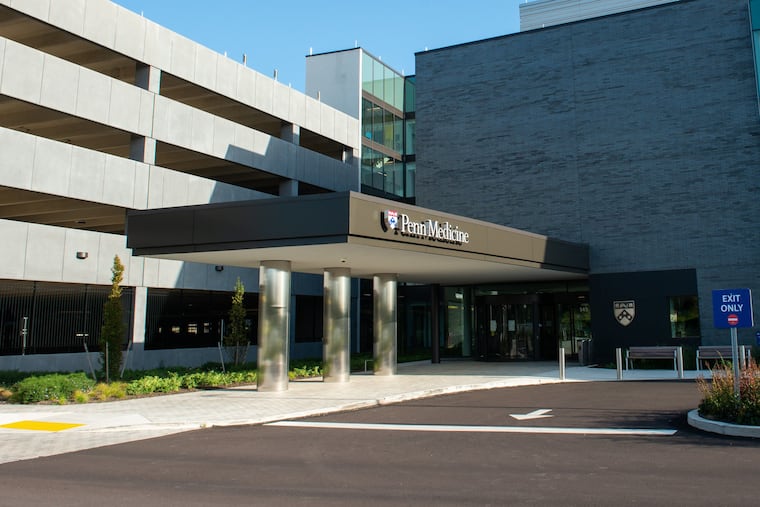
A $10 million gift from philanthropists Jeffery and Cynthia King, and Jason and Julie Borrelli helped to establish the King Center for Lynch Syndrome, which officially opened late last year at the Abramson Cancer Center in West Philadelphia.
Jeffery King, a real estate investor, didn’t discover he carried the mutation for the condition until his late 60s, after being diagnosed with his second Lynch syndrome-related cancer.
He died last August at age 80 after having “cancer and heart disease,” according to an online obituary.
The King Center, one of the few dedicated centers in the country, sees patients coming from all over the East Coast.
Experts at the center help patients manage their cancer risks with specific recommendations for screenings, risk-reducing surgeries, or medications.
One medication frequently used in Lynch syndrome is aspirin, according to Bryson Katona, a gastroenterologist and the center’s executive director. Data has shown that regular aspirin use can substantially lower colon cancer risk by up to half in patients with the condition.
Depending on the mutation a patient has, their lifetime colorectal cancer risk can range from 30% to 74%.
“If you can cut that in half, that’s a really big risk reduction for them,” Katona said.
The center’s research efforts extend outside the clinic to improve cancer screening strategies and preventive treatment.
Long stressed that having Lynch syndrome does not guarantee that cancer will develop.
“Genetics is not destiny, but it tells us whether someone is at increased risk,” she said.
Why the uptick in diagnoses?
Lynch syndrome is caused by mutations in so-called DNA mismatch repair genes that normally instruct the body to produce proteins to identify and correct errors in the genetic code.
If you think of DNA as a string of text, they’re like “the body’s spell-checker that goes in and repairs those genetic typos that we acquire over time,” Long said.
When mutations interfere with these genes, cells have “a greater chance of continuing to accumulate more DNA damage,” she said.
This causes an increased chance of developing certain cancers.
It’s become more common for Penn Medicine oncologists to evaluate cancer patients’ tumors for the mutations, which has led to an increase in Lynch syndrome diagnoses.
That in turn has led to those patients’ relatives getting tested too. If one parent has the condition, their child has a 50% chance of inheriting it.
“We are picking up more people with Lynch syndrome than ever before,” she said.
It’s also become much more affordable to get a genetic test. Commercial labs now bring costs down to $250, and many patients, depending on their insurance, pay $100 or less, Long said.
A personal story
For months last year, a mysterious number kept calling Dennis Massimo.
He picked up the phone last April, “with a little bit of attitude,” thinking it was a scammer or salesperson, he said.
But the person on the other line insisted he had information to share about a medical test result.
Still skeptical, Massimo told him to email the results.
A couple of minutes later, he received an email from the Penn Medicine BioBank, a repository for health-related data used for research.
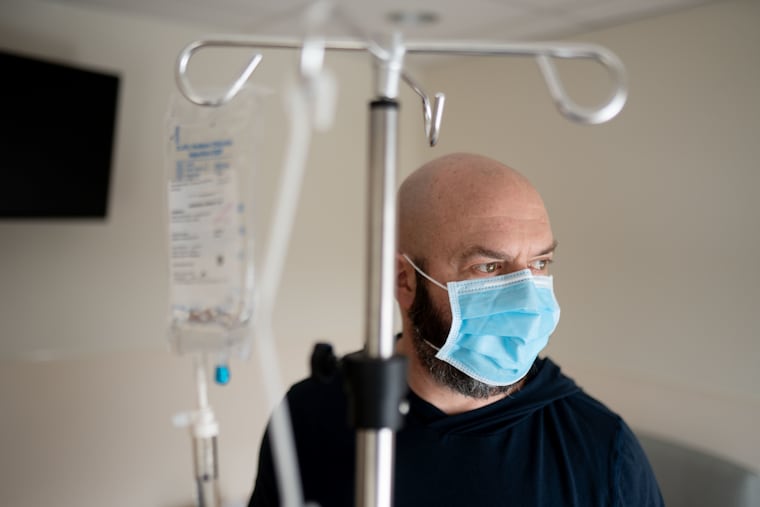
Massimo, a construction estimator and father of three from West Chester, learned he had a type of Lynch syndrome associated with a 52% chance of colorectal cancer.
The next month, he got a colonoscopy at age 42 — three years before the first routine screening is recommended.
He woke up from his procedure in a room by himself with a box of tissues on hand.
“Oh no, I’m in the grieving room,” Massimo recalled thinking.
He learned he had stage 3 colorectal cancer.
He underwent surgery to remove half his colon, followed by chemotherapy and immunotherapy.
His last day of chemotherapy was on Christmas morning, and he’s expected to finish immunotherapy at the end of this summer.
At Penn, he’s now scheduled to get yearly colonoscopies and other GI tests.
Massimo said he feels like he’s in “the best spot” in the world for somebody to have Lynch syndrome, living near the King Center.
His recent scans were clean, as was a ctDNA test that looks for tumor DNA in the blood.
The King Center also arranged for his whole family to come in for genetic tests. His sisters, parents, aunts, and uncles all tested negative, which signified that Massimo was the first in his family to carry his particular mutation.
His school-aged children are still considered too young for testing, but Massimo is grateful his family knows about the issue. And that the BioBank alerted him before his aggressive cancer reached stage 4.
“I got a phone call that stopped it all,” he said. “I mean, how many people get that lucky?”