Philly biotechs are getting a small funding boost from a new city program, but it doesn’t replace ‘America’s seed fund’
Congress failed to reauthorize the Small Business Innovation Research (SBIR) and Small Business Technology Transfer (STTR) programs last fall. More than a dozen local biotech companies are affected.
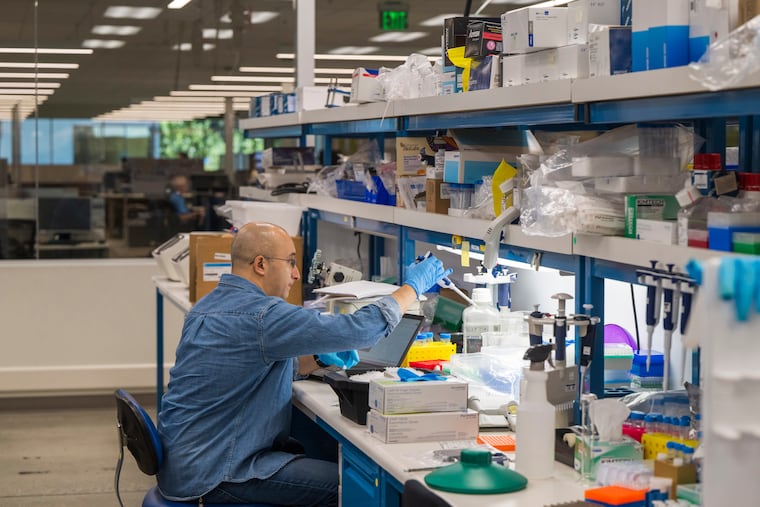
Philadelphia biotechs are worried about losing a key source of federal funding for early-stage innovation.
Known as “America’s seed fund,” the Small Business Innovation Research (SBIR) and Small Business Technology Transfer (STTR) programs help small companies develop innovative technologies. In recent years, they’ve allocated $4 billion annually to more than 4,000 businesses nationwide. However, after Congress failed to reauthorize the decades-old programs last fall, their funding officially expired in September.
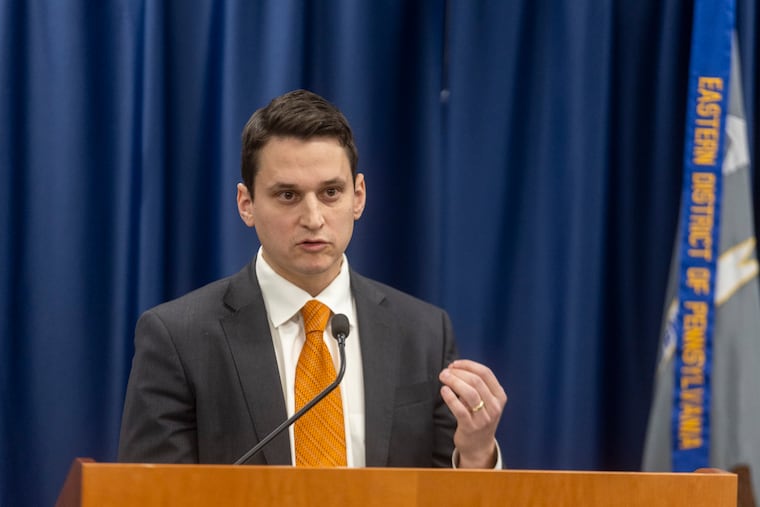
The fallout has affected more than a dozen local life sciences companies, raising concerns about whether they can maintain staffing and make up for the delay in funds promised months ago, said Heath Naquin, senior vice president of innovation and new ventures at University City Science Center, a nonprofit commonly known as the Science Center that provides startup support.
For many, staffing and financing plans could be disrupted by funding shortfalls, as companies either haven’t gotten their payment yet or can’t get their funding for next year approved, he said.
An exact figure is unknown, but Naquin estimated that some affected companies could be short up to a million dollars for the year.
At the same time, the city of Philadelphia launched last spring a new program that provides additional funding to those who have already earned SBIR/STTR grants. The 21 awardees who will share $450,000 from the city were announced publicly in January.
The city money is earmarked for technical assistance, such as the cost of attorneys, marketing, and anything else needed for commercialization, while SBIR/STTR money normally goes toward research and development.
“There is no overnight solution to SBIR right now,” said Tiffany Wilson, chief executive officer of the Science Center, which is partnering with the city to implement the program. “It’s just another layer of uncertainty that we’ve got to navigate through.”
New city-led program
Pennsylvania is not one of the dozens of states that offer matching programs to supplement the federal SBIR/STTR funds.
To fill that gap, Philadelphia launched its new city-level program, which is one of the first in the nation and the only one of its kind in the state.
The idea was to boost companies already vetted by the federal government that could still benefit from smaller amounts of money.
“Life science companies need millions of dollars, but this was a way that we could help Philadelphia-based companies thrive,” said Rebecca Grant, who runs the program and serves as senior director of life sciences and innovation for the city.
This year, the city offered funding to all eligible applicants.
The $450,000 is doled out in three tiers: companies with the earliest stage grants received $20,000 while those in the next phase received $40,000. Those whose grants were no longer active received $2,500.
The program is still a pilot, and city leaders hope to run it on an annual basis, Grant said.
Naquin has heard from at least three companies in the last six months that are formally considering moving to Philadelphia as a result of the program’s existence.
» READ MORE: Why Philadelphia loses promising biotech firms to Boston, San Francisco, and San Diego
Pivoting
The SBIR/STTR grants are valuable to early-stage biotechs for two reasons: They provide funding without asking for ownership or equity in return, and signal to potential investors that the company is less risky, Wilson explained.
The programs traditionally have been reauthorized every few years without major lapses. However, recent debates over reforms have created a deadlock.
Policymakers from both parties want to address companies that are repeatedly going back for more funding, concerns over foreign involvement, and how to better support commercialization, Naquin said.
“We’re still in a waiting game,” he said, adding that the programs were not reauthorized in the latest government funding bill passed this week.
With the SBIR/STTR pipeline stalled, the Science Center has had to pivot. Federal support for science has been particularly precarious under President Donald Trump’s second administration, with widespread cuts and pauses to millions of dollars worth of programs and grants.
Late last year, the center launched an initiative to help startups figure out which agencies still have available funding opportunities.
The aim is to help them better shop around for the grants that they can apply to, Wilson said.