Giuliani is pursuing healthcare through 9/11 program, lawyer says
The former New York City mayor, who is improving after a serious case of pneumonia, suffers from a respiratory condition linked to his exposure to toxins at ground zero, his spokesman says.
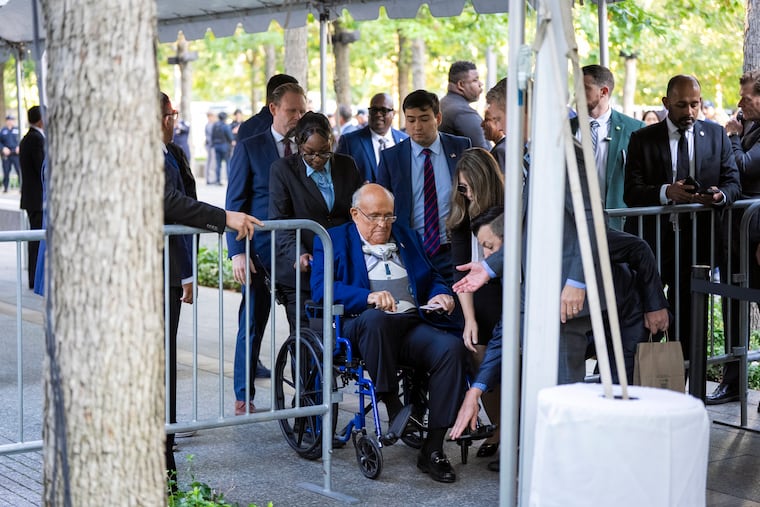
Rudy Giuliani, the former New York City mayor who has been diagnosed with pneumonia, is applying for free medical care through a federal program for emergency workers and others exposed to toxins following the 9/11 terrorist attacks, according to his lawyer.
More than 152,000 people have been enrolled in the initiative, the World Trade Center Health Program, which pays for medical research and provides free medical care to people affected by the terrorist attacks. Beneficiaries have access to doctors who specialize in 9/11-related illnesses, and the patients don’t face copayments or deductibles.
“I’m proud to represent him and get him the healthcare he deserves,” said Michael Barasch, an attorney who represents Giuliani and many clients who were exposed to toxic dust from the collapse of the World Trade Center.
The federal health program paid out more than 600,000 medical claims in the past year, at a cost of nearly $350 million. Many of the claims relate to cancer, while others covered treatments for respiratory ailments.
Getting approval to receive care through the healthcare fund could allow Giuliani or his family members to seek further compensation through a separate fund for 9/11 victims.
Giuliani in recent years has struggled with financial burdens. Last year, he was ordered to pay $1.3 million to lawyers who represented him in criminal investigations. He has sought to declare bankruptcy, but in 2024, a judge dismissed the case, saying that Giuliani had failed to “provide the financial transparency required of a debtor in possession.”
Giuliani, who led New York through the 9/11 attacks and supervised the work of emergency medical workers as they responded to the catastrophe, is more closely associated with ground zero than any other living politician. His attempt to enroll in the World Trade Center Health Program is a full-circle moment, nearly 25 years after the attacks.
When the first tower toppled, Giuliani was two blocks away. As he walked north, ash dusted his head and shoulders.
In the aftermath, he oversaw the cleanup of the collapsed World Trade Center and made frequent visits in the first three months after the attack. His leadership was hailed. But in the years that followed, examinations of his time in office showed that in the push to reopen the financial district, his administration overlooked or played down the health dangers and environmental hazards near ground zero.
Giuliani rarely wore a mask at the World Trade Center site. And his administration rarely forced cleanup workers to wear masks or respirators, the New York Times has reported.
In recent days, Giuliani, who turns 82 this month, was placed on a ventilator in a Florida hospital as he battled pneumonia and struggled to breathe. He was in critical condition, and, according to Maria Ryan, a former hospital administrator and close companion of the former mayor, a priest visited him Sunday evening.
But after receiving medical care, Giuliani was able to breathe on his own, and his health has continued to improve, according to a person with knowledge of the former mayor’s condition who spoke on the condition of anonymity out of respect for Giuliani. He has been moved out of the intensive care unit and is no longer in critical condition, but is expected to remain in the hospital for the time being.
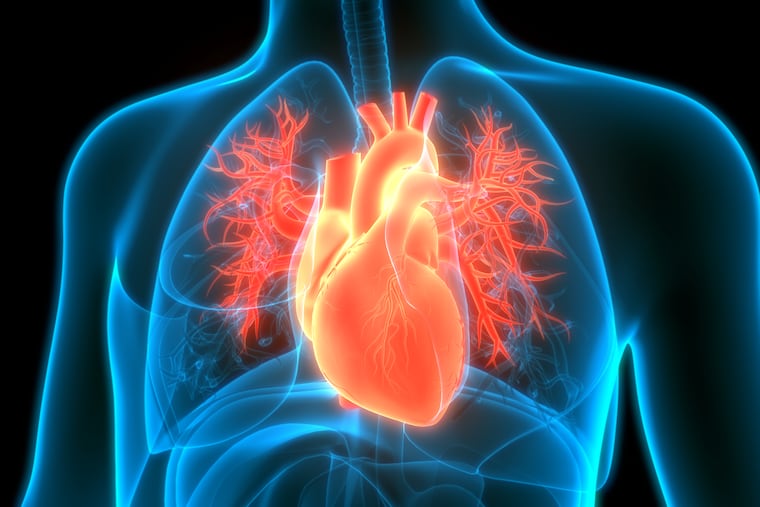
On Monday, a spokesperson for Giuliani, Ted Goodman, said Giuliani had been diagnosed with restrictive airway disease, a condition he said was linked to the former mayor’s proximity to ground zero on the day of the 9/11 attacks and in the days and weeks afterward. The condition can make respiratory illnesses more threatening, Goodman said.
“Mayor Rudy Giuliani ran toward the towers to help those in need,” Goodman said.
It is unclear whether Giuliani has publicly mentioned being diagnosed with restrictive airway disease. But in recent years, his lawyers have alluded to his potentially having lung disease related to toxicity from the attacks.
In an interview Tuesday, Barasch said that he was trying to get Giuliani enrolled in the federal health program.
“I’m representing him to get him into the World Trade Center Health Program so he can enjoy the same benefits of healthcare at no cost to people who have been certified with 9/11 illnesses,” Barasch said.
Congress authorized the World Trade Center Health Program in 2010. In the years leading up to the legislation, Giuliani was largely on the sidelines as New York politicians sought to get the federal government to pay for medical care for sick World Trade Center workers. But by 2010, Giuliani was an advocate of the program and criticized fellow Republicans for their opposition.
The Times reported in 2007 that as the city faced thousands of liability claims connected to the terrorist attacks, Giuliani wrote to the local congressional delegation urging passage of a bill that capped the city’s liability at $350 million.
A second benefit established by the federal government, the September 11th Victim Compensation Fund, compensates people for physical harm or death related to the terrorist attacks. Being certified by the health fund as someone who suffered from a 9/11-related illness also opens the door for Giuliani or his family members to later seek compensation from the Victim Compensation Fund.
Just over 60% of the people who have enrolled in the health program have been emergency workers, while the remainder are mainly people who lived, worked or went to school in Manhattan south of Houston Street or in Brooklyn Heights.
A quarter-century after the attacks, the program continues to admit new enrollees. Between 8,000 and 11,000 new applications are received each year. Though processing can take time, most applicants are admitted.
Over the years, more than 40,000 of the program’s enrollees have been certified as having 9/11-related respiratory conditions, ranging from asthmalike symptoms to scarring of lung tissue.
“Civilians like Rudy Giuliani are entitled to the same free healthcare as the cops and firefighters,” Barasch said.
Restrictive airway disease and restrictive lung disease are broad categories that capture an array of pulmonary ailments, some experts said.
“His exposures at 9/11 certainly could have contributed to his pulmonary condition,” said Jacqueline Moline, who directs Northwell Health’s program for ailments linked to the attack on the World Trade Center and who has treated patients with 9/11-related conditions for nearly 25 years.
Many emergency workers and people in downtown Manhattan who were exposed to toxic dust and smoke when the twin towers fell — and in the weeks and months afterward — began to experience asthmalike symptoms. The dust contained toxins, including asbestos, lead, partially burned hydrocarbons and components of jet fuel.
“It was one of the most common early conditions that we saw after 9/11, and for many people it persisted,” Moline said.
Over time, other people who had been exposed to toxic dust began to develop a range of respiratory ailments. Their lungs grew stiffer and scarred, causing shortness of breath.
“It takes time for the scarring to occur,” said Marc Wilkenfeld, an occupational medicine specialist at NYU Langone Health who treats many patients with 9/11-related illnesses. “It could be 15, 20, 25 years later.”
Wilkenfeld said that people with restrictive lung or airway disease are far more susceptible to pneumonia than people with normal lung function.
“It can predispose you to pneumonia, and it can make it also harder to treat pneumonia,” he said.
This article originally appeared in The New York Times.