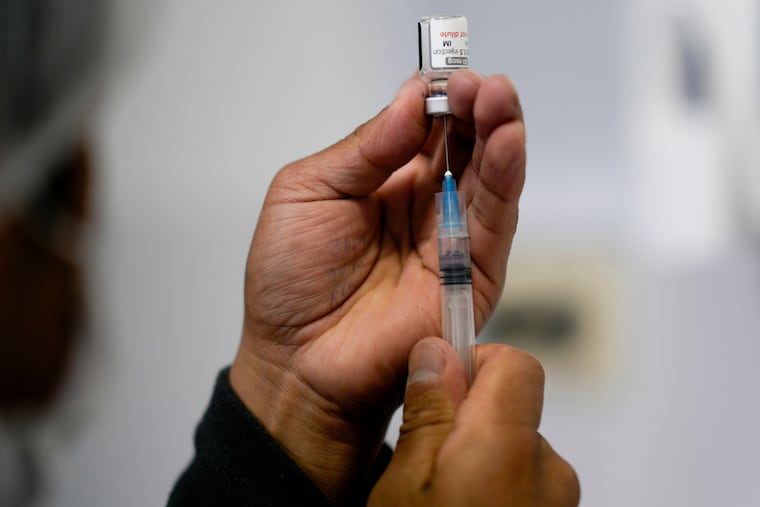
Once-daily pill could help teens with common genetic heart disease, CHOP-led study finds
Mavacamten has been approved for adults with hypertrophic cardiomyopathy since 2022, but hadn’t yet been tested in adolescents or children.

A once-daily pill could change how doctors treat teens with hypertrophic cardiomyopathy, a genetic heart condition that can block blood flow, a Philadelphia researcher has found.
Children’s Hospital of Philadelphia cardiologist Joseph Rossano led an international trial involving 44 patients ages 12 to 17 that studied a drug already approved for adults with the condition. His work showed the drug, mavacamten, could also significantly reduce blockages in youth — and possibly delay the need for surgery.
The trial’s findings were presented Sunday at the American College of Cardiology’s annual scientific session in New Orleans and simultaneously published in The New England Journal of Medicine.
Hypertrophic cardiomyopathy is a common inherited heart disease, estimated to affect one in 500 Americans. The average age at diagnosis is around 39, and most patients with the disease are undiagnosed.
The condition causes the heart muscle to thicken, which can obstruct blood flow. In such cases, the heart is strained as it works harder to pump blood out to the body. Over time, the condition can lead to heart failure, abnormal heart rhythms, and in rare cases, sudden cardiac death.
“This can present at any age, and sometimes the first symptoms could be the last symptom,” Rossano said.
Mavacamten has been approved for adults with the condition since 2022, but hadn’t yet been tested in adolescents or children. (The drug’s manufacturer, Princeton, N.J.-headquartered Bristol Myers Squibb, financially supported the study and pays Rossano as a consultant.)
In hypertrophic cardiomyopathy, the heart tends to squeeze extra hard and vigorously. By getting the heart to squeeze less strongly, obstructions to blood flow can be reduced. The medication is designed to treat the “underlying problem,” rather than just the symptoms, Rossano said.
Teens in the trial were randomly split into two groups: roughly half received mavacamten, and the others were placed in a control group taking a placebo (no active drug). Participants did not know whether they received the intervention or not, a study design that’s considered the gold standard for medical research.
They were followed for 28 weeks. The researchers compared the amount of obstruction before and after, evaluating levels of pressure in an area of the heart where healthy levels would be around 0 mmHg and above 30 mmHg would indicate an obstruction.
The mean levels before treatment in both groups were around 80 mmHg. By the end of the trial period, the teens receiving mavacamten saw these levels cut substantially with an average drop of 48 mmHg, compared to 0.5 mmHg in the group receiving no drug.
“Nothing else can do that besides surgery,” said Elizabeth Blume, a pediatric cardiologist and professor of pediatrics at Harvard Medical School who was not involved with the study or the pharmaceutical company.
Some of the children would have needed a myectomy, a surgery where doctors remove muscle that’s blocking blood flow, she said. It’s the primary treatment for young patients with severe obstruction, when medication fails to relieve symptoms.
But the effects of the drug were significant enough that they might not need surgery, at least for the time being.
“Imagine being the parent of a 12-year-old who can now take a medicine by mouth rather than have open heart surgery,” said Blume, who also leads the advanced cardiac therapies division at Boston Children’s Hospital.
Next step: longer term studies
The results suggest that surgery could be delayed for most of the kids, CHOP’s Rossano said, although he wasn’t sure whether it could be avoided altogether (that will require a longer-term study).
He saw the potential to reduce damage to the heart over time as especially exciting.
His team found that the heart was able to relax better on the drug. The heart also becomes less thick. And when the researchers looked at markers of injury in the heart, they found those in the mavacamten group showed decreased levels. Those in the placebo group had slightly increased levels.
These early findings suggested to Rossano that the drug might improve the way patients’ hearts function in the long-term.
If these effects are confirmed in a longer-term trial, doctors may want to start patients on the drug at an early age to avoid heart damage that could otherwise accumulate over time.
“If we identify patients young with this and get started on medicines early, their hearts could be much better, 10, 20, 30 years later than if they weren’t started on the medicine,” he said.
He noted a limitation of the trial was its relatively small sample size. Longer-term studies are being planned.
The incidence of adverse events was similar for the two study groups, with two patients in each having a serious event.
In the mavacamten group, one teen experienced two fainting episodes, while another had an inappropriate shock delivered by an implantable cardioverter defibrillator (ICD).
“None of those would stop me from using the medication,” said Blume, the independent Harvard expert.
Blume called the rate of serious adverse events low for a group of sick pediatric patients. To her, there didn’t appear to be any “surprises” compared to the adult trial.
Mavacamten has an FDA-required warning on its box for risk of heart failure. This rare but serious risk of the drug requires regular monitoring through echocardiograms.
Going forward, Blume also wanted to see long-term outcomes, since the study period of 28 weeks is a “very short time,” she said.
The potential effects of puberty, for example, should be monitored in follow-ups of multiyear outcomes. She would also want to see a study in younger children to see if they could benefit as well.
Blume applauded the investment of time and resources needed to figure out if there are differences in dosing and side effects for children compared to adults, describing it as a “rarity.”
“It’s really a huge milestone for pediatric cardiomyopathy,” she said.