A new program at Fox Chase helps young adults with cancer navigate unique challenges, like fertility and sexual health
Temple’s Fox Chase Cancer Center launched the first program in Philadelphia specifically designed for cancer patients ages 18 to 39 dealing with concerns about things like school and fertility.
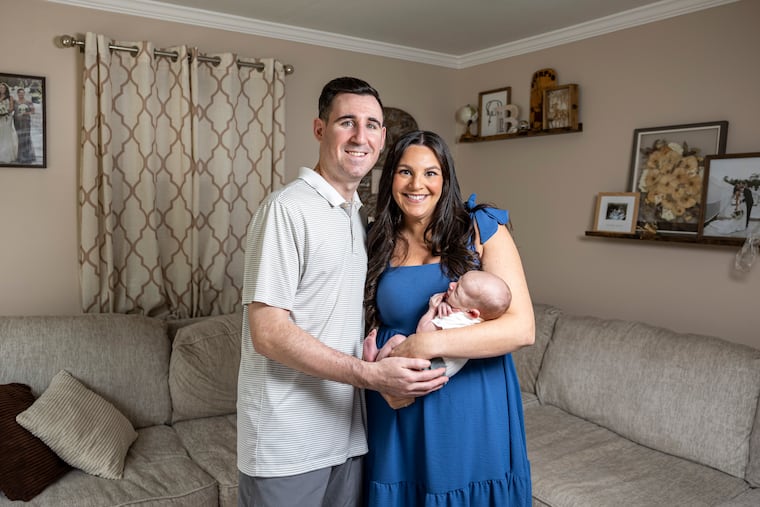
Josh Breen was honeymooning in Italy last June when he noticed a softball-sized lump under his right armpit.
He lifted his arm to show his wife, Sam, who was immediately concerned.
“We got to go to the doctor right when we get home,” she recalled saying.
Within weeks of returning to Delaware County, Breen was diagnosed with stage 3 melanoma, an advanced form of skin cancer.
Doctors at Temple’s Fox Chase Cancer Center said he would need immunotherapy, a treatment that uses the body’s own immune system to fight cancer. Breen was likely to survive after treatment, but he was also worried about how it might impact his fertility. He had been trying to conceive a baby with his wife for a year and a half.
“I spent one night crying all night because we didn’t know if we were going to be able to have babies after his cancer diagnosis,” Sam said. She learned that certain chemotherapies are toxic to sperm, and that there’s little research on how immunotherapies, a newer class of cancer drugs, could affect long-term fertility.
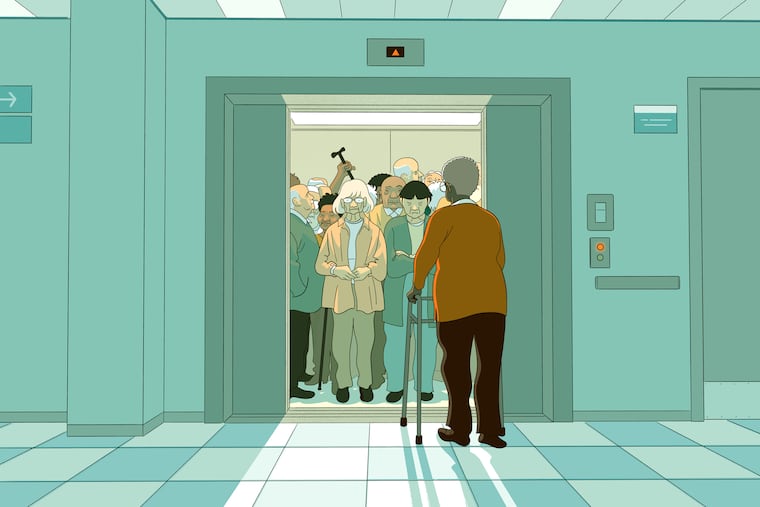
Many doctors aren’t familiar with concerns specific to cancer patients as young as Breen, who was then 30 years old. Cancer is typically diagnosed at 67, according to the National Cancer Institute.
Yet rates of young people getting diagnosed with cancer are rising.
Between 1990 and 2019, the number of cases in young adults worldwide increased by 79.1%, from 1.82 million to 3.26 million. A report from the American Cancer Society found rates in the U.S. had steadily risen by 1 to 2% each year between 1995 and 2020.
Young cancer patients like Breen can face different challenges than their older counterparts. Some are starting families. Others are still in school or starting their careers. And their needs aren’t always taken into account during treatment. In one study, only half of young adults with cancer received information about fertility preservation before starting treatment, for example.
To address the issue, Temple’s Fox Chase Cancer Center launched in January the first comprehensive program in Philadelphia specifically designed for cancer patients ages 18 to 39. The Young Adult Cancer Program seeks to guide patients through their unique concerns around work, school, fertility, sexual health, finances, and relationships.
A growing number of these programs have been cropping up around the country in recent years, and several Philadelphia health systems have started offering support groups and other services tailored to younger cancer patients.
“This disease is hitting them really in the prime of their life,” said Christopher Cann, an oncologist and executive director of the program.
His team includes psychiatrists, social workers, financial counselors, occupational therapists, and other specialists. All new patients receive a needs assessment designed to expedite referrals for specialized care.
“[The goal is] to really provide them the best care so that they can just focus on their disease and not have to worry about so many of the other components,” he added.
Having a baby after cancer
Fox Chase noticed that many of their young adult cancer patients weren’t getting referred to fertility specialists. This made them wonder if conversations around fertility risks were even happening.
It’s a topic that doctors may not think to bring up, despite its importance to many patients.
As a remedy, Fox Chase implemented a digital alert that reminds its clinicians to start a discussion about fertility preservation with young adults receiving chemotherapy or immunotherapy. Within six months, fertility preservation referrals increased by 450%.
Now, more patients have a chance to bank their sperm or eggs prior to starting treatment that could potentially be damaging.
The alert helps families like Breen and his wife, both 31, who weren’t aware of fertility preservation options ahead of treatment. With the assistance of doctors, they were able to get Breen an appointment to freeze his sperm days before his first round of immunotherapy last July.
After going through in vitro fertilization (IVF), Sam found out she was pregnant that November.
On July 1, she gave birth to a healthy boy named Logan.
“Everyone’s always like, ‘Oh, you don’t know the love for your own child until you have one.’ And it really is true,” Sam said.
Breen’s last immunotherapy treatment was in August 2024, followed by surgery that September. As of May, his CAT scans have been clear of cancer.
“I got to be here to help take care of him and support my wonderful wife next to me,” he said.
“I know others aren’t as fortunate,” he added.
Less alone
The young adults that Fox Chase sees often have aggressive cancers that are diagnosed at later stages, making them harder to treat, Cann said.
Between 2018 and 2022, the center treated 1,300 such cases, reflecting a rise in prevalence of breast cancer and cancers of the gastrointestinal system, especially. One study found adults born around 1990 have double the risk of colon cancer and quadruple the risk of rectal cancer as those born around 1950.
Experts have wide-ranging explanations for the rise, from lifestyle changes and environmental exposures to simply having better diagnostic tools that are identifying more cancers. In many cases, the causes are unknown.
Only 20% of these cancers in young adults are hereditary, Cann said, meaning people aren’t risk-free just because they lack a family history of cancer.
Gianna Cericola, a 28-year-old graphic designer from Conshohocken in Montgomery County, always ate nutritious foods and exercised regularly. Her health never bothered her until the spring of 2024, when she started having symptoms that felt like a urinary tract infection.
Antibiotics didn’t help. She went to the emergency room and then an obstetrician-gynecologist, but was told her blood tests looked good and that she was “super young.”
“I’ve heard from other young people too, their doctors will dismiss them,” Cericola said.
Months later, in October, she started passing out randomly. She returned to the emergency room, and this time, doctors performed imaging that showed a large mass in her stomach had ruptured. It turned out to be a cancer of the soft tissues, called desmoplastic small round cell tumor.
She was rushed into surgery and quickly started chemotherapy.
“All of the unknowns were really scary, like not knowing what tomorrow even brings,” she said.
She sometimes feels out of place in the waiting rooms of the cancer center, surrounded by people who are much older.
But the Young Adult Cancer Program helps her feel less alone.
Fox Chase started a support group for young adult patients that meets quarterly. They also hosted a social mixer last month, where Cericola connected with several other patients.
Meanwhile, her social worker at the center helps her find grants to apply to for financial assistance.
“It just takes that burden away a little bit,” she said.