CHOP’s Vaccine Education Center experts fear policy changes coming under RFK’s health leadership
The CDC's vaccine advisory board is reviewing vaccines after the panel was revamped by Robert F. Kennedy Jr., an anti-vaccine activist who is now the nation's top health official.
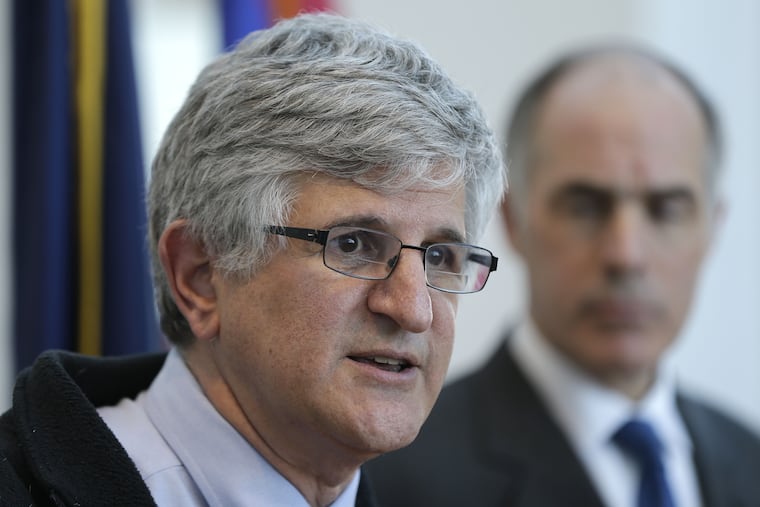
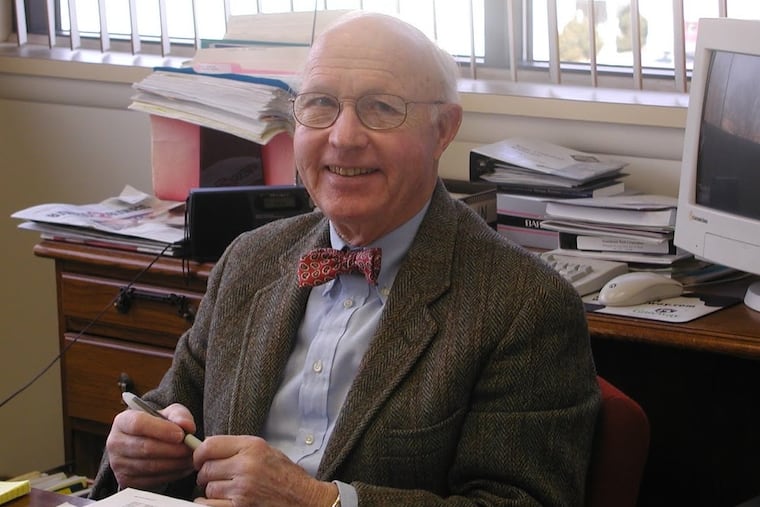
For 25 years, the Vaccine Education Center at the Children’s Hospital of Philadelphia has pushed back against scientific misinformation about vaccines, trying to refute scare campaigns that keep parents and patients from taking the potentially life-saving shots.
Founders Paul Offit, a nationally prominent scientist and pediatrician who created the rotavirus vaccine, and a researcher in his lab, Charlotte Moser, originally planned on running the center for just a few years. But each year, more anti-vaccine conspiracy beliefs gained traction.
Yet they didn’t foresee a year as devastating to their mission as 2025.
Veteran experts, including Offit and Moser, were removed from key federal vaccine advisory committees; some were replaced with skeptics under the leadership of Robert F. Kennedy Jr., a longtime anti-vaccine activist who is now the nation’s top health official.
Kennedy’s revamped advisory panel advanced an agenda that would shake up the nation’s vaccine infrastructure at the Centers for Disease Control and Prevention in Atlanta on Thursday, the first day of a two-day meeting to discuss childhood vaccines for hepatitis B and MMRV (measles, mumps, rubella, and varicella, or chickenpox), followed by a review of COVID-19 vaccines.
They voted to no longer recommend the combined MMRV vaccine for children under 4, and instead recommended the MMR and chickenpox vaccines be given separately. While this is commonly done already, the move addressed concerns about rare instances of feverish seizures associated with the combined vaccine, which was still considered safe and had ensured protections for families who may miss shots if they cannot repeatedly visit medical clinics.
The committee plans to vote on Friday on guidance changes for the hepatitis B vaccine, including whether to no longer recommend that all newborns receive a dose of the hepatitis B vaccine at birth. They may instead recommend delaying the shot until infants are at least a month old.
The panel’s leaders also shared plans to create working groups to review vaccines given during pregnancy and during childhood and adolescence.
“Anti-vaccine activists were shouting from the sideline for decades. Now, they’re making public policy,” said Offit, who had sparred publicly with Kennedy over the safety of childhood vaccines for decades.
A lawyer who founded Children’s Health Defense, an anti-vaccine advocacy organization, Kennedy has long spread false information about vaccine safety and claimed that children receive too many vaccines. He promotes giving families wide freedom to choose which vaccines to take and when.
In his role as Health and Human Services secretary, Kennedy says he favors transparency and accountability and aims to ensure vaccines meet the highest standard of safety, according to an agency statement.
Early vaccine policy decisions under Kennedy’s leadership have disregarded gold-standard science and threatened to limit access to immunizations across the country, widely drawing criticism from the medical establishment.
Several states, including Pennsylvania and New Jersey, have responded with plans to form a regional health coalition to collaborate on health initiatives and other moves designed to help protect access to vaccines — especially for COVID — when respected medical guidance differs from federal health agencies’ recommendations.
CHOP’s Offit and Moser support national efforts to form alternatives to the federal government’s primary vaccine advisory body.
They are worried about the far-reaching potential of Kennedy’s leadership to limit access to childhood vaccines and stifle vaccine development.
“We’ve been here for 25 years, and we’re still doing the same thing, which is explaining the science,” Moser said.
Responding to vaccine misinformation
If the Vaccine Education Center had a tagline, it would be “on the nerves of anti-vaccine activists since 2000,” Offit said.
The need that he saw for the center emerged from a wave of false information spreading about vaccines in the 1990s.
A report alleging a connection between the MMR (measles, mumps, rubella) shot and autism was published in 1998 by a medical journal called The Lancet. With a sample size of just 12 children — too small to draw definitive conclusions from — it fueled panic among thousands of parents. The paper was later found to contain deliberately falsified data, and was fully retracted. The lead author, Andrew Wakefield, was stripped of his medical license, and extensive research has disproved the link between vaccines and autism.
A year later, in 1999, the American Academy of Pediatrics and the U.S. Public Health Service called for the removal of a mercury-based ingredient known as thimerosal from most childhood vaccines. It had been used since the 1930s as a preservative to prevent bacterial growth in multi-dose vials.
Though there was no evidence that it caused harm, it was removed out of an abundance of caution due to concerns by activists about mercury exposure. Offit says the way the decision was presented was confusing and inspired distrust in health officials.
Numerous studies have since shown that thimerosal is safe to use in vaccines.
Offit wanted scientists to use their expertise to explain to the public why vaccines don’t cause autism, or why thimerosal wouldn’t cause harm. But he didn’t see them speaking up.
He started the center as a group of scientists who would interact with the public, media, and physicians to provide information on vaccines.
First they had a website. Then they created informational tear sheets containing facts about childhood vaccines, which doctors could pass out to patients at their practices, as well as videos, webinars, and posters.
“It just got bigger and bigger and bigger,” he said.
The anti-vaccine movement grew bigger, too, escalating with the COVID-19 pandemic.
A third of Americans didn’t trust the COVID-19 vaccine, and more than a quarter believed the false idea that the vaccines had caused thousands of deaths, surveys, and public opinion polls have found. That’s despite multiple studies showing that the COVID-19 vaccine saved millions of lives.
In this climate, Kennedy gained prominence as debates over vaccines increasingly were centered not on science, but rather politics and partisanship.
Today’s climate
This week’s meeting of the Advisory Committee on Immunization Practices, a group that advises the CDC on the use of vaccines, is seen as a potential inflection point for national vaccine policy. The original 17 members, including Moser, were abruptly removed and replaced in June with Kennedy’s own picks.
ACIP’s recommendations influence immunization schedules, insurance coverage, and access to vaccines through public programs.
Stanley Plotkin, a prominent Philadelphia-area physician and researcher who developed the rubella vaccine, is worried about bias on Kennedy’s reconstituted advisory board.
Several of Kennedy’s new appointees have a history of anti-vaccine advocacy, and have been criticized by experts for lacking strong vaccine or immunology expertise.
The group’s first move in June had been to ban thimerosal, though the mercury-based compound was already largely phased out and has long been proved safe for use in vaccines.
“I fear that that committee will make recommendations that will limit vaccination or recommend against specific vaccines,” Plotkin said.
A recent outbreak of measles that affected hundreds of unvaccinated people in Texas and killed two children is a preview of what could increasingly happen if use of vaccines is discouraged or access is threatened, he added.
Other recent moves under Kennedy-led health agencies include the CDC’s decision to stop recommending the COVID-19 vaccine for pregnant women and infants in May, despite evidence suggesting benefit to these groups.
And last month, the FDA limited the recommended use of COVID-19 boosters to people 65 or older and those at high risk of complications, and removed the emergency use authorization that made Pfizer’s shots available to healthy children under 5.
Kennedy also canceled $500 million in federal research funding for mRNA vaccine technology. This type of vaccine was first deployed during the COVID-19 pandemic and won the University of Pennsylvania researchers who developed it a Nobel Prize in 2023.
Kennedy has claimed it is unsafe and ineffective, despite scientific evidence that the vaccines are highly safe and beneficial.
Vaccine experts worry how this decision could impact the future of pandemic preparedness.
“They’re not the optimal platform for every vaccine, but for certain vaccines, they are the only ones that allow you to respond quickly to newly emerging threats, just like they did for COVID,” said Mark Feinberg, president and CEO of the International AIDS Vaccine Initiative.
He said this decision could make it difficult for future vaccine projects using RNA technology to secure investment. For manufacturers, it could seem risky to invest in a product that might not get approved or recommended even if it’s safe and effective.
“I am very concerned that companies that develop vaccines will not continue to remain committed to vaccine development,” he said.
Concern about long-term vaccine access
Offit’s biggest fear is that Kennedy’s actions could drive vaccine manufacturers out of the business entirely.
He saw it play out decades ago with a 1982 television film called DPT: Vaccine Roulette. The film highlighted claims that the pertussis vaccine caused brain damage. Pictures and videos of children with disabilities were flashed across the screen, followed by interviews with parents who blamed the vaccine.
Though this link was later disproved through scientific studies, the controversy drove the formation of anti-vaccine groups and inspired hundreds of lawsuits against vaccine manufacturers in the following years.
As a result, many companies decided it wasn’t worth the financial risk and legal pressure to develop vaccines.
“We went from 18 companies that made vaccines in 1980 to four by the end of that decade,” Offit said.
To stabilize the supply of vaccines and encourage manufacturers to reenter the market, Congress passed the National Childhood Vaccine Injury Act of 1986. It protects vaccine companies from liability by establishing a special system for compensation, where instead of filing a lawsuit, people file a claim with the program to get compensated for an injury.
However, this program protects only vaccines the CDC routinely recommends for children or pregnant women.
If more vaccines lose this protection, Offit said he fears “these companies won’t continue to make the vaccines because the civil litigation will be so onerous.”
Efforts to create alternatives
Health officials from Pennsylvania and New Jersey, along with five other states and New York City, announced Thursday that they had formed a regional health coalition to collaborate on health initiatives, improve trust in public health, and “strengthen confidence” in vaccines and “science-based medicine,” among other goals.“
The Northeast Public Health Collaborative was established informally several months ago, officials said, and met for the first time in Rhode Island in August.
“The group’s shared goal is to protect the health, safety and well-being of all residents by providing information based on science, data, and evidence, while working to ensure equitable access to vaccines, medications and services,” the collaborative said in a statement.
The group said that it’s already looking at collaborating around immunization recommendations and purchasing vaccines.
Professional societies of physicians have also released their own recommendations. The American Academy of Pediatrics, for example, clashed with the CDC by recommending the COVID-19 vaccine for all young children.
Pennsylvania’s regulatory body for pharmacists voted this month to allow pharmacists to follow the vaccine recommendations of professional medical societies.
Elsewhere, a group of national scientists launched the Vaccine Integrity Project at the University of Minnesota this spring as an effort to provide evidence-based recommendations for vaccines.
At CHOP’s Vaccine Education Center, the mission remains focused on continuing to provide accurate, science-based information, including through a podcast that launched last week.
Moser is glad to see other efforts advance, but still worries about the limits of a patchwork solution.
“We’ve lost something that was the gold standard throughout the world, and no amount of small groups working together throughout the country is going to be able to replace all of that,” Moser said.
Staff writer Aubrey Whelan contributed to this article.
Editor’s note: This story has been updated with details about the Northeast Public Health Collaborative and the committee’s meeting.