With $30 million gift, Wistar Institute opens center dedicated to developing new medicines
The Wistar Institute's new center will accelerate the process of translating discoveries into new medicines.
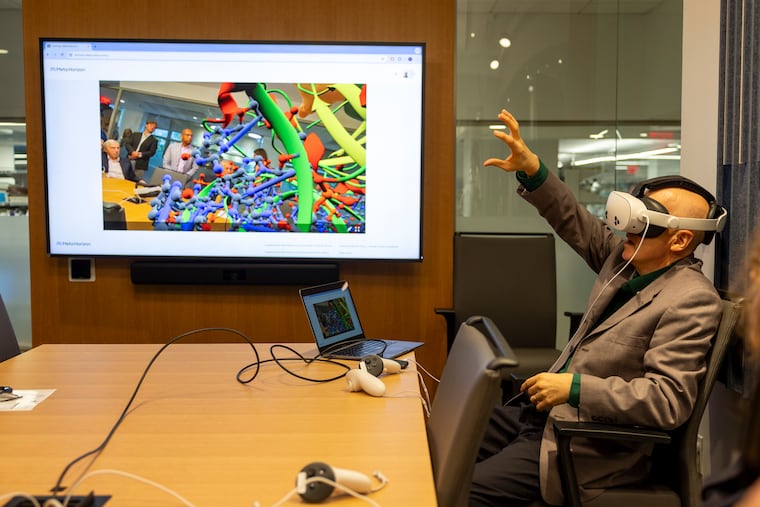
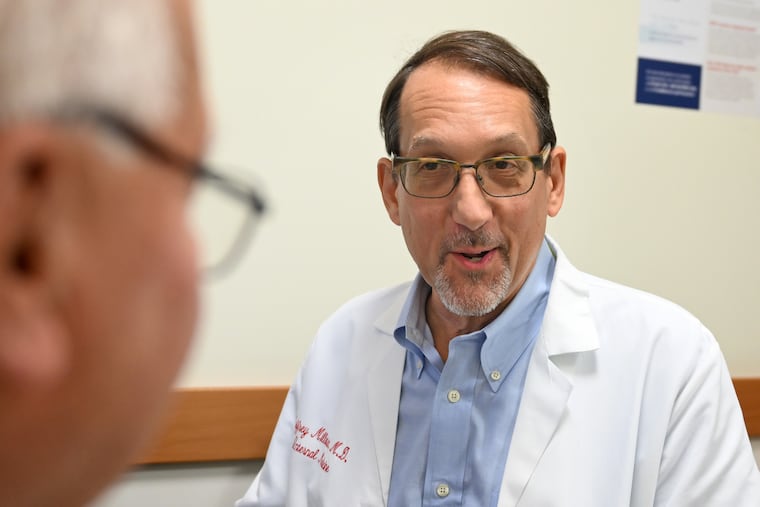
Paul Lieberman has spent the last 30 years at the Wistar Institute studying Epstein-Barr virus, a common virus that infects 90% of adults and has been linked to multiple cancers and autoimmune diseases.
He believes he’s developed a drug that could help patients.
Called a small molecule drug due to its low weight, his compound is now being put to the test in clinical trials against EBV-driven cancers. Lieberman hopes to join the long legacy of scientists at Wistar who have translated their discoveries into lifesaving medicines.
The vaccines for rabies, rubella, and rotavirus all spun out of labs at the independent biomedical research institute founded in 1892 in West Philadelphia.
“It was a really eye-opening and sobering experience to see how much is involved,” Lieberman said.
Accelerating the process of transferring discoveries to the clinic for his drug — and the 20 other promising concepts under development at Wistar — is now his other goal. Lieberman has been tapped as the inaugural director of Wistar’s Center for Advanced Therapeutics that launched this month.
Backed by a $30 million gift from an anonymous donor, the Center for Advanced Therapeutics will serve as a central resource for scientists looking to turn their research into new drugs and therapies. The center will also hire new scientists dedicated to accelerating that pipeline, which can be lengthy and sometimes unpredictable.
There are regulatory hurdles, manufacturing challenges, and a need for robust clinical data. Plus, the cost of bringing a drug to market is tens of millions of dollars, Lieberman noted.
Most Wistar faculty are in the early stages of discovery, and are interested in seeing their work lead to therapies. But “many of them really don’t know how to move forward in that process,” Lieberman said.
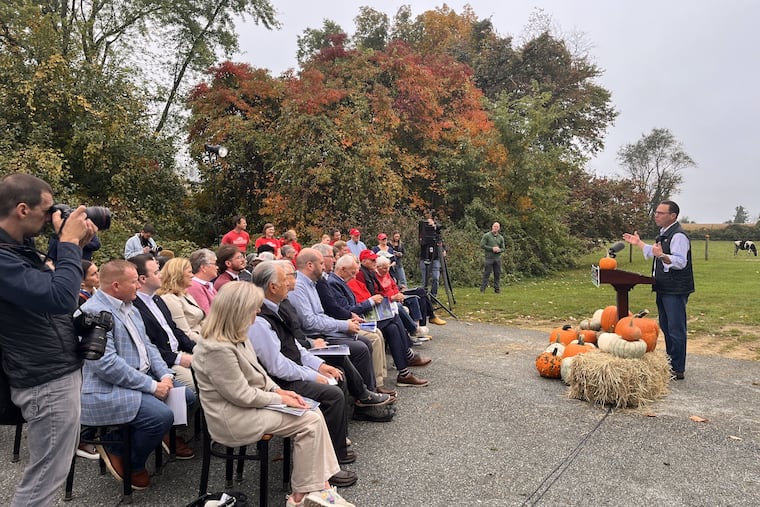
“Wistar scientists will create paths to accelerate that process, building a bridge that will span the chasm between basic research and accessible cures,” said Rick Horowitz, chair of Wistar’s Board of Trustees, at the center’s ribbon-cutting event on Thursday.
The center will have a coordinated team of experts, including those with experience in industry, business development, medicinal chemistry, high-throughput screening, and clinical practice.
They will focus on three broad areas — cancer, infectious diseases, and autoimmune diseases. In the United States, 600,000 people die from cancer every year, tens of millions are afflicted with a viral infection, and millions suffer from autoimmune diseases.
Wistar aims to advance the next generation of personalized therapies to overcome therapy-resistant cancers, as well as antiviral therapeutics for viral diseases, and immune system-dampening treatments for autoimmunity.
“Patients are waiting. Families are counting on us to make a future where cancer, infection, and autoimmunity are no longer life-defining points,” Lieberman said.
Bench to bedside
Wistar’s efforts to bring its scientific discoveries to market have traditionally gone through its office of business development.
“We have various programs that we’ve been moving forward, but slowly, because we didn’t have dedicated resources,” said Heather Steinman, senior vice president of business development at Wistar.
Now the business office will partner with the center to make that process more efficient.
Key steps in preparing a discovery for eventual commercialization include securing funding for experiments, finding investors and industry partners, and protecting the intellectual property.
The process can be high-risk, especially if it’s an early-stage discovery. A drug that’s effective against its target could later be found to be toxic to a critical organ such as the heart, for example.
Steinman strategizes with scientists to “de-risk” their discovery, which in some cases can mean outsourcing experiments to analyze the characteristics of a molecule and how the body would absorb it.
She’s currently working with Wistar scientists on small molecule drugs, DNA-based medicines, and proprietary antibodies for cancers, infectious diseases, and autoimmune and inflammatory conditions.
The new center will have a fund set aside to invest in work by academic faculty, with the goal of “carefully curating the projects that are most likely to be successful,” Lieberman said.
They will have medicinal chemists who can engineer compounds to be safe and effective, and will work with partners to communicate with the Food and Drug Administration regarding regulatory requirements.
When the time comes for a clinical trial, the center can also connect researchers with a team of physicians.
In addition to serving as a resource for other Wistar scientists, the center will produce its own research. It will hire several investigators over the next two years, with the goal of having three to four groups doing hands-on basic science research, and two to three computational scientists working on AI or informatics.
Lieberman envisions a multidisciplinary group with expertise across the areas of cancer, autoimmunity, and viruses.
“The next steps will not be easy,” said Lieberman, whose directorship is supported by a $1 million grant from the Pew Charitable Trusts. “We are confronting some of the most challenging biomedical problems at a time when support from our federal government is uncertain.”