MLB’s RBI program has begun to revive baseball among children in cities. In Philadelphia, it lacks diversity.
North Philly coaches say they have benefited from free equipment and clinics, but the program is a better fit for well-established teams that already have their foundational needs met.
In the 1980s, baseball scout John Young noticed a declining share of Black or Latino draft prospects in his hometown of Los Angeles. With funding from Major League Baseball, he started a youth program dubbed “Reviving Baseball in Inner Cities” (RBI) to address the disparity in 1989.
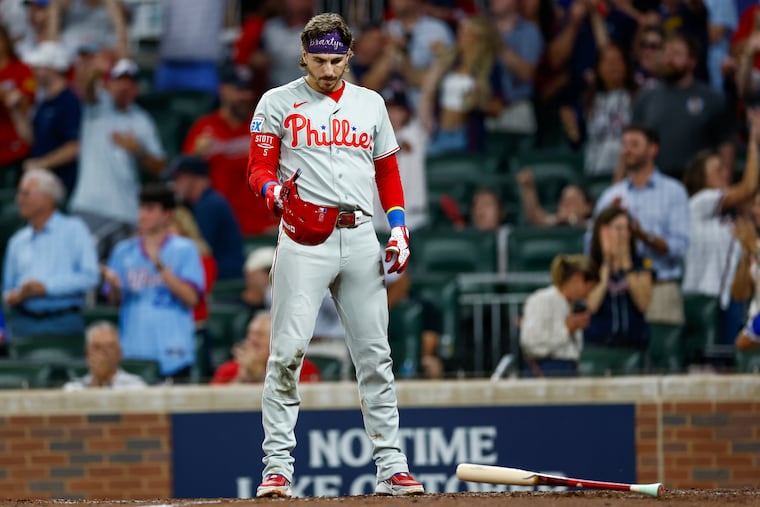
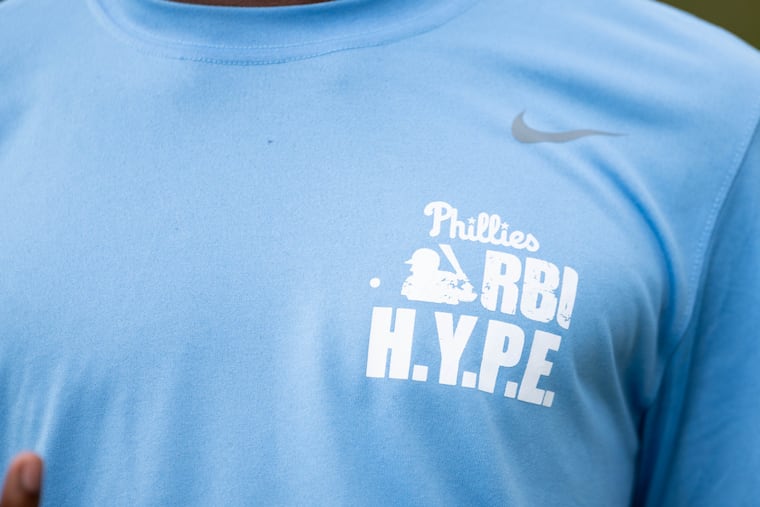
RBI has since spread across the country, including Philadelphia, as baseball’s preeminent youth outreach program. The Phillies say their RBI program serves more than 6,000 children in the city and the surrounding region by providing organized baseball and softball leagues, free equipment, and game tickets to youth participants.
But contrary to RBI’s founding mission, Philadelphia’s program mostly serves the city’s predominantly white, middle-class neighborhoods in the Northeast.
» READ MORE: New study finds access to youth sports is unequal in Philadelphia. The city looks to change that.
“The programs we have in North Philadelphia are programs that save at-risk kids,” said Dave Fisher, who runs Tioga United Baseball. “The programs that they have in the Northeast are programs to evaluate and elevate the talent of their kids.”
Among nearly 200 teams across 35 programs listed on the Phillies RBI’s registration website, about two-thirds were located in Northeast Philadelphia and 15% in New Jersey. Only about a dozen teams were in North or West Philadelphia, where the city’s highest share of Black residents reside.
Neither the Phillies nor Major League Baseball returned requests for comment.
The distribution of RBI teams reflects Philadelphia’s unequal youth sports landscape, confirmed by a recent city-funded study that found neighborhoods with more white residents had more fields, amenities in better shape, and more youth sports programs compared to other areas. In Northeast Philadelphia, there is simply more baseball: The Philadelphia Parks & Recreation Baseball league reflects a similar disparity of Northeast teams as the Phillies’ RBI leagues.

Temple University’s Logan Center for Urban Investigative Reporting and the Claire Smith Center for Sports Media, in partnership with the Philadelphia Inquirer, have launched a series examining the state of North Philadelphia’s recreational facilities and youth sports programs and whether investing in them should be a cornerstone anti-violence strategy for City Hall.
We’ll visit parks, pools, and playing fields north of Girard Avenue to document the conditions of facilities and compare them to others throughout the city. We’ll also outline the challenges leaders face in maintaining activities for young people in the city’s poorest neighborhoods most impacted by gun violence.
Several North Philadelphia coaches are part of Phillies RBI and say they have benefited from the league’s free equipment and clinics. But they say the program is a better fit for well-established teams that already have foundational needs met. Teams working against the tide of economic inequality, lower parental involvement, and children not being exposed to baseball early cannot recruit enough to play in the RBI league.
» READ MORE: Philly has a real need in finding its youth more safe spots to play baseball
“You’ll find more parents who are financially able and culturally able to give baseball to their children at such a younger age of 6, 7, or 8,” said Fisher, who participates in RBI. “Kids at that age are groomed through baseball to be able to have batting coaches, pitching coaches, hitting coaches, fielding coaches.”
Phillies RBI offers noncompetitive leagues that introduce children ages 5 to 12 to baseball and softball as well as competitive leagues for children 13 and older. The program’s website says teams “must be located in an area that serves children who are unable to afford to play in an organized baseball league without assistance.”
David Lisby, who coaches the North Philly Camelots in Strawberry Mansion, was part of Phillies RBI but withdrew after six years because of a lack of players on his team. This past season, he was able to recruit only 15 children from three age brackets to make a single team.
“With the Phillies RBI program, I wasn’t seeing them coming down to really get the kids involved,” Lisby said.
Amos Huron, the executive director of the Anderson Monarchs in South Philadelphia — which does not participate in Phillies RBI — said the RBI program is more focused on areas where baseball is already played rather than introducing the sport to new players.
“There’s such wide swaths of the city where kids are never getting exposed to the game, and there’s only one entity in the city that has the baseball credibility and financial capacity to create a system that spreads across the city, and I think it’s a shame that they are not doing that,” he said.
» READ MORE: North Philly’s youth baseball fields are in sorry shape. They can’t wait long for MLB’s help.
Coaches on ways to improve
Running a community baseball or softball program in Philadelphia is a grind. Coaches — many of whom are volunteers — maintain their own fields, recruit players, and take care of all the logistics in running a nonprofit on top of their on-field duties.
They say the Phillies could help with that.
“I did a lot of stuff on my own, a lot of stuff. Field stuff, cutting trees down,” said Tyrone Young, who founded and leads the Heritage Baseball League in North Philadelphia. “Anybody that didn’t have the drive that I have will probably get frustrated and give up if they didn’t have more support. More support can help.”
Young, who endorses the Phillies RBI program, also said it could sponsor more events and clinics to teach children baseball in North Philadelphia.
Josh Throckmorton, a coach with Give and Go Athletics in Brewerytown and director of program development with the Philadelphia Youth Sports Collaborative, said coaches at smaller programs could benefit from off-field support, such as help with securing insurance and background checks.
“I think administrative support would be huge,” he said. “I think providing some training to help coaches for these really small programs market their programs and manage registration, I think that could be huge.”
This year, a small group of teams in North and West Philadelphia, organized by Germantown’s Urban Youth Kings and Queens and supported by the Phillies, formed a separate RBI group aimed at children ages 7 to 12. The subleague benefited programs like Throckmorton’s, which withdrew from the larger RBI league after finding its first-time players mismatched against other teams, he said.
The four teams in the league played eight games in the spring and some of the teams continued practicing into the summer. This spring, league organizers are seeking to double the number of teams and serve an additional 100 or more children between the ages of 6 and 9.
“We’ve already gotten outreach from families asking us when baseball season is going to start again,” Throckmorton said. “It did exactly what we were hoping for.”
Playing Fields, Not Killing Fields is an Inquirer collaboration with Temple’s Claire Smith Center for Sports Media and the Logan Center for Urban Investigative Reporting, to produce a series examining the current state of Philadelphia’s youth recreation infrastructure and programs. The project will explore the challenges and solutions to sports serving as a viable response to gun violence and an engine to revitalize city neighborhoods.