Who gets to unearth Philly's history?
The city’s soil is filled with historic treasures. But amateur diggers and professional archaeologists disagree about who should be allowed to access them.
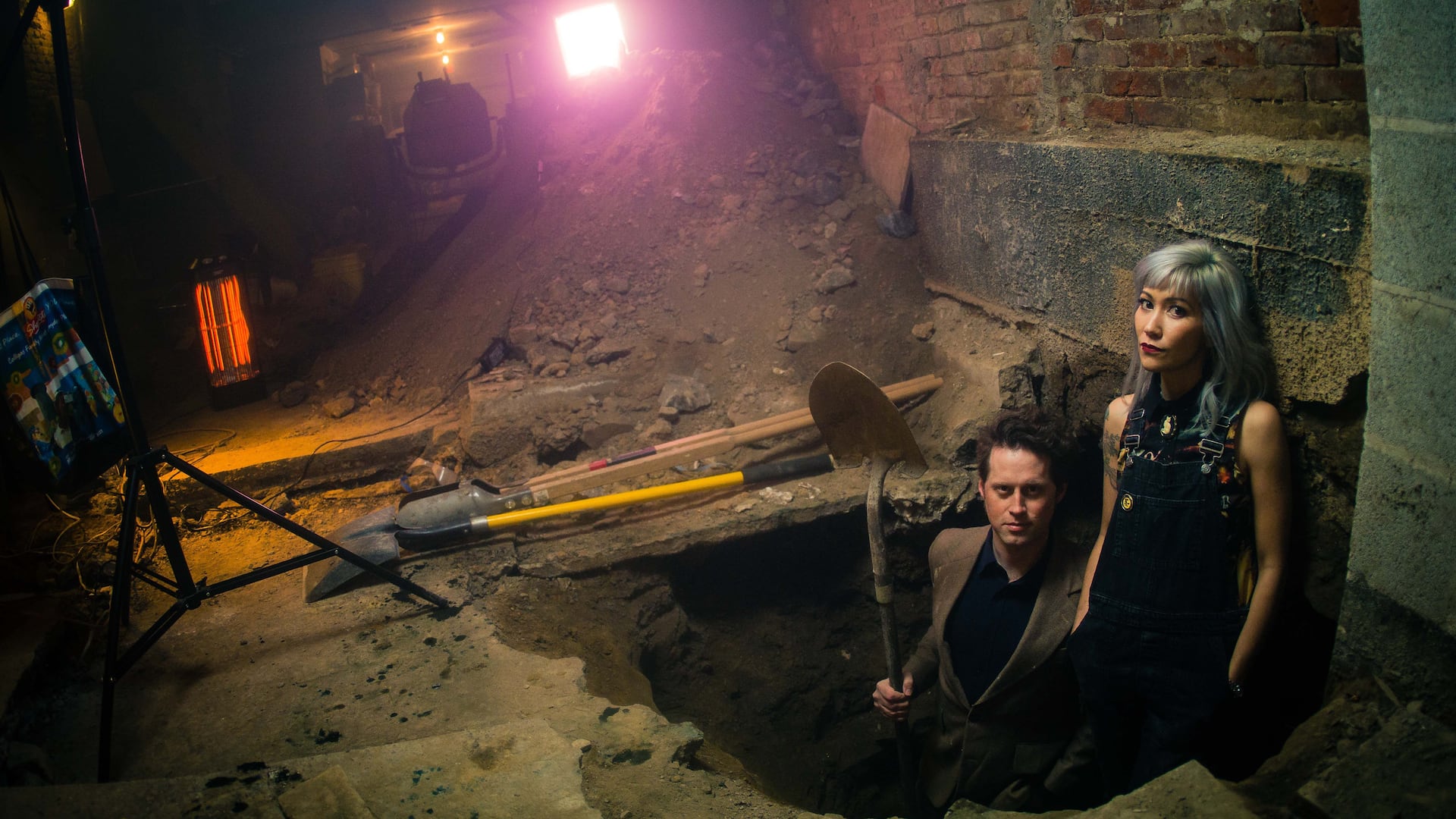
To be a privy digger in Philadelphia is to be part excavator, part flea market authority, and part pirate. First, you must be able to dig — sometimes 30-plus feet in rocky soil — to get to the bottom of a centuries-old outhouse. Whatever you find buried in the organic waste there, you must research. And much of this digging and discovery takes place in secret in the middle of the night, on open construction sites across the city where you’re not exactly supposed to be.
“Obviously, it’s sketchy. We would have the police come,” said Matt Waholek, 39, a longtime Philadelphia privy digger who now lives on Long Island. “They would be like, ‘Alright, you’re not burying bodies, right?’”
Privy diggers are not burying bodies. Instead, Waholek and his fellow diggers are hobbyists probing for a certain kind of treasure — ceramic cups and bowls, clay pipes, glass bottles — that long-ago Philadelphians threw into their outhouses before the existence of citywide trash collection.
Most of the diggers are only interested in land that was developed before 1880, when the rise of factory production led to fewer handmade objects. One digger described finding half a dozen handblown glass devices from the mid-19th century that turned out to be early breast pumps.
It’s a largely male, macho subculture, rife with big characters and rumors of those who are not to be trusted because they absconded with their fellow diggers’ treasure.
“One guy was checking his car for pipe bombs ‘cause he thought I was gonna blow his car up,” said George Mathes, owner of the thrift store Thunderbird Salvage in Kensington, who has dug about 1,000 privies over the years. (He said he did not blow up anyone’s car.) He estimated there are about 15 privy diggers excavating today in the city.
As America’s 250th birthday approaches, Philadelphia is in the national spotlight, being counted on to reflect the country’s history back to itself. The question of how to preserve and tell that history has become more pressing than ever.
With its 300-year-old neighborhoods and relatively lax oversight, Philly is also a center of clandestine digging. People are legally allowed to keep almost anything they find under the ground on their own properties; privy diggers describe legally digging on someone else’s property as being “on a permission.”
But there’s also a fair amount of trespassing, and some of the privy diggers sell what they find. (Prosecution is rare, though Mathes was arrested and sentenced to 24 hours community service for digging on someone else’s property in Old City in 2010, he said.)
All of this has frustrated professional archaeologists, whose job is not just to remove particularly interesting relics from the earth, but to document exactly where they were found and what relation they had to one another, in an attempt to tell a whole, contextualized story about the past.
They say Philadelphia has done little to protect its buried history. Unlike other historic cities, such as Boston or Alexandria, Va., Philadelphia does not have a city archaeologist, who would be responsible for guiding the city’s historical commission and offering insight to residents.
Into that breach, some see the amateurs — “whether you want to call them looters or private collectors,” as Doug Mooney, president of the nonprofit Philadelphia Archaeological Forum, put it — as taking and selling collective artifacts while recklessly destroying historical sites in the process.
Much of what professional archaeologists are interested in is not glamorous, said Jed Levin, an archaeologist for more than 50 years and the vice president of the forum. They are just as compelled by the preserved remains of human intestinal parasites and hundreds-year-old pollen grains as they are by whole glass bottles. Such microscopic information can reveal what Philadelphians were eating and growing hundreds of years ago.
Yet that kind of detail is lost to amateur diggers, who are far more interested in removing intact artifacts, some of which might net them hundreds or thousands of dollars.
“They dig indiscriminately through soil layers,” said Levin. “Once you dig through a site, you’ve destroyed it. It’s gone.”
The code of the privy pirates
Privy digging as a hobby surged in Philadelphia in the late 1960s, when the construction of Interstate 95 uprooted miles of soil across the city.
Over the decades, it became a passionate pursuit and then an underground industry. It’s driven largely by obsession: Diggers might find treasure, but they also might find nothing at all. Some end up with hundreds or thousands of broken pottery pieces. When I asked Waholek what he did with all the things he found over two decades, he replied, “Do you want some of it?”
Both the city’s amateur diggers and the professional archaeologists contend that they’re the ones working in the public interest, aiming to make their findings available to the most people.
There’s pirates that work with you and there’s pirates that’ll work against you.”
“I don’t like the word ‘amateur.’ I probably know a lot more than some archaeologists. They focus mainly on one topic,” said Waholek, who calls himself an “avocational archaeologist.”
Some privy diggers say they are particularly moved to preserve objects that otherwise might be forgotten. Mathes, of Thunderbird Salvage, said he had found spearheads and Native American artifacts in his digs, objects which he does not sell. (Repatriation laws don’t apply to private property owners).
“To me, they’re more spiritual. I display those with the greatest of respect. I show them off to people, I like to hold them,” he said. “To donate them to a museum, most of the time they’re going to get put in a drawer and not displayed because there’s limited space.”
Over the years, some diggers have formed relationships with construction workers and police. One local developer described learning about the hobby when he encountered a group of men trespassing on his construction site carrying what he believed to be spears. (They were actually handmade metal probes, which the diggers use alongside shovels, clam rakes, pickaxes, and tripods and pulleys.) The developer was disturbed until he, too, became fascinated.
As with any subculture, there are rules about how to dig with integrity, said Michael Frechette, 60, an artist and veteran privy digger who lives in Kensington. Among them: Always ask permission; never dig on federal land where archaeologists are already working; fill in the hole you make; respect other diggers’ claims; and maintain honor within your own group — equal work should lead to equal bounty.
But, of course, as Mathes put it: “There’s pirates that work with you and there’s pirates that’ll work against you.”
Who gets to call themselves an archaeologist
The non-sketchy, wholesome representatives of the privy digging community in Philadelphia are Melissa and Matt Dunphy, who call themselves “citizen archaeologists.” She’s a composer with a doctorate in music; he’s an e-commerce engineer.
They fell down the rabbit hole of privy digging about a decade ago after they bought a shuttered magic theater in Old City with a deed dating back to 1745 and began to renovate.
The construction workers uncovered two privies on their property, one of which the Dunphys excavated right away. Since then, they’ve dug six more privies in the vicinity and launched a podcast, The Boghouse, about their discoveries.
The two have become “obsessed at the level that now we give talks at Colonial Williamsburg,” Matt Dunphy said.
Their apartment, on the third floor of the former magic theater, is packed floor to ceiling with thousands upon thousands of shards of pottery and other artifacts. The bathroom has relics displayed on every wall, and the glass cabinets in the kitchen are filled not with matching plates but with broken teapots, chamber pots, punch bowls, and cups, each with their own carefully researched backstory.
The Dunphys are amateurs who have not formally studied archaeology, but they are brimming with intellectual curiosity and knowledge about what they’ve found.
They mostly don’t sell their discoveries (Melissa Dunphy has sold some found teeth) and are instead working to build a museum on the ground floor of the theater, which they hope to open by July. They want to call it “The Necessary Museum,” because privies were often called necessaries.
“These objects — even something as simple as a bowl — tell you something about the people who used them, the people who made them, the journey that that object took,” Melissa Dunphy said. “This is like a passing of stewardship of this little postage stamp-sized corner of the world.”
Unlike those who work in secret, the Dunphys are in close touch with archaeologists at the National Park Service and local museums, speak at archaeology conferences, and regularly text with the editor of the academic journal Ceramics in America, whom they consider a mentor.
When they first found glass bottles in the privy in their backyard back in 2016, they tried reaching out to various archaeologists and museums in the city asking how they should proceed, they said. But no one was particularly helpful, and they only had a week before the hole would be filled in.
So they set about trying to “rescue” as much as they could themselves.
“My assumption then was that this archaeology is probably everywhere in Philly, and it’s probably not that important. So I don’t have to feel academically guilty about doing it myself, without any real expertise,” Melissa Dunphy said. She descended the privy hole in a cobbled-together archaeological outfit: Duluth Trading Co. coveralls, a “Rosie the Riveter” scarf, a camping headlamp.
The couple fashioned screens from chicken wire they bought at Home Depot to sift pottery from dirt, and Matt Dunphy photoshopped a picture of a ruler he saw at the Museum of the American Revolution to measure the objects they uncovered.
Scott Stephenson, president of that museum, who in the years since has gotten to know the Dunphys well, said he supports people doing “citizen archaeology” alongside professionals.
But he likens each archaeological site to a diary that you can only read once, because the story is as much about the objects that are buried as it is about the relationship between them. When amateurs “read the diary,” it’s like they’re “only recording three words off of an entire page,” he said.
Before the Museum of the American Revolution opened, it conducted a massive archaeological dig on its site that included multiple privies. The recovered artifacts are part of a display at the museum called “Trash Tells the Truth.”
The Dunphys acknowledge that they don’t document the stratigraphy, or the exact chronological layering, of the privies they have dug. But they also see themselves as democratizing an important effort, saving bits of the past that would otherwise be wholly lost. It’s not as if the city’s professional archaeologists have the time or ability to carefully dig every backyard under construction across Philadelphia.
“We have watched with our own eyes archaeological features being crushed up and destroyed during construction in our neighborhood,” Melissa Dunphy said.
Once you dig through a site, you’ve destroyed it. It’s gone.”
Some archaeologists are frustrated by the very notion of “citizen archaeology.”
“Would we talk about an ‘amateur doctor?’ No. Medicine takes training and following a set of techniques and ethics. Archaeology, the same thing,” said Levin of the Archaeological Forum. Of privy diggers, he said, “They are not amateur archaeologists. They are no stripe of archaeologist.”
Piecing the past back together
On a recent afternoon, Matt Dunphy donned black rubber gloves, filled an Ikea strainer with sudsy water in the sink, and began to scrub pottery shards with a small denture brush. Centuries-old dirt trickled down the drain.
Next to him, pieces of clean pottery lay on a towel to dry. Many privy diggers don’t take the time to piece together the hundreds of broken pieces they find, because it can seem like a nearly impossible task. But Melissa Dunphy sees it as puzzle-making “boss level.” To repair a single ceramic bowl might take a week of 16-hour days, she said.
She uses painters tape to keep related pieces together, and when they seem to fit, she uses archival-grade museum glue diluted with a syringe full of acetone to seal them back together.
The thrill of bringing something back to life — it’s like nothing else.
“This is the first time that someone has seen this bowl,” she said, “the way that it’s supposed to be, in hundreds of years.”

- Highlights Magazine has reached millions of kids over 80 years — straight from the Poconos
- Two random teenagers threw snowballs at me, a grown man. What should I do?
- How to have a Perfect Philly Day, according to Philly rapper Kur
- Reese’s cup reckoning, Olympic tears, and a very dad hat | Weekly Report Card
- The best things we ate this week
- Snacktime’s bassist couldn’t imagine living anywhere but South Philly
- Citywide Quest: Do you know where to find these Isaiah Zagar mosaics around Philly?
- Whiskey history, covered bridges, and mountain luxury in Bedford, Pa. | Field Trip
- What the Flower Show looked like before opening