In a Facebook Marketplace and Depop world, Philly Craigslist still endures
“Craigslist is gritty,” says University of Pennsylvania professor Jessa Lingel, “and so is Philly.”
Every morning, Julie Parlade, a 34-year-old stylist, wakes up and does what most millennials do. She reaches for her phone and checks her apps. Instagram, Gmail, maybe the news. Then she checks one more: Craigslist.
Yes, that Craigslist. The classified advertisement website that was popular in the early aughts and 2010s. She checks it later in the day, too, pretty much whenever she has downtime. “It’s so automatic for me,” said Parlade, who lives in Springfield, Delaware County. “I have an obsession.”
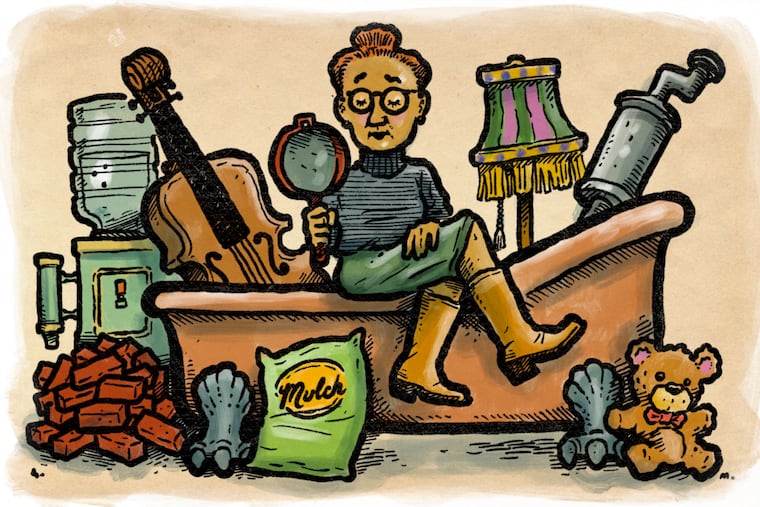
Parlade mostly sticks to the free section, where she has scored everything from a pair of Frye boots in perfect condition to an entire set of Le Creuset cookware. Half of her house is furnished from the Craigslist free section: the claw-foot tub in the bathroom, the subway tile in the kitchen, the mid-century modern furniture in the living room.
She started using Craigslist around 2010, first for jobs and apartments, and never really stopped. Today, it’s still her go-to source for secondhand items, despite the rise of other online marketplaces like Depop and Facebook Marketplace.
“Everyone uses Craigslist,” Parlade said, “so I feel like I’m able to get better things. It’s a much broader net.”
Does everyone still use Craigslist? Maybe not everyone, but more people than you might think. Despite its reputation as a digital relic, Craigslist draws more than 105 million monthly users, making it the 38th most popular website in the United States, according to internet data analytics company SimilarWeb.
And in Philadelphia, the site remains a daily resource for people seeking work, housing, materials, and other necessities.
University of Pennsylvania professor Jessa Lingel, 42, who interviewed hundreds of Craigslist users in Philadelphia for her book An Internet for the People: The Politics and Promise of Craigslist, says the platform functions as a kind of parallel infrastructure to more polished platforms, particularly for people with fewer financial resources.
“Craigslist still has a role to play for a lot of Philadelphians who are just trying to live their everyday lives,” Lingel said.
Access to affordability
That role shows up most clearly in the kinds of jobs and housing that still circulate through Craigslist. Lingel, who lives in North Philadelphia, said many of the users she interviewed relied on the site to find warehousing shifts, construction work, and short-term gigs paying around $20 an hour — work that rarely surfaces on platforms like LinkedIn or Indeed because “those other platforms haven’t called those folks in,” she said.
The same pattern holds for housing. Affordable apartments and private rooms for rent still appear regularly on Craigslist, posted by college students seeking temporary roommates or by landlords unwilling to pay higher listing fees. As one of Lingel’s interviewees put it, the cheap housing is on Craigslist, not Redfin. He called Craigslist the “poor people’s internet,” Lingel said.
Craigslist does not release detailed user data, so there’s no way to know how many Philadelphians still rely on the site. But, Lingel said, given that Philadelphia is the second-poorest big city in the country, it would not be surprising if the ”poor people’s internet” remained especially relevant here. “Craigslist is gritty,” Lingel said, “and so is Philly.”
Privacy protection and net nostalgia
For some Philadelphians, the appeal of Craigslist isn’t affordability so much as how little of themselves it asks for in return. Unlike newer marketplaces that tether buying and selling to social profiles, Craigslist allows users to remain largely invisible — no profile photos, no friend networks, no algorithm stitching transactions back to a personal identity.
It hearkens back to a simpler time on the internet, and, according to Lingel, holds special appeal for young tech skeptics who “are more ideologically attached to Craigslist.” .
“The comparison that I think of is children of the ’80s going to ’50s-themed diners and getting really into Lindy Hop. It’s like, ‘Oh, this is a vision of the internet that I want to have experienced but have not.’”
That simplicity is precisely what draws people like Raquel Glassman, a cofounder of a local kombucha company from Port Richmond, who mostly uses Craigslist to give things away. When she’s decluttering, she’ll box up items, leave them on the sidewalk with a handwritten “Free” sign, snap a photo, and post it online. “It’s always gone within the day,” she said.
If Glassman, 31, is going to sell an item, she likes that she can do it anonymously on Craigslist. Facebook Marketplace is more efficient, she says, but it’s not a great place to go if you don’t want your aunt to know that you’re getting rid of the “ugly lamp” she gave you. “She’ll see it on my Facebook because we’re friends,” Glassman said. “You put that on Craigslist if you want to sell that.”
IRL effects
But the funny thing about Craigslist is that while it lets you be a stranger online, it forces you to be your full self in real life, and some people prefer that. According to Lingel, hobbyists such as musicians and car enthusiasts are among the most active Craigslist users.
Indeed, two of the most popular “For Sale” subcategories on Philly Craigslist are auto parts and instruments — both of which benefit from face-to-face transactions. They allow sellers to avoid shipping costs and allow buyers to inspect their purchases.
As Michael Lesco, a 33-year-old musician and marijuana dispensary manager said, “If I’m going to put $300 into something, I want to meet you in person and put the money in your hand.”
Like Parlade, Lesco also makes good use of Craigslist’s free section. Last summer, he used it to get mulch and brick for the garden he was building in the abandoned lot next to his house in West Philly. The project could’ve easily cost $5,000. Instead, he and his wife did it for less than the cost of their West Philly Tool Library membership.
“We could not have done it without Craigslist,” Lesco said.
Parlade’s most recent Craigslist score was also construction-related: free drywall from a contractor. “We’re going to use it to fix my dad’s house,” she said. Craigslist, she added, is “almost like a service.”