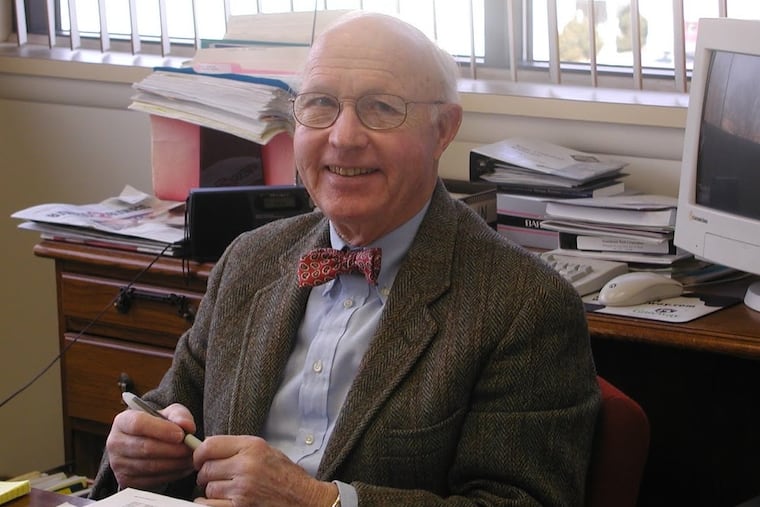
Where are the happiest places in Philly? This Drexel professor asked his students to map them
Eric Zillmer put together the map with his 243 Psych 101 students, who nominated Rittenhouse Square, a Mantua park filled with cats, and Johnny Brenda's, among other places.
What’s your happiest place in Philadelphia, and is it really worth gatekeeping?
Those are questions Drexel University psychology professor Eric Zillmer asked the 243 students in his spring semester Psychology 101 class.
It was for science, he promised.
Zillmer is the director of Drexel’s Happiness Lab, where he studies the meaning and science behind joy. Twentysomethings are the unhappiest age cohort in the United States, according to the United Nations World Happiness Index, where they are bogged down by a loneliness epidemic, financial uncertainty, a thankless job market, and the evergreen awfulness of growing up. Perhaps, Zillmer reasoned, he could use his class as a way to help young people focus on the pockets of happiness that already exist in their lives.
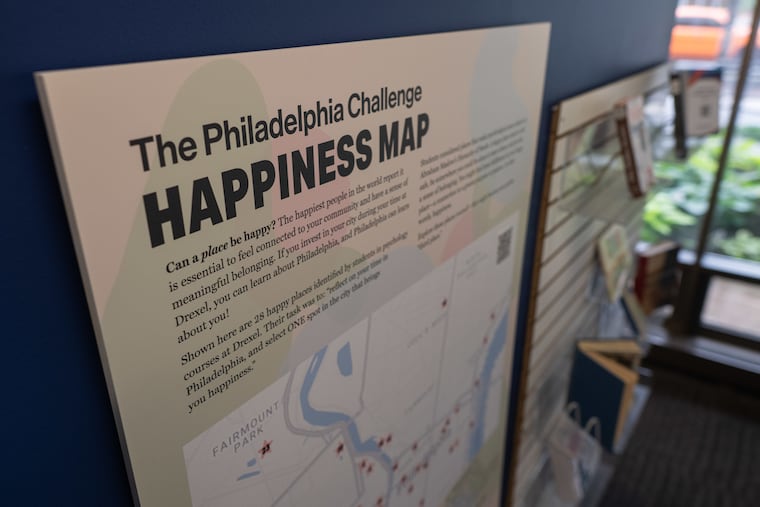
The result: A map of the 28 happiest places in Philly — according to Zillmer’s students — that’s been viewed over 40,000 times since it was uploaded on June 18. An oversize version is on display in Drexel’s W.W. Hagerty Library through Nov. 30 as part of the Philadelphia Challenge exhibit, which pulls from Zillmer’s class assignments to show how everyday objects and routines in Philadelphia made it easier for people to open themselves up to happiness.
“As a psychologist, I’m trying to help my students focus on what’s good about Philadelphia and what’s good about their lives,” Zillmer said, “instead of what’s negative in their city in their lives.”
Zillmer asked each of his students to nominate the single place that makes them feel the happiest, whittling down the list to a mere 28 locations to account for duplicates, access to public transit, and cost of entry.
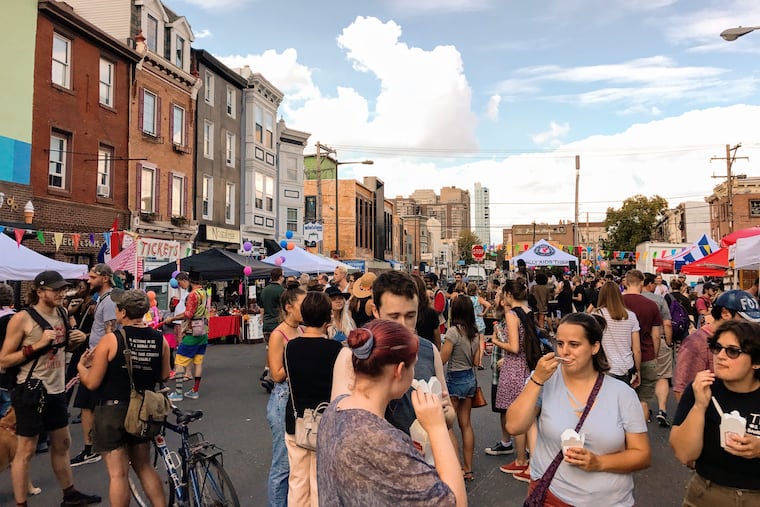
The final map is both a greatest hits list of Philadelphia’s public parks and cultural institutions and a rundown of hidden ponds, pocket parks, and whimsical dessert cafés. Hot spots like the Philadelphia Museum of Art, Cira Green, the Shofuso Japanese Cultural Center, and Rittenhouse Square were immediate front-runners, Zillmer said.
“Rittenhouse Square park is such an easy answer. It’s the social hub of Philadelphia,” Zillmer said with a playful eye roll. “But there’s something to be said about it. It’s accessible, easy to navigate, and you can hang out there on your own terms.”
So too is the unofficial cat park at 526 N. Natrona Street in Mantua, where neighborhood strays have long gathered to sunbathe among potted plants and rusted lawn chairs. A neighbor maintains the space and feeds the felines, said Amanda Moore, Zillmer’s research assistant, who grew to know the cats by name after frequenting the park as a student. Moore made sure it and the University of Pennsylvania’s public James G. Kaskey Memorial Park made the final cut.
There, Moore said, she finds peace by watching the koi fish and turtles swim around a tree-covered pond. “It feels like you’re in some national park, not the city,” said Moore, 23, who’s originally from Austin, Texas.
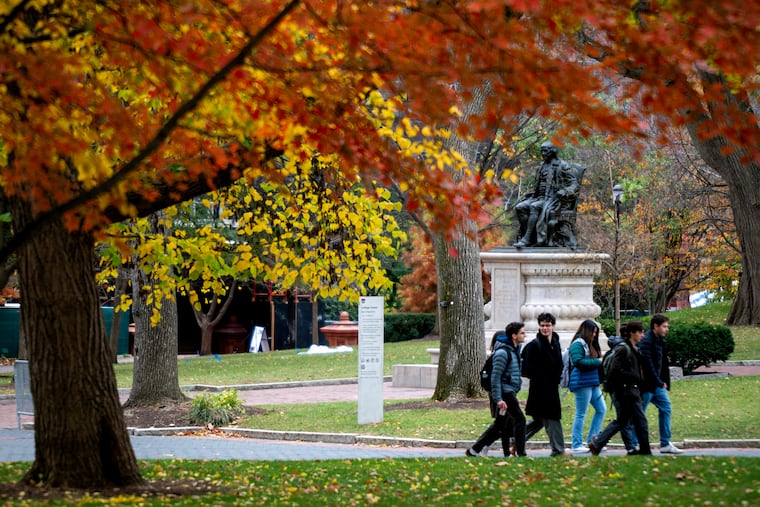
Zillmer said the project reaffirmed that there is no single formula for getting to happy, but there are a few shortcuts. Happy places are safe, said Zillmer, and they often involve nature or overlap with third spaces, or environments that aren’t home or work. Mostly, Zillmer explained, happy places should encourage a sense of urban citizenship, which is just a fancy way of saying they should make you feel like you belong where you live. His go-to is Society Hill’s historic Athenaeum library.
“I think there’s something that feels a little secret about finding a happy place,” said Zillmer. “But I think the highest level of happiness you can feel is the moment when you feel most connected to your city and want to share.”

There's no particular order to the 28 locations Drexel professor Eric Zilllmer and Psych 101 students mapped. They are:
- Athenaeum of Philadelphia
- Cat park at 526 N. Natrona Street
- Cira Green
- Drexel Park
- Franklin Square
- James G. Kaskey Memorial Park
- John F. Collins Park
- Johnny Brenda's
- Kimmel Center for the Performing Arts
- Lancaster Walk
- Logan Circle
- Maison Sweet
- Mango Mango Dessert
- Penn's Landing
- Philadelphia Film Society Center
- Philadelphia Museum of Art
- Philadelphia Zoo
- Rittenhouse Square
- Schuylkill River Trail
- Shofuso Japanese Cultural Center
- T-Swirl Crêpe
- Temple University Outdoor Track
- The Fillmore Philadelphia
- The Happiness Lab at Drexel University
- The Mütter Museum at the College of Physicians of Philadelphia
- The Treehouse in the Sky
- Washington Square
- Wood Street Steps
Philadelphia is consistently ranked as the most walkable city in the United States and lauded for its green spaces. Nearly 95% of Philadelphians live within a 10-minute walk to a park, according to the Trust for Public Land. Far fewer live near year-round third spaces, which have dwindled post-pandemic.
Struggling to find a happy place in Philly? Get a little cringe, recommended Zillmer, and try playing tourist.
“Think about the things you like to do when you’re on vacation,” said Moore, Zillmer’s happiness protégé. “We get so used to just living, going to work and school and the grocery store, that we forget how important it is to explore.”
Do you have a Philly happy place worth sharing? The Inquirer is taking nominations to build the definitive Philly Happy Map, inspired by Zillmer’s project. Fill out this form to help us find all the happy!