Philly residents thought they had a winter parking system. Then the snow stuck around.
Philly's flimsy parking norms are starting to collapse.
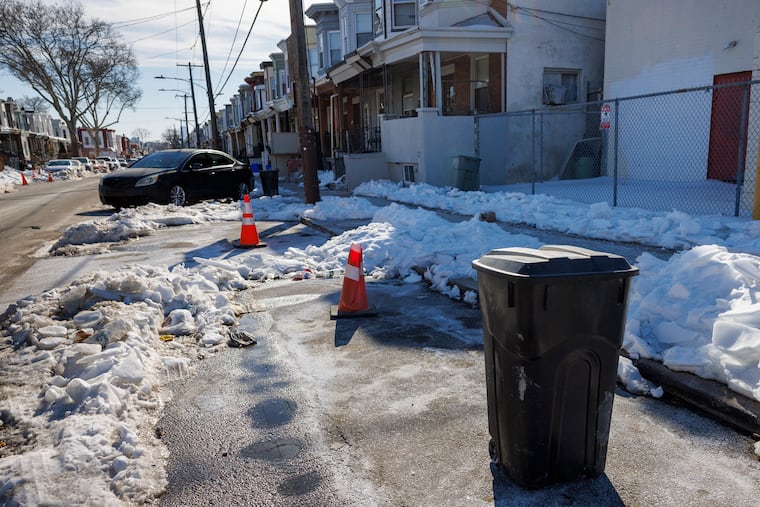
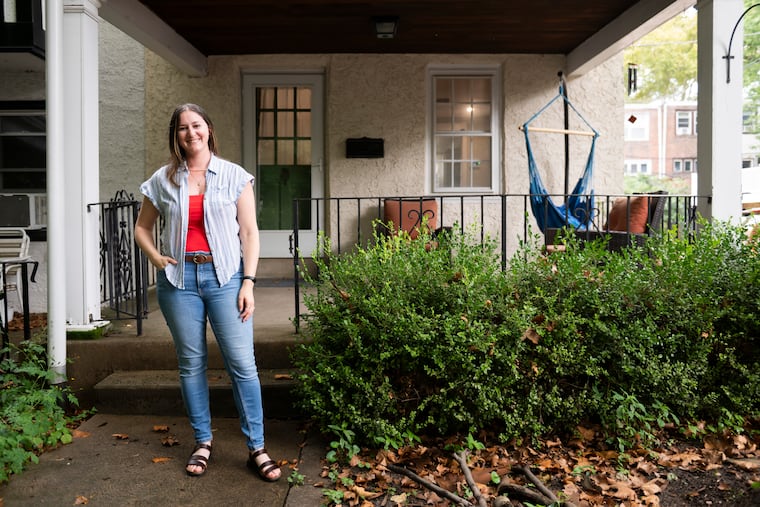
By the time Taylor Schuler finally freed their car, they were exhausted. It had taken five hours across two days, hacking at the wall of ice encasing their Prius’ bumper, shoveling piles of frozen snow off the tires, to complete the job. As the sun set on their afternoon of labor, they were tempted to put a piece of furniture in their hard-earned spot, a practice sometimes known as “savesies” in Philadelphia.
But they knew better. Having just moved to Philly from Houston, the 28-year-old academic librarian wasn’t all that familiar with cold-weather etiquette, so they took to the internet ahead of January’s snowstorm to figure out what exactly Philly’s rules are. They gathered that people weren’t all that fond of the “savesies” practice, so, tempted as they were to hold onto their spot, they let it go.
Once the spot was cleared, they circled the block, a quick trip to make sure their car was still working. Their internet research had also led them to believe no one would just take their spot immediately. As they rounded the corner toward their house, though, they saw another driver lurch into the spot they just spent hours digging out.
“Oh jeez,” Schuler thought to themselves. “It’s like the Wild West out here.”
In some snow-burdened cities, saving a shoveled-out parking spot is a deeply ingrained winter habit. Boston even formally acknowledges the practice by allowing residents to mark a spot they dug out for up to 48 hours after a storm. In Chicago, protecting your precious dug-out parking space with a lawn chair is called “dibs,” and it’s been a beloved and widely accepted tradition since the great blizzard of 1967.
But Philadelphia exists in a murkier middle ground. Until about two weeks ago, it snowed infrequently enough and melted fast enough that any theory about our collective approach to storm parking was never really put to the test. But the lingering snow has revealed a kind of civic chaos, with neighbors operating under wildly different assumptions and fights breaking out over who is entitled to snow-cleared parking spots.
The divide is often generational. Older residents, who experienced harsher winters, are more likely to embrace savesies as another classic Philly tradition while younger residents and transplants see it as territorial nonsense, out of step with the values of densely populated city life.
Schuler finds the entire debate exhausting. “I just want to be able to go to work and come home,” they said. “I didn’t ask for any of this.”
Jeff Martin, 43, who lives in South Philly, describes himself as firmly “no savesies” but with caveats. He won’t put out a chair. He won’t defend one. But he also won’t move someone else’s. “I don’t believe in the chair,” Martin said. “But I’m going to obey the chair.” His reasons are entirely practical. “I don’t want to get keyed,” he said.
Martin argues Philadelphia’s parking wars are a symptom of the changing climate. “The fact that over the last 20 years, we haven’t gotten as much snow as we did over the previous 20 years has made us forget how to deal with it,” he said, “and the city forget how to deal with it to the point where they don’t properly fund the removal of snow.”
For the record, the city is firmly in the “#nosavesies” camp, and the police routinely remind Philadelphians that saving parking spots is illegal. Of course, that doesn’t stop people from doing it — and other people complaining about it.
Lucas Tran didn’t see the cinderblock in the spot he parked in on Tuesday night. It wasn’t until another driver pulled up and told him that he was in her spot that he became aware of it. She said she had dug out the spot herself, saved it with the cinderblock, and that Tran had to move.
» READ MORE: Can I move the cones my neighbor places to save his parking spot?
At first, he refused. But he backed down after she called him a liar and a “little b—.” He didn’t want things to escalate. The next day, she left a handwritten apology on his car. “Thank you for moving your car,” it read. “You are NOT a little b—.”
Tran takes a “special exception” approach to the savesies debate. If the woman had been elderly or a first responder, or if it had been two or three days after the storm rather than a full week later, he might have been more understanding. “But the roads are drivable now, he said. “There are more options to park. You can’t keep claiming a spot that’s public property.”
Back in West Philly, Schuler spent the week parking wherever they could. The spot they dug out remained occupied until one evening, when they pulled up, excited to reclaim what was once theirs — only to find a folding table balanced on two overturned pots in their way. Someone had “savesied” Schuler’s spot.
Schuler snapped a photo and uploaded it to Reddit, where the response was nearly unanimous. As one Redditor put it, “that’s diabolical.”
It was the one version of “savesies” Schuler had never seen defended. “If there’s anything people agree on,” they said, “it’s that you don’t do that.”