The government hasn’t done enough to regulate AI, most Americans say in a new Penn survey
The data show most Americans are paying attention to AI — “and what they see concerns them,” a researcher said.

Americans are skeptical that artificial intelligence will broadly benefit society. And they think politicians haven’t done enough to rein it in.
That’s according to a nationally representative survey conducted by the Annenberg Public Policy Center of the University of Pennsylvania.
Fewer than 2 in 10 Americans think artificial intelligence will have a positive impact on the country over the next decade, and more than twice as many expect negative results, the study found.
A plurality of respondents offer a bleak assessment of how the technology will affect the economy, household utility costs, and mental health, according to the survey of 1,330 adult U.S. citizens. Medical research was the one area in which the public found reason for optimism, with 57% expecting positive impacts.
In addition to broad pessimism around AI, the survey found that nearly two-thirds of respondents — a bipartisan majority — say the government has done “too little” to regulate the technology.
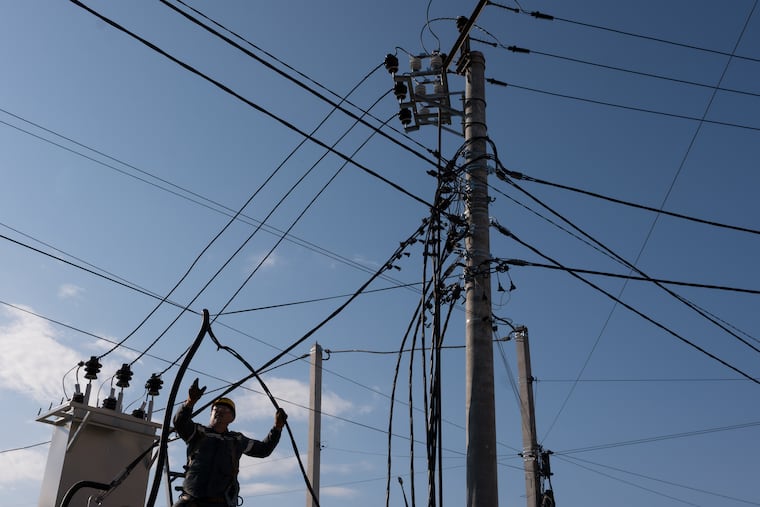
Released six months ahead of midterm elections that will determine control of Congress and statehouses across the country, the findings offer a snapshot of how the public is thinking about an issue that has stirred anxiety about the job market and spawned protests from those who fear new data centers will drive up energy costs.
The data show most Americans are paying attention to AI — “and what they see concerns them,” Shawn Patterson Jr., a research analyst at the Annenberg center, said in a statement. “The demand for regulation is not a partisan issue.”
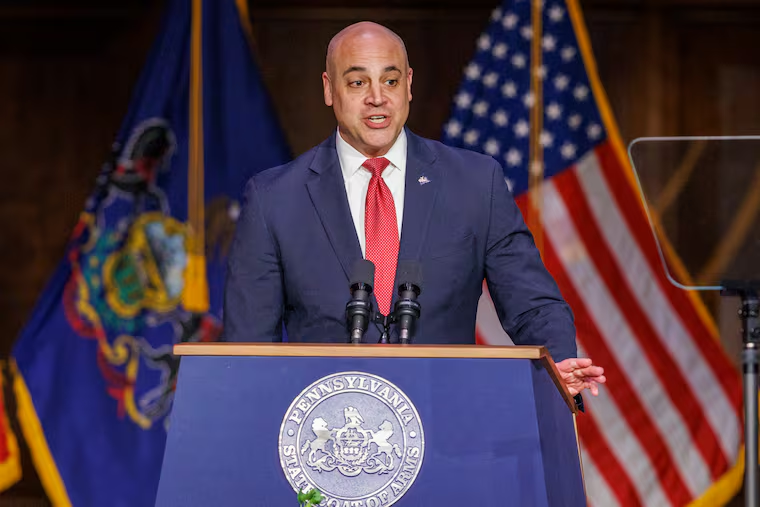
Elected officials ranging from President Donald Trump to Pennsylvania Gov. Josh Shapiro to local township supervisors have been navigating evolving public opinion on AI.
Trump initially adopted a light regulatory touch in a race to beat China on AI. But he’s now reportedly considering bringing government oversight to new AI models, according to the New York Times. In Harrisburg, Shapiro has courted private investment in new data centers by companies like Amazon — and more recently he’s called on developers to supply their own energy or pay for new generation.
The Annenberg survey found that just 21% say they would support the construction of new data centers in their area, compared with 49% opposed.
Pollsters also asked respondents for their views on whether Trump or Kamala Harris, the 2024 Democratic presidential nominee, would better handle certain issues, including AI.
While Democrats and Republicans disagreed on whether Harris would have handled several areas better than Trump did, they were closer to agreement with regard to AI, with 22% of both Democrats and Republicans saying Harris would have done “about the same” as Trump on AI regulation.
Bipartisan concern about AI “offers real potential rewards to either party if they can convince the public that they have the correct approach,” University of Pennsylvania professor Matt Levendusky said in a statement.
The survey had a margin of error of plus or minus 3.5 percentage points for the full sample of respondents.