For years, she photographed life at Camp Mystic. Now, she’s grieving from South Philly.
The former camp staffer shared photos and memories of the “special, safe place.”

Every morning at Camp Mystic, the nearly century-old Christian summer camp for girls in west-central Texas, reveille played over the loudspeakers at 7:30 a.m. For the rest of the day, the girls were busy: eating communal meals, horseback riding, and making arts and crafts, competing against each other in camp-wide teams they called tribes. They spent hours playing in the nearby Guadalupe River.
In the early morning of July 4, the river rose 20 feet in three hours, crashing through the camp in Hunt, Texas, and leaving at least 27 campers and counselors dead. Ten girls and a counselor remain missing, according to the New York Times. The tragedy at Camp Mystic has gripped the country, and thousands of alumni and former counselors have watched it unfold with particular horror.
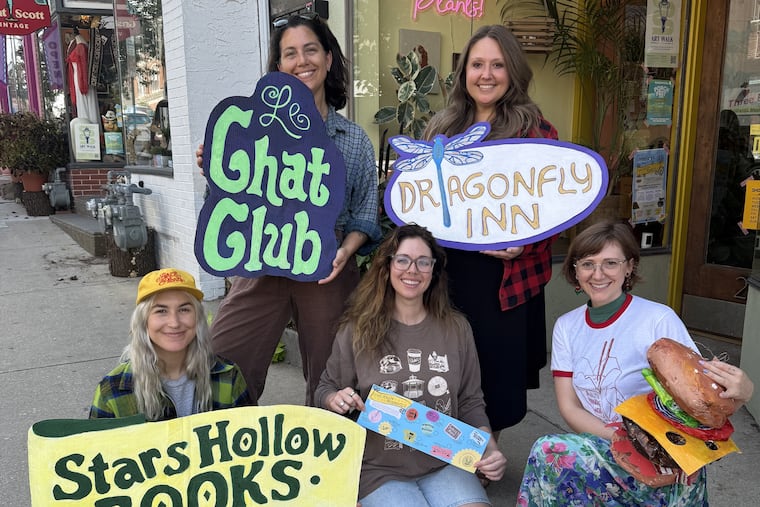
Emily Joynton, an illustrator and chainstitch embroiderer who lives in South Philadelphia, is one of them. She worked at Camp Mystic for three summers between 2007 and 2010, first as a counselor and then as an office aide and camp photographer. Joynton grew up attending a nearby Christian summer camp along the Frio River, also in Texas Hill Country.
Since Friday, Joynton has been reflecting on her time at Camp Mystic, connecting with other former staff and alumni, and grieving for the losses there. Joynton, who moved to Philly in 2017, suspected there were only a handful of alumni in the Philadelphia area.
“Camp Mystic, especially, is basically an intergenerational experience,” Joynton, 37, said. “There are girls whose grandmothers went to that camp when they were their age, and their moms went.”
Texas Hill Country is filled with summer camps, Joynton said, partly because it’s close to natural bodies of water, and it’s beautiful; nestled among old cypress and live oak trees. But she always thought of Mystic as unique — albeit slightly upscale, where notable Texas families sent their daughters.
Each session was a monthlong (they used to be even longer, at six weeks), and culminated in elaborate theater and dance productions. There were songs and rituals repeated year in and year out, including a sunrise Holy Communion service, according to the camp’s brochure.
“You’re in a place where you’re separated from your parents, but you’re still really cradled in this special, safe place where you know what to expect,” Joynton said.
Though it was a Christian camp, Joynton said Mystic was also laid-back in its approach to religion, essentially saying, “We’re also here to have a great time, and be outside, and make great friendships.”
Joynton first learned about the flooding when her father, who still lives in San Angelo, Tex, sent her a text.
“I didn’t really grasp the gravity of the situation in that first moment,” she said. Slowly, she began to realize the extent of the catastrophe. Over the holiday weekend, she stayed glued to her phone, where her Facebook feed filled up with former campers and counselors posting updates, memories, and stories. She has been sharing a link to the Kerr County Flood Relief Fund sent by a camp friend who lives in Kerrville.
She wondered if any of the current campers were the daughters of those who attended when she was there.
Joynton particularly grieved the death of Dick Eastland, the longtime director who ran the camp for decades alongside his wife, Tweety. Eastland was a stalwart of the camp. He died trying to shuttle campers to safety, according to the Kerrville Daily Times.
“I hadn’t even thought about that as a possibility,” Joynton said of Eastland’s death.
The girls who were killed in the floodwaters or remain missing were among the youngest campers, staying on flat land closest to the riverbank. The camp confirmed the deaths on its website, writing, “Our hearts are broken alongside our families that are enduring this unimaginable tragedy.”
In South Philadelphia, Joynton’s heart is breaking, too.
“It was a very special place to a lot of people,” she said, “and just really terrible to have to go through this.”