Chester County is rolling out a fleet of propane buses
Chesco will add 16 propane buses to its fleet by early next year, with plans to build its own fueling station to reduce costs and as part of a climate action plan.
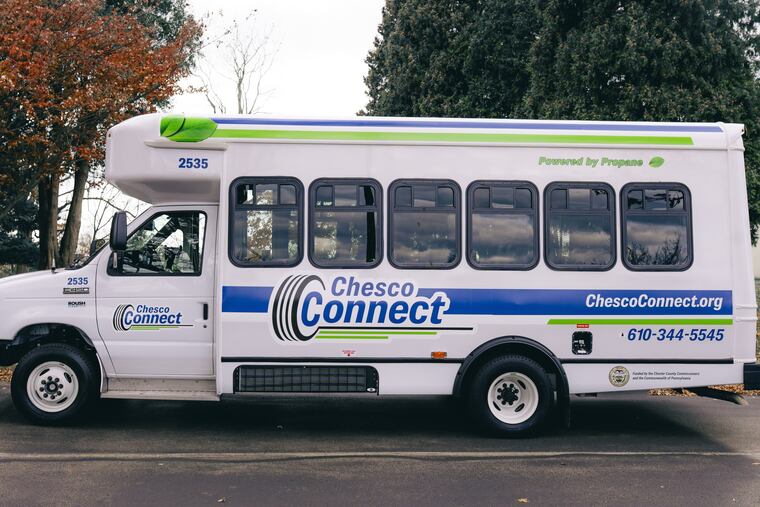
Chester County is rolling out a fleet of propane public buses — in what could be a broader trend for municipalities looking to cut costs, especially as the federal government moves away from pushing electric vehicles.
The county will run 16 propane Chesco Connect buses by February, with seven already on the roads. The majority of the 74-bus Chesco Connect fleet, a door-to-door shared ride transportation system that covers the county, is gasoline-fueled, but the county plans on adding more propane buses in 2027, said Gene Suski, director of transportation for the Chester County Department of Community Transit.
Propane is a cleaner fuel source than gasoline or diesel, and costs $1 to $1.50 less than gasoline per gallon.
“On any given day, our buses go anywhere between 150 and 250 miles a day, so when you can save that kind of money per gallon, it’s a significant factor,” Suski said.
A propane bus costs roughly $33,000 more than a gas bus, but with $20,000 saved in fuel costs annually, “it pays for itself” in 18 months, a county spokesperson said. The buses being replaced were “well past their useful life.”
Chester County’s new propane buses follow similar moves made by neighboring Montgomery and Lancaster Counties, which in recent years have embraced propane for part of their fleets. School districts across the state have also used the model, with more than a thousand propane school buses on the streets through the state, said Tony Bandiero, executive director of Eastern Pennsylvania Alliance for Clean Transportation, an organization that works with 34 counties to encourage alternate fuels.
It’s a relatively easy–and cheap–change for municipalities to make, Bandiero said.
“There’s a little bit of upfront cost, but usually that could be recuperated within a year just by fuel saving, cost savings, and maintenance on the vehicles,” he said.
Propane buses “hit a niche” about seven years ago, Bandiero said. Under President Joe Biden’s administration, his organization saw a ton of interest in electric projects. But that shifted with President Donald Trump’s return to office and the president slashing electric goals. Bandiero expects to see more projects focused on propane and natural gas in response.
In Chester County, the buses are part of the county’s climate action plan, approved by the commissioners in 2021. The county worked with ROUSH CleanTech, which has developed propane buses, vans, and pick up trucks since 2010.
The county was drawn to propane buses for the environmental benefits, and operating more efficiently, said David Byerman, the county’s chief executive officer.
“We believe that we have a duty as a county to be good environmental stewards, and this initiative is a way for us to demonstrate that leadership, and we’re very much looking forward to continuing to realize the goals we laid out in our climate action plan, and continuing to provide a model for sustainability for southeastern Pennsylvania,” he said.
Despite a recent state of emergency over propane woes in neighboring New Jersey, Suski said the county hasn’t had issue with fueling the current supply of buses. A tanker arrives each morning to fuel the buses. But in the next three to six months, the county plans to build its own propane fueling station in Coatesville to directly fuel its fleet.

Want to get Inquirer Chester County straight to your inbox every week? Sign up here for our guide to the news, stories, and events shaping life in your community.
This suburban content is produced with support from the Leslie Miller and Richard Worley Foundation and The Lenfest Institute for Journalism. Editorial content is created independently of the project donors. Gifts to support The Inquirer’s high-impact journalism can be made at inquirer.com/donate. A list of Lenfest Institute donors can be found at lenfestinstitute.org/supporters.