FBI cited debunked claims to obtain warrant for Fulton County vote records, documents show
The FBI relied heavily on previously debunked claims of widespread election irregularities in Georgia as it persuaded a federal judge last month to sign off on plans to seize scores of 2020 voting records from the state’s most populous county, court documents unsealed Tuesday show.
The FBI relied heavily on previously debunked claims of widespread election irregularities in Georgia as it persuaded a federal judge last month to sign off on plans to seize scores of 2020 voting records from the state’s most populous county, court documents unsealed Tuesday show.
In a pair of Jan. 28 search warrant affidavits, authorities said they were seeking evidence that would determine whether “deficiencies” in the vote tabulation in Fulton County, home to Atlanta, were the result of intentional wrongdoing that could constitute a crime.
But many of the irregularities they raised — including claims of duplicate ballots and missing ballot images — have been previously explained by county officials as the types of routine errors that frequently occur, are typically corrected in the moment, and are not significant enough to sway the outcome of an election. Independent reviews have backed up that conclusion.
The affidavits cited previously aired theories from several prominent election deniers whose names were redacted in the documents unsealed Tuesday but whose descriptions align with publicly known details about those who advanced conspiracy theories about the election.
The documents also revealed that the FBI’s investigation was prompted by a referral from former Trump campaign lawyer and prominent election denier Kurt Olsen, who was recently appointed to a White House position tasked with monitoring election integrity.
“Some of those allegations have been disproven while some of those allegations have been substantiated, including through admissions by Fulton County,” FBI Special Agent Hugh Raymond Evans wrote in the affidavits, which sought court authorization to search the county’s primary election warehouse and the office of the county’s clerk of courts.
He added, “If these deficiencies were the result of intentional action, it would be a violation of federal law,” whether or not any of them were significant enough to affect the outcome of the race.
Evans’s affidavits were made public Tuesday after Fulton County officials and a coalition of news outlets, including The Washington Post, urged a federal judge to release the typically sealed court filing. The Justice Department did not oppose the request.
The assertions laid out in the 23-page documents are likely to stoke alarm among county officials and democracy advocates who have condemned the investigation as an attempt by the Justice Department to substantiate Trump’s long-held grievances about his 2020 election loss to Joe Biden.
Multiple audits, nearly a dozen court rulings and former Trump attorney general William P. Barr have found no evidence of widespread fraud sufficient enough to affect the outcome of the race in Georgia.
More broadly, Trump’s critics have raised concerns that the criminal probe of Fulton County officials could pose a threat to state-level control of voting and the future of independent elections.
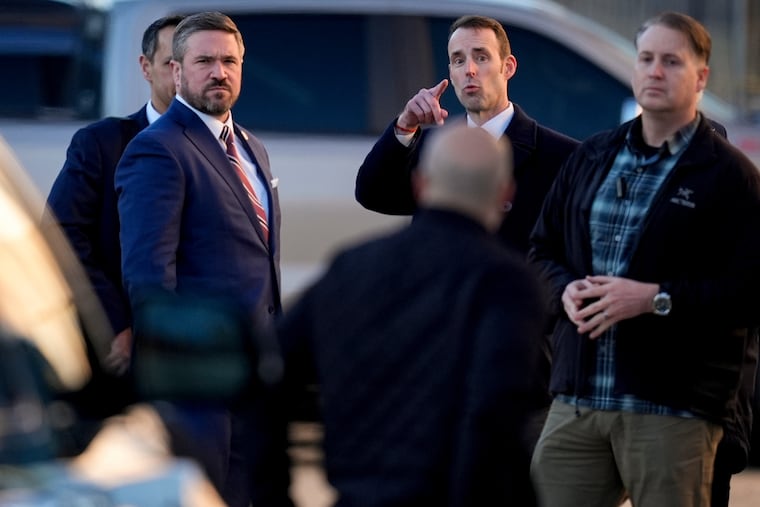
Dozens of agents descended on Fulton County’s election warehouse last month and spent several hours combing through the county’s records under supervision from FBI Deputy Director Andrew Bailey. They left with more than 700 boxes of material, including all physical ballots from the 2020 race.
A copy of the search warrant, previously obtained by The Post, revealed that the search was part of a criminal inquiry into possible violations of two federal laws: one requiring officials to retain voting records and the other criminalizing efforts to defraud voters through denying them an impartially conducted election.
But until the public release Tuesday of the affidavit underlying the warrant, the exact focus of the investigation — and the evidence agents cited to persuade a judge to sign off on the search — was unknown.
Federal authorities did not have to prove any claims laid out as the basis for the warrant. They were required only to demonstrate a substantial likelihood that a crime occurred and that evidence of that crime could be found at the two locations they sought to search.
U.S. Magistrate Judge Catherine M. Salinas in Atlanta found the Justice Department had met that threshold and signed off on the warrant Jan. 28 — just hours before agents arrived at the warehouse.
Since the search, FBI Director Kash Patel has waved off concern expressed by Trump’s critics over the bureau’s investigation, describing the search as “just like one we would do anywhere else.”
“We did the same thing there we do in any criminal case or investigation,” Patel told Fox News in an interview last week. “We collected evidence, we presented that evidence to a federal magistrate judge, who made a finding of probable cause.”
Fulton County officials have urged a different federal judge — Trump appointee J.P. Boulee — to order the return of all material seized by the FBI.
“Claims that the 2020 election results were fraudulent or otherwise invalid have been exhaustively reviewed and, without exception, refuted,” Fulton County Attorney Y. Soo Jo wrote in a recent filing. “Eleven different post-election lawsuits, challenging various aspects of Georgia’s election process, failed to demonstrate fraud.”
Boulee has yet to rule on that request.
— — -
Aaron Schaffer and Mark Berman contributed to this report.