Trump’s administration planned mass layoffs. Instead, thousands of Philly-area federal workers left on their own.
Thousands in the Philadelphia region left federal jobs last year, but only 2% of them were laid off.
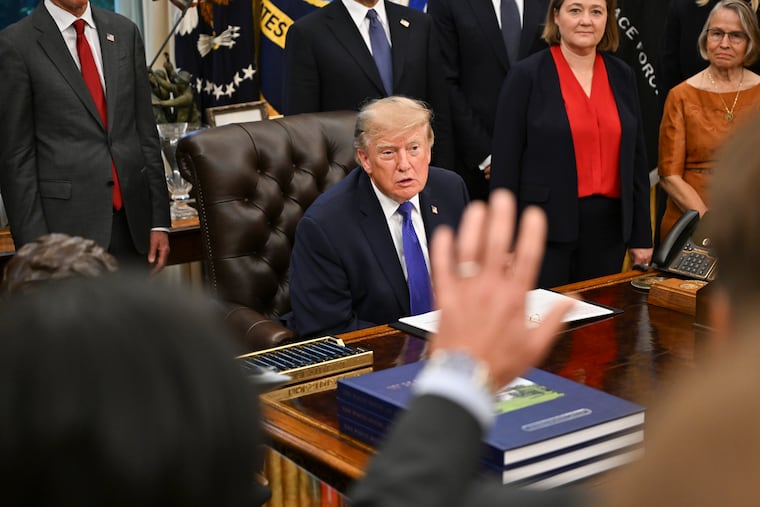
Early last year, federal workers braced for layoffs after President Donald Trump took office. But as his administration’s threat loomed, many in the Philadelphia region opted to leave on their own instead, recent data suggest.
In 2025, roughly 4,700 federal employees in the Philadelphia metro area — an 11-county region spanning Pennsylvania, New Jersey, Delaware, and Maryland — left their jobs. That is more than in the two previous years combined.
But only 2% of them were laid off, according to an Inquirer analysis of data from the U.S. Office of Personnel Management, the government’s human resources arm.
The vast majority of workers who left their positions chose to do so. They opted to retire, quit, or take a government incentive — the Trump administration’s deferred resignation program — that allowed federal employees to resign and continue to be paid for months.
“The uncertainty of federal employment” drove many to leave, said Philip Glover, national vice president for the American Federation of Government Employees (AFGE) District 3, which represents federal employees in Philadelphia.
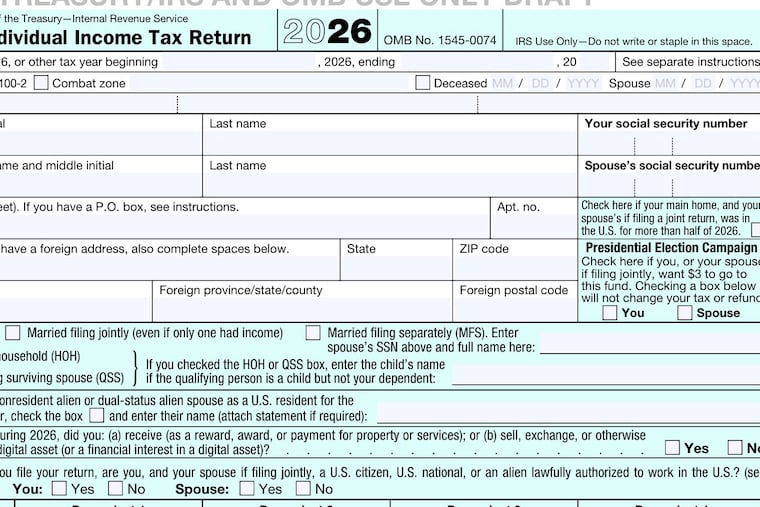
For some government workers, it was not really a choice, said Alex Jay Berman, a leader at the National Treasury Employees Union chapter 71, which represents IRS employees in Philadelphia.
“For a great many people, the prospect of the federal service — to which they’ve given their lives in service — became untenable,” he said.
Why did federal workers leave?
In early 2025, the Trump administration, in its efforts to reshape the federal workforce, instructed agencies to draw up plans for reductions in force.
The Office of Personnel Management offered the deferred resignation program, which some referred to as a buyout, and said those not taking the offer would get no guarantee their job would still be around.
IRS employees were instructed to upload their resumes so the agency could assess their qualifications as part of the reduction in force. Employees across agencies were instructed to submit a list of their accomplishments to OPM each week.
Meanwhile, remote work flexibility was rescinded.
“It caused a real disruption in childcare, travel — all those kind of things. Those people started looking for the exits,” said Glover at AFGE.
Among all Philadelphia-area federal workers who left their agencies last year, 48% were classified as having quit, meaning they left federal service before they were eligible for regular retirement benefits.
Some left because they saw their agency’s mission change, said Richard Gennetti, a national AFGE representative in Pennsylvania.
He heard from Environmental Protection Agency employees, for instance, who told him, “‘I’m not doing this. I came to protect the environment, not water down all the rules. I came to provide services. I didn’t come to destroy them,’” Gennetti recalled.
The government shutdown also pushed some workers out, Glover said. It started in October and lasted 43 days, during which some employees at the Social Security Administration, the Transportation Security Administration, and other agencies were expected to continue to work without getting paid. More left from the Department of Homeland Security when that agency shut down this year, Glover said.
“They’re just fed up,” he said.
How many took the government incentive?
When workers first heard about the deferred resignation offer in January 2025, some thought the announcement might be spam, and some did not believe that the federal government would pay them for not working. Those who took it had to waive their rights to appeal pay disputes, Glover said, and the union advised members against taking it.
Those deferred resignations account for nearly half of the federal workers in the Philadelphia metro area who left last year. Some employees who applied to take it were denied, union leaders said.
With almost 1,900 local departures, the Treasury Department saw more Philadelphia-area employees leave last year than any other agency. By comparison, fewer than 1,200 Philadelphia-area Treasury employees left in 2023 and 2024 combined.
Two-thirds of Treasury workers who left last year took the deferred resignation.
Meanwhile, only 10 of the 250 people locally who left the Social Security Administration last year took the deal.
» READ MORE: These Philly federal workers loved their jobs. But amid Trump’s shakeup they chose to leave.
Retirements accounted for nearly 40% of last year’s federal worker departures in the Philadelphia area. Some took the deferred resignation offer as they retired, while others used the regular process.
Among them: “People who were towards the tail end of their career, and maybe they weren’t planning on leaving, but they had [worked] enough time to retire,” Glover said. “Maybe they did, because it just isn’t worth it.”