Frank Rizzo statue to return to committee of supporters, but an agreement with city says it can only be displayed on private property
Supporters, however, say they’re not ruling out featuring the statue in a public space.
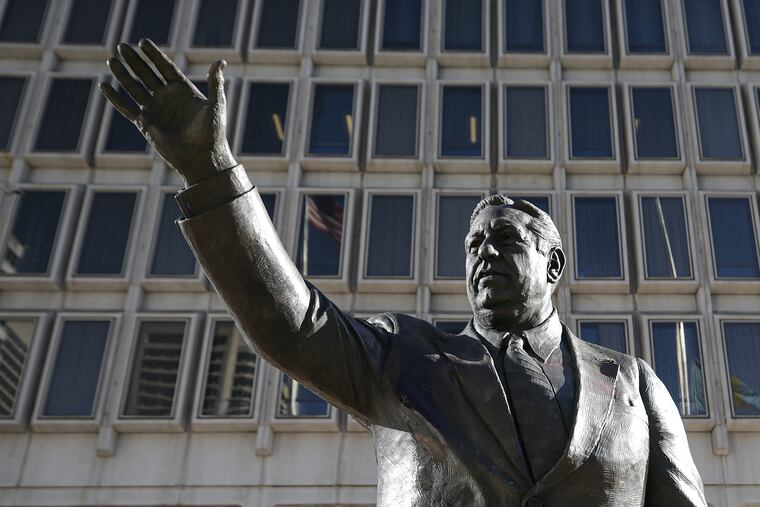
The 10-foot bronze statue of Frank Rizzo, the former Philadelphia police commissioner and mayor, will be going back to the group of supporters that donated it to the city in 1998.
The Philadelphia Art Commission decided Wednesday it would release the statue from its collection within 90 days, finalizing an administrative step to approve a deal reached by the city and the group last year.
According to the agreement filed with the commission, the city will make an $80,000 payment to the Frank L. Rizzo Monument Committee for damage caused to the statue during its middle-of-the-night removal in June 2020. In exchange, the committee will end litigation against the city regarding the statue.
What’s more, the agreement stipulates that the statue may be displayed only on private property, “inside of a building or behind a fence, wall, or other structure that makes the statue not visible from the public right of way.” The mayor or managing director can make an exception with written approval, according to the deal.
Still, an ebullient George Bochetto, one of the attorneys for the committee, said the group was still in conversations with Mayor Cherelle L. Parker’s administration regarding a future home for the statue, possibly on public land.
“The chapter is not closed on that,” Bochetto said. “The headline is going to be: More to follow.”
The city deferred to the art commission for comments regarding the deal.
“The Philadelphia Art Commission recognizes the importance of public art and appreciates the dialogue about the significance of public monuments in our city,” commission spokesperson Bruce Bohri said in a statement.
The decision ends a yearslong battle over possession of the statue that began at the height of racial justice protests after several instances of vandalism, including attempts to light the Rizzo effigy ablaze and topple it with cords.
Bochetto has said that prior attempts to get the statue back were stymied by the administration of Mayor Jim Kenney, which fought the committee “tooth and nail.” Bochetto said the Parker administration was much easier to work with.
To formalize the agreement, the city and the committee had to submit a joint motion to the art commission, which offered unanimous approval Wednesday.
Rizzo: A divisive legacy, a controversial memorial
Supporters of Rizzo have long considered his rise to police chief and mayor a source of pride for blue-collar Italian Americans.
People who knew him, like Bochetto, have insisted that the former mayor’s actions and motivations were misunderstood. Rizzo was simply “tough on crime,” Bochetto said last year.
» READ MORE: The history of the controversial Frank Rizzo statue in Philadelphia
“Yes, he was a brute in some respects. But it wasn’t racist,” he told The Inquirer then. “It was law and order, it was crime, and I think he got a bad rap, frankly.”
There was enough support to memorialize Rizzo that the committee began fundraising in 1992, not long after his death. The group donated the statue to the city and it was officially unveiled in 1998.
For years, critics pointed to the heavy-handed policing of marginalized communities under his tenures in leadership as reasons the statue should be removed.
Black Lives Matter protesters placed a Ku Klux Klan hood over the figure in 2016, calling for its removal, and as the country mulled the place of Confederate statues in today’s society, former City Councilmember Helen Gym reiterated calls for the Rizzo statue’s removal.
But calls for removals and protesters’ attempts to do it themselves reached new heights in 2020.
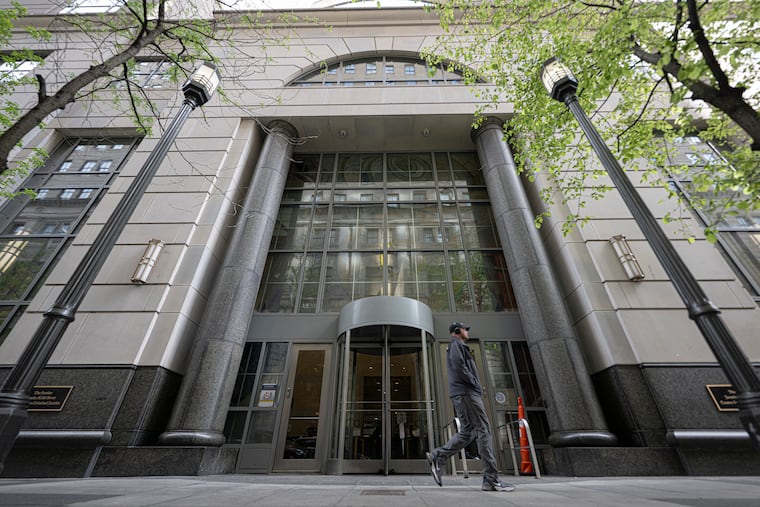
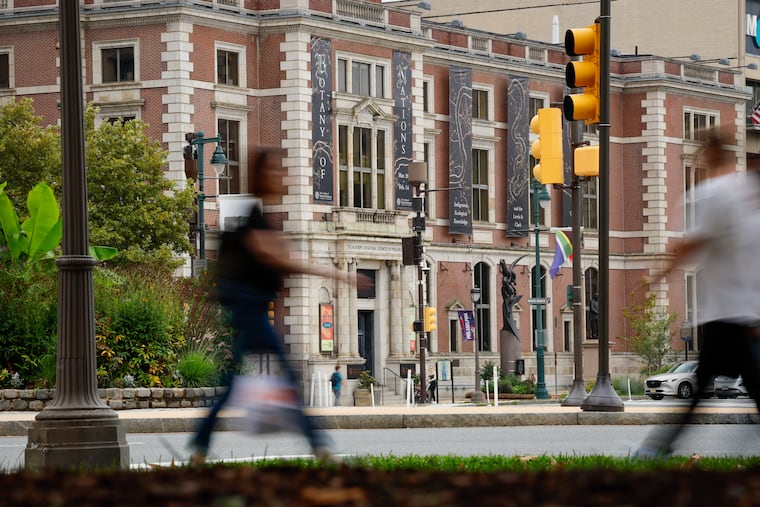
Kenney ultimately had the statue removed from the front of the Municipal Services Building in the predawn hours, placing it in city storage.
“The statue is a deplorable monument to racism, bigotry, and police brutality for members of the Black community, the LGBTQ community, and many others,” Kenney said in a statement at the time, adding that treatment of those communities under Rizzo “was among the worst periods in Philadelphia’s history.”
Then a member of City Council, Parker expressed support for the removal.
“The statue represented bigotry, hatred, and oppression for too many people, for too long. It is finally gone,” she wrote on X, formerly Twitter.
Future of the statue
Matthew Minsky represented the committee at Wednesday’s hearing and offered a glimpse of future challenges in finding the statue a new home. The statue, he said, was made to make it appear as if Rizzo is coming down steps.
“The base of the statue requires some sort of structure resembling steps,” he said. “So we first have to get a base, then we have to get a location, and then we’re going to proceed from there.”
But the committee’s first step will be to refurbish the statue.
Bochetto said he was pleased by the latest victory for Italian Americans in Philadelphia, who he said felt attacked by the Kenney administration.
Not long after the Kenney administration removed the Rizzo statue, it boxed up a Christopher Columbus statue in Marconi Plaza. Kenney would then sign an executive order replacing Columbus Day with Indigenous Peoples Day in 2021.
Those actions were all challenged in court.
Commonwealth Court required the city to unbox Columbus in 2022, and just this month, the same court found the replacement of Columbus Day was invalid because Kenney did not have the authority to swap the holiday.
Bochetto, who had no kind words for Kenney, took a victory lap Wednesday.
“He started with the Columbus statue, he went for the Columbus Day holiday, and removing the Frank Rizzo statue … all of that is being undone," he said.