Jeffrey Epstein claimed he championed Penn’s ‘quantum gravity program’ — but he confused the university with Penn State
After reviewing the Penn State's grants database at The Inquirer’s request, a spokesperson confirmed that Epstein’s name appeared on paperwork related to a gift the university received.
People mix up the University of Pennsylvania with Pennsylvania State University so often, alumni at the Ivy started making novelty T-shirts that read “Not Penn State.”
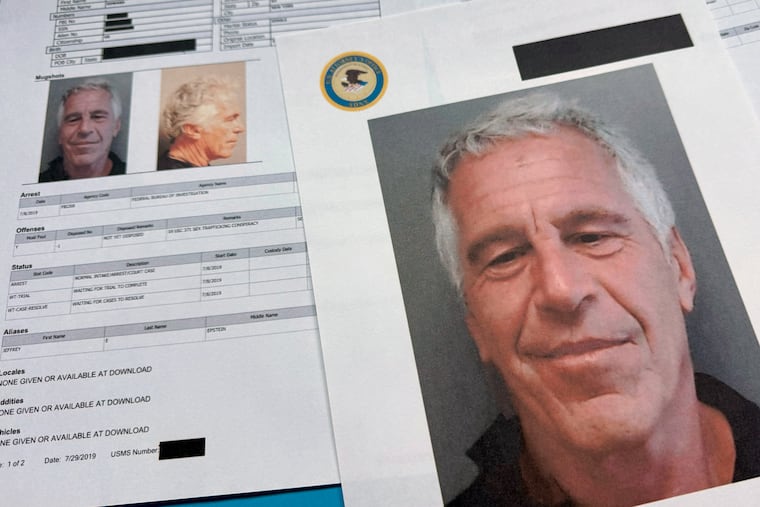
You can add another name to the list of offenders: Jeffrey Epstein.
The convicted child-sex solicitor was also a prolific donor to scientific research programs through the Jeffrey Epstein VI Foundation. A tranche of the disgraced financier’s emails released by the U.S. Department of Justice contains descriptions of dozens of pet projects the foundation supported at elite institutions.
But one of them, the “Quantum Gravity Program” at the University of Pennsylvania, is something of a whodunit involving theoretical physicists in three different countries.
Epstein was a self-proclaimed backer of “cutting-edge science,” and the Quantum Gravity Program is mentioned dozens of times in his personal records. The program and its affiliation with Penn are even referenced today on the Wikipedia page for his foundation.
But there is no other evidence a program by that name ever existed at Penn.
After a series of at-times-uncomfortable calls with confused spokespeople and academics, The Inquirer discovered that Epstein was, in fact, involved with financing researchers in the 1990s at a similarly named program based at Penn State — sometimes referred to as the “loop quantum gravity program.”
A spokesperson for the state-funded university said Epstein’s name was attached to a 1990s grant made through an intermediary nonprofit in support of former PSU physics professor Lee Smolin, who helped lead the loop quantum gravity program and maintained ties with Epstein for years afterward.
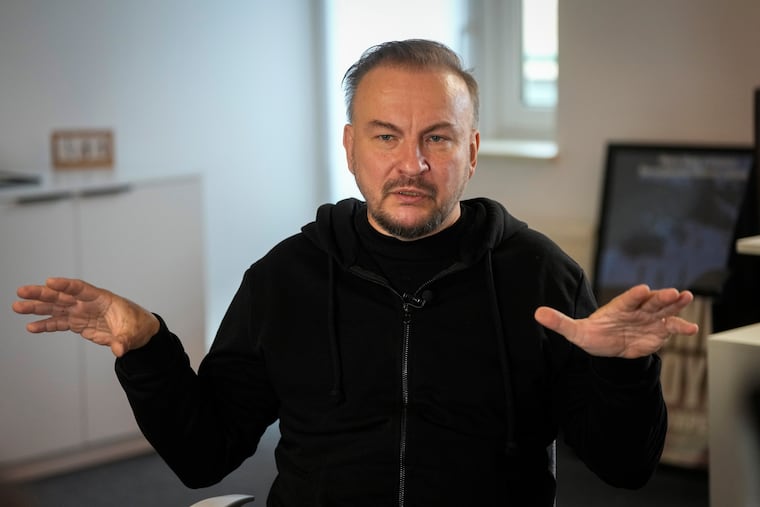
German theoretical physicist Olaf Dreyer sought out a doctorate at PSU at that time in hopes of working on the loop gravity program, and said Epstein’s decades-old claim that he had supported such a program at Penn was a classic case of mistaken academic identity.
“The ‘quantum gravity program’ is the program at Penn State,” Dreyer said via email Thursday from Frankfurt, Germany. “It was the loop quantum gravity program that brought me to Penn State.”
Dreyer said that Smolin helped lead the program during his time at the state university, and that the scientist had procured funding from Epstein for the Penn State program.
“Smolin had the connections to Epstein,” he said. “Lee stayed connected to Epstein long after Epstein‘s conviction.”
A spokesperson for Penn State cited a publicly available research paper from 1999 that showed Smolin’s quantum gravity research was funded by the “Jesse Philips Foundation.” But after reviewing the university’s grants database at The Inquirer’s request, the spokesperson confirmed that Epstein’s name appeared on paperwork related to that foundation gift.
The Jesse Philips Foundation was created by the eponymous Dayton industrialist, who died in 1994. After his death, his widow, Caryl Philips, took over the foundation, which is now known as the Jesse and Caryl Philips Foundation. A request for comment from the foundation was not immediately returned.
A record of another philanthropic donation made in 1998 was described as coming from “J. Epstein Foundation and Jesse Philips Foundation.” And Epstein’s emails indicate Caryl Philips was in contact with both Epstein and his confidant, convicted child sex trafficker Ghislaine Maxwell, as late as 2010.
Dreyer said it was his understanding that Smolin was being funded by Epstein directly.
“He used money from Epstein to pay for grad students,” Dreyer said.
Reached by email, Smolin confirmed Epstein was behind the foundation grant at the time, which allowed him to leave PSU to pursue his research abroad. “These arrangements had nothing to do with UPenn,” he said.
Smolin’s ties to Epstein are now well documented. He was quoted praising Epstein’s support for his research on an Epstein Foundation website.
“I was extraordinarily fortunate to encounter someone who asked me, ‘What would you really like to do? What is your most ambitious and crazy idea?,’” the quote reads. “Then, unexpectedly and generously, Jeffrey Epstein gave me the chance to try to make good on my answers.”
After his time at PSU, Smolin went on to cofound the Perimeter Institute for Theoretical Physics, in Toronto, Canada, now one of the top research programs for theoretical physics in the world. Dreyer followed the physicist to the Perimeter Institute after obtaining his doctorate in 2001, and recalled Smolin taking a group photo of his team to send to Maxwell for inclusion in Epstein’s now-infamous 50th “birthday book.”
“You can imagine how happy I am to be included in that book,” he joked.
Newly released emails from the U.S. Department of Justice (DOJ) disclosed Smolin had kept up a relationship with the financier during this time — and well after Epstein’s 2008 conviction — which led to his ouster in February from the Perimeter Institute.
Epstein’s professed involvement at Penn came as a shock to administrative faculty and longtime physics professors at the West Philadelphia university.
The financier first alluded to the supposed Penn program in a rambling email to his personal assistant in 2006, according to emails released as part of the Epstein Transparency Act. He later commissioned a more detailed description of the foundation’s activities, including a mention of the Penn program on an official philanthropic website that debuted in 2010.
The original text, which was often appended to Epstein’s curriculum vitae ahead of speaking engagements, was likely written in the 2000s by literary agent John Brockman, according to later email exchanges attributing the writing to him. Brockman, who could not be reached for comment, helped Epstein cultivate scientific relationships and promote his foundation.
Epstein’s description of his foundation’s activities underwent several rewrites or revisions, including one iteration alluding to the foundation supporting science programs at a “Penn University” — which also does not exist.
While Epstein’s personal records mention the program at Penn dozens of times, a Penn spokesperson said the university was unfamiliar with Epstein’s long-claimed affiliation until the DOJ record release in December.
“Penn is not aware of a so-called ‘Quantum Gravity Program’ referenced in Jeffrey Epstein’s bio and has no records of his involvement,” said university spokesperson Matthew Grossman in a statement.
Burt Ovrut, a theoretical physicist who helped lead the physics department at Penn, said he would have known if such a program ever existed.
“I would have heard of this,” said Ovrut, who remains a professor emeritus. “We don’t tend to have private grants in theoretical physics.”
The fallout from the Epstein saga has ensnared numerous other universities with ties to the billionaire investor, rocking institutions like Princeton, the Massachusetts Institute of Technology, and Harvard, where the Epstein scandal led to resignation of former president Larry Summers, who was raised in Penn Valley, a Philadelphia suburb.
The lure of Epstein’s wealth and interest in obscure academic fields was powerful.
While Penn had no official relation with Epstein’s foundation, its staffers were not immune to his temptations. In 2012, for instance, a Penn professor wrote to Epstein seeking funding for immersive research on African hunter-gatherer societies. There was no response.
Dreyer, the German physicist, also solicited Epstein for his own research funding in 2009 on the advice of a colleague. While he, too, was never funded, he regrets that he did not do his own due diligence on Epstein.
“If only I had done some research,” he said.
Editor’s note: This article has been updated to include a comment from Smolin regarding the grant.

The Inquirer’s journalism is supported, in part, by the Lenfest Institute for Journalism and readers like you. News and editorial content are created independently of The Inquirer’s donors. Gifts to support The Inquirer’s high-impact journalism can be made at inquirer.com/donate. A list of Lenfest Institute donors can be found at lenfestinstitute.org/supporters.