DA Larry Krasner calls lawmakers ‘lawbreakers’ for delaying vote on felony murder bills
The bills would give incarcerated people the chance at release after 25 years.

Philadelphia’s top prosecutor on Thursday accused state lawmakers of effectively defying the courts, as a window narrows for the legislature to respond to a landmark ruling that struck down mandatory life sentences for second-degree murder convictions.
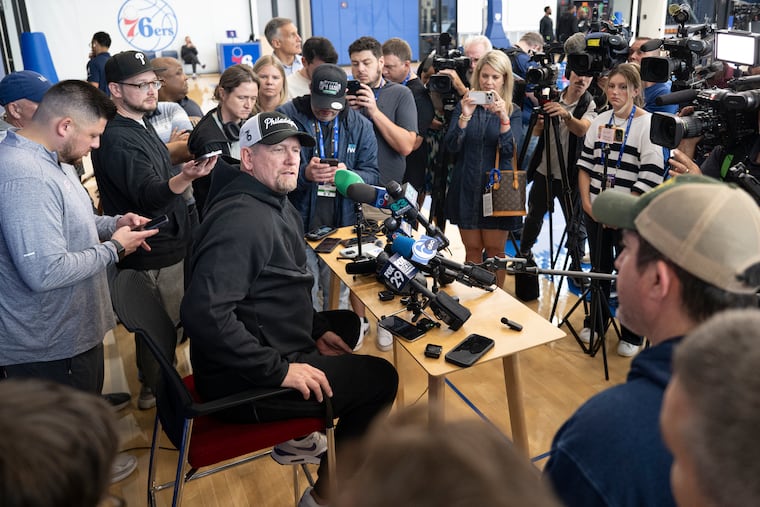
At a news conference, District Attorney Larry Krasner said lawmakers’ failure so far to act on proposed parole legislation amounted to “lawbreaking,” warning that time was running short to repair what he called an unconstitutional sentencing scheme.
His remarks came 28 days after the Pennsylvania Supreme Court ruled that mandatory life sentences for second-degree murder are unconstitutional.
The court gave lawmakers 120 days to craft a framework to address its ruling and apply it to those serving such sentences.
Krasner said legislators were not moving quickly enough.
“What we have now is an opportunity for our legislature — the people we have elected to work for us — to go from being lawbreakers to lawmakers," Krasner said. “We have 92 days left, and we need to move ahead.”
Two bills — House Bill 443, introduced by Rep. Tim Briggs, a Democrat from Montgomery County, and Senate Bill 387, introduced by Sen. Sharif Street, a Philadelphia Democrat — would allow people convicted of so-called felony murder to become eligible for parole after 25 years.
Krasner’s remarks focused on House Bill 443, which had been scheduled for a vote on April 9 before Briggs postponed consideration, saying he would withdraw the measure and consult with attorneys and advocates in hopes of producing legislation “we can all be proud of.”
In a statement, Briggs said he had worked with multiple stakeholders, including Krasner, to craft the bill, which he called “a fair and just solution to this problem.”
But, he said the measure seemed destined to stall in the Republican-controlled Senate, so lawmakers had more work to do to reach consensus
Of the roughly 1,100 people serving life sentences for second-degree murder across Pennsylvania, more than 500 were convicted in Philadelphia, according to Krasner’s office — a concentration that would give the office an outsized role in any future parole process. About 70% of those people could become eligible for parole consideration if either bill is enacted, Krasner said.
He emphasized that his office would play a central role in reviewing cases before any hearings, promising what he described as a rigorous, individualized assessment.
“We will engage in an extremely detailed review of these cases,” he said. “We want our voice to be heard.”
Under the current system, he argued, such scrutiny was largely absent. “It’s the kind of hearing that should have happened originally,” he said. “But we had an illegal law that said, ‘There’s only one sentence you can give.’ So why ask questions? Why find out about the individual?”
Krasner also pushed back on criticism that his position aligned more closely with defense advocates than with prosecutors.
“A part of my job is to seek justice,” he said. “Part of my job is to uphold the Constitution, and this law was strictly unconstitutional.”
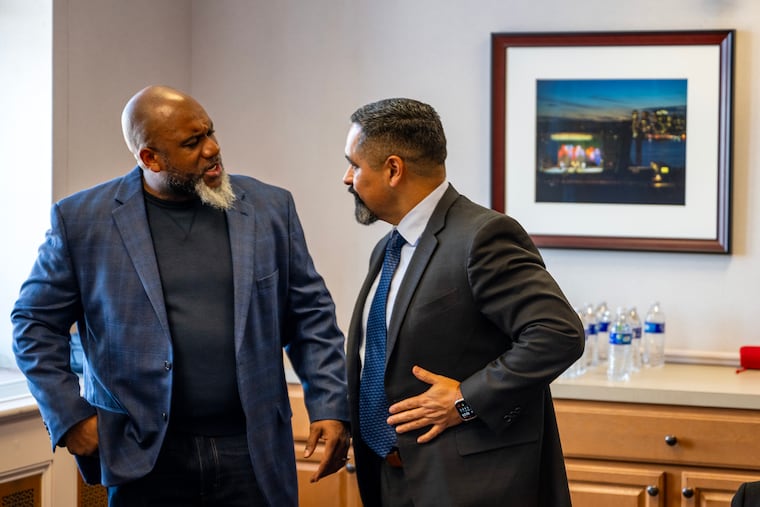
He was joined by several criminal justice advocates, including Saleem Holbrook, executive director of the Abolitionist Law Center, and John Pace, associate director of reentry and engagement at the Youth Sentencing and Re-entry Project. Both men had once been sentenced to life in prison and were later released after U.S. Supreme Court rulings barred mandatory life sentences for juveniles and made those decisions retroactive.
Holbrook stressed that the hundreds of men and women incarcerated under the former law were waiting for an opportunity to be released and show they could contribute meaningfully to their communities.
“I say opportunity,” Holbrook said, “because that’s what it is: They’re going to have to earn their release. They’re not just going to be taken in front of the parole board and let go.”
But, he added, “the clock is ticking.”