ABC accuses government of violating First Amendment
The company said in a filing with the FCC that regulators had a “chilling effect” on free speech by trying to punish political content they disagreed with.
ABC has accused the Federal Communications Commission of violating its free speech rights, potentially setting the stage for a protracted, high-stakes legal battle between the network and the Trump administration.
The company said in a filing with the agency that regulators had a “chilling effect” on free speech by trying to punish political content they disagreed with. The filing, made public Friday, is the most aggressive defense from any television network since President Donald Trump kicked off an extended campaign last year to bring media organizations to heel.
It represented a striking departure for ABC. The network, under the corporate stewardship of the Walt Disney Co., set an early tone of compliance toward Trump when it settled a defamation lawsuit with him for $15 million in December 2024. Many legal experts considered Trump’s case unlikely to succeed in court.
The filing was registered on behalf of a single ABC station in Houston and involved a minor regulatory dispute over the talk show The View. But in a signal of its importance, the company’s paperwork was signed by one of the most experienced Supreme Court litigators in the country, Paul D. Clement, a solicitor general under President George W. Bush.
The filing responded to action the FCC took earlier this year questioning whether The View, the longtime ABC morning talk show, fell under old federal rules requiring entertainment programs on broadcast television to grant equal airtime to political candidates for the same office. The show features a mix of political and celebrity interviews, led by a panel of hosts who are often highly critical of Trump.
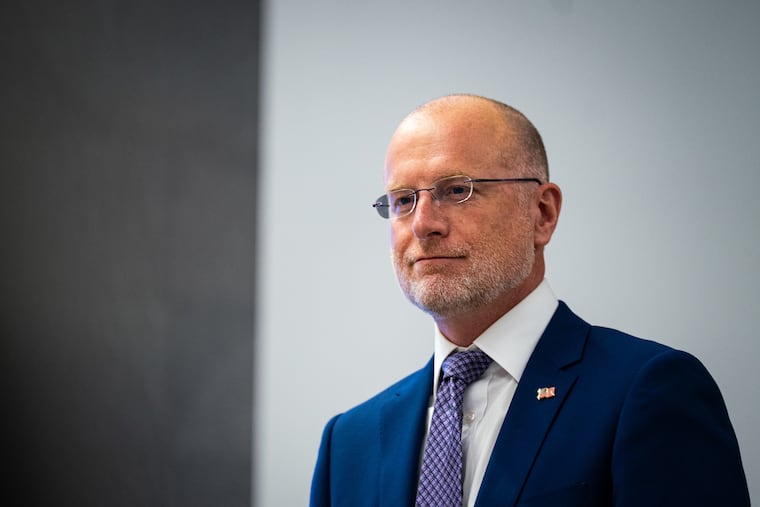
Trump’s appointed chair of the commission, Brendan Carr, has strongly suggested in public that The View, which is technically part of ABC’s news division, should not qualify for an exemption that the equal time rules allow for so-called “bona fide” news programs. But the filing from ABC revealed for the first time the intensity of the agency’s efforts against the network, which have included extensive requests for documents and information about its operations and editorial approach.
The exemption has been extended to many talk shows over the years. But Carr offered a new interpretation of the rule in January, suggesting that too many talk shows improperly assumed they qualified for it.
The FCC did not immediately respond to a request for comment.
According to ABC’s filing, the FCC ordered the company’s station in Houston, KTRK-TV, to file a formal request asking whether The View qualified for the exemption. The agency suggested that if the show was not exempt, then KTRK should have registered formal paperwork required under the equal time rules in February when The View booked James Talarico, the Democratic candidate for Senate in Texas.
ABC said the request was an overreach because The View had already received its own news exemption from the agency in 2002. The company said the exemption had never been challenged in the 24 years since and considered it to remain in effect.
The network called the FCC’s demand that it file for an exemption again “unprecedented, beyond the commission’s authority and counterproductive to the commission’s stated goal of encouraging free speech and open political discussion.”
It added, “Some may dislike certain — or even most — of the viewpoints expressed on The View or similar shows. Such dislike, however, cannot justify using regulatory processes to restrict those views.”
Pointedly, it noted that the agency has questioned talk shows critical of the president, like The View, but not radio talk shows supportive of the administration, like those hosted by conservative commentators Glenn Beck and Mark Levin. The filing also noted the timing of the inquiries, which come before the midterm elections.
Carr assumed the agency chairmanship in 2025, vowing to enforce century-old “public interest standards” that include provisions like the equal time rule after a prolonged period of leniency that began in the Reagan era.
Those rules apply to broadcast television and radio, much less so to cable, and not at all to the internet. Carr has accused the nation’s three oldest networks — ABC, NBC, and CBS — of exhibiting liberal bias that could be in violation of the public interest standards, drawing pushback from public interest lawyers, Democrats, and even some Republicans.
ABC has taken the brunt of the action. Early in his term, Carr initiated an inquiry into diversity, equity, and inclusion practices at ABC stations, which remains underway.
In September, Carr threatened possible sanctions against the network over a joke that late-night host Jimmy Kimmel made about the man accused of murdering Charlie Kirk. Kimmel’s comments prompted fury from Trump and his supporters. ABC responded by suspending Kimmel’s show for several days, but he returned after a wave of protest from his fans and others concerned about the free speech implication of taking him off the air.
The pressure has only intensified since. The FCC began looking into The View and then, two weeks ago, took the highly unusual step of reviewing the licenses of all eight of ABC’s owned local stations years before they expire.
That license review came after another joke from Kimmel that angered the president, though Carr said it was because ABC had been playing “rope-a-dope” with the agency in the DEI inquiry and “weren’t being entirely forthcoming.”
ABC disputed Carr’s description of events in its filing this week. The company said it had fully complied with all agency demands in the inquiry, on schedule, supplying some 11,000 documents in response to scores of requests.
The paperwork, however, suggested that ABC was considering a broader court challenge to the long-standing rules, asserting that they were outdated and unfair, given the many media options now available, most of them free of any such public interest obligations.
And it echoed warnings from Republicans — including Sen. Ted Cruz of Texas — in saying, “If the government is allowed to discriminate on the basis of viewpoint in a Republican administration, there is little preventing it from doing so when the Democrats are in charge.”
This article originally appeared in The New York Times.