Pulling customs from ‘sanctuary’ city airports would cause chaos, business groups say
Travel industry and business leaders are denouncing a proposal by DHS Secretary Markwayne Mullin, saying it could cost billions of dollars in losses.
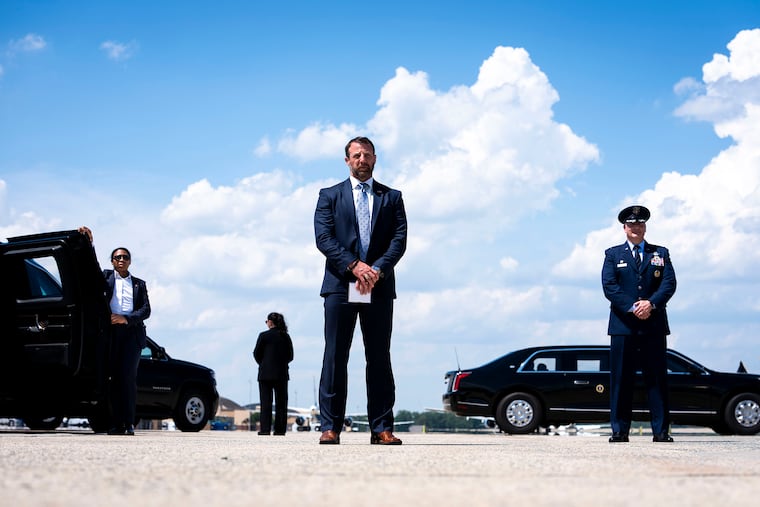
WASHINGTON — Travel industry and business leaders are denouncing a proposal by Homeland Security Secretary Markwayne Mullin to remove customs officers from airports in liberal cities, saying it would create havoc for travelers and jeopardize the travel economy at some of the nation’s largest ports of entry.
The idea, which Mullin has floated on cable television interviews, is designed to punish so-called sanctuary cities that limit their cooperation with federal immigration authorities.
Customs officers monitor goods flowing in and out of the country and must be on hand for international flights. Removing customs from airports would mean they cannot accept incoming international flights.
“Any reduction in Customs and Border Protection operations at major U.S. gateway airports threatens to cause unnecessary chaos throughout the nation’s air transportation system,” a coalition of travel and business trade groups, including the U.S. Travel Association and the U.S. Chamber of Commerce, wrote in a statement Friday. The fallout of making such changes at even a handful of gateway airports, the statement added, “will quickly ripple across the country.”
Last week, Sean Duffy, the transportation secretary, also told lawmakers that such a move would be ill-advised.
“We have people from around the world and around the country that need to be able to fly into all different kinds of places,” he said during a hearing before a House Appropriations subcommittee. “We shouldn’t shut down air travel in a state that doesn’t agree with our politics.”
The White House, despite past efforts to target sanctuary cities over their immigration policies, has not endorsed Mullin’s plans. The Department of Homeland Security declined to comment on the idea, beyond pointing to Mullin’s comments.
But as the criticism has mounted, Mullin has only dug in on the proposal.
Mullin promoted the idea multiple times last week, saying in an interview with Fox News on Tuesday that the department was drawing up plans to withdraw officers who process international flights in cities where “local radical left Democrats aren’t allowing us to do our job and enforce federal laws.”
“We shouldn’t be processing international flights into their cities either,” Mullin said. “They don’t want us to enforce immigration but they want us to process immigration at their facilities? Nothing about that makes sense to me.”
The next day, Mullin claimed during an interview with Newsmax that local law enforcement in New Jersey refused to respond after federal officials requested help following the eruption of protests outside an immigrant detention facility in Newark. Mullin held up that event as justification for potentially moving customs officers “out of the airports so they can help assist to secure the area.”
The travel industry has said the impact of such moves, if they come to pass, is potentially significant.
There are 18 airports in areas that the Department of Justice has put on its list of sanctuary cities including Philadelphia, Boston, New York, and Los Angeles. They handle a combined 68 million passengers a year, worth tens of billions in commercial activity. Some of them are also major cargo hubs, processing billions in imports on a daily basis.
According to travel industry representatives, shutting down customs at Newark Airport alone would jeopardize an estimated $8 billion per year in travel spending, and an estimated $100 million of imports on a daily basis. The city is expected to be a major destination for travelers arriving this summer to watch World Cup soccer games in New Jersey.
Shifting that much traffic to other airports could wreak havoc on an already stressed system, they add.
A full shutdown of customs operations at airports in sanctuary cities, according to the travel industry’s calculations, would imperil more than $70 billion in U.S. economic activity.
Mullin’s stated plans appear to run counter to at least one recent move the Trump administration has made to expand airport customs operations in a sanctuary city. Last week, the administration announced it would start to screen passengers from Ebola-stricken areas at Kennedy Airport, one of only four airports nationwide that has been designated to try to keep the fast-moving virus from entering the United States.
On Thursday, Mullin said on Fox & Friends that the department might not pull CBP officers out of airports in every sanctuary city, but focus on cities such as Newark.
“If things don’t change, we’re going to have to make this step pretty quick,” Mullin said when asked if he planned to pull CBP officers out of Newark.
This article originally appeared in The New York Times.