Boris Johnson moves to suspend Parliament ahead of Brexit deadline
The idea of suspending Parliament prompted howls of outrage from opposition politicians.
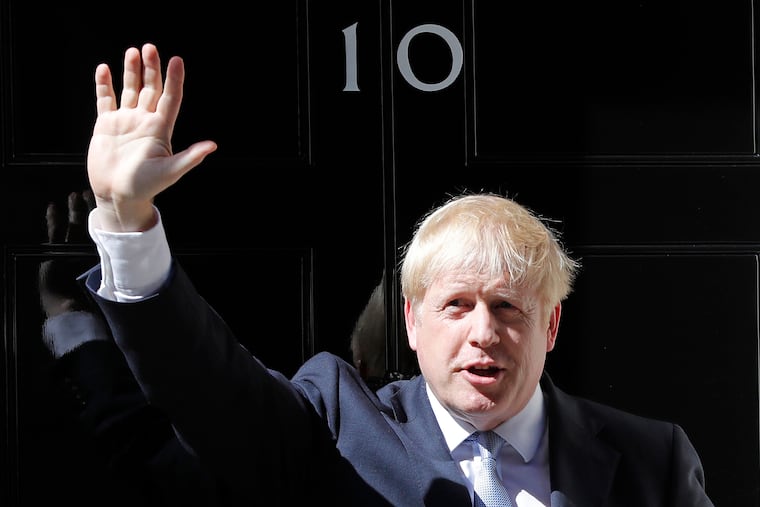
LONDON - Prime Minister Boris Johnson asked Queen Elizabeth II on Wednesday to delay opening Parliament, effectively robbing the opposition of time to thwart a no-deal Brexit and prompting howls of outrage from lawmakers.
Johnson told reporters that he had asked the queen to give her customary speech outlining the country's legislative agenda in mid-October, effectively suspending the body between Sept. 11 and Oct. 14.
Britain is expected to leave the European Union on Oct. 31.
Johnson denied claims that Brexit was the reason behind the new timetable, telling reporters that he wanted a new session of Parliament so he could set out the government's "very exciting agenda."
He added that there would be "ample time" for Parliament to debate Brexit.
The move to suspend - or prorogue - Parliament at this crucial time in the Brexit process sparked outrage from many lawmakers, including from some within the governing Conservative Party.
John Bercow, the speaker of the House of Commons, called it a "constitutional outrage." He said in a statement that "however it is dressed up it is blindingly obvious that the purpose of prorogation now would be to stop Parliament debating Brexit and performing its duty."
Dominic Grieve, a Conservative lawmaker, said that suspending Parliament at this time would be "outrageous."
"This has very little to do with starting a new session of Parliament - it's a deliberate attempt to make sure Parliament doesn't sit for a five week period. Normally, when we prorogue Parliament it's for five or six days maximum between sessions and I think this is pretty unprecedented," he said.
Yvette Cooper, a Labour lawmaker, said: "Boris Johnson is trying to use the Queen to concentrate power in his own hands - this is a deeply dangerous and irresponsible way to govern."
The queen is on holiday in Scotland at her Balmoral residence.
Tom Brake, the Brexit spokesman for the pro-E.U. Liberal Democrats, tweeted that Johnson has "thrown down the gauntlet to Parliamentary democracy."
"The mother of all Parliaments will not allow him to shut the #PeoplesParliament out of the biggest decision facing our country," he said. "His declaration of war will be met with an iron fist."
Nicola Sturgeon, the leader of the Scottish National Party, said that "unless MPs come together to stop him next week, today will go down in history as a dark one indeed for UK democracy."
British lawmakers return to Parliament next week following their summer recess, or break. Parliament then normally shuts down in late September for about three weeks, which is when the political parties hold their annual conferences. The proposed suspension would extend that period.
The latest maneuverings follow a meeting on Tuesday by opposition lawmakers to try to thwart a no-deal Brexit. In a rare show of unity, leaders of opposition parties agreed that they would prioritize trying to pass legislation to stop a no-deal Brexit.
Britain's mop-topped prime minister has set his timetable: he says that Britain will leave the E.U. with or without a deal by Oct. 31. He insists that he wants a deal, but his four-page letter to E.U. chiefs and talks last week with the leaders of France and Germany have yet to yield any breakthroughs.
With the risk of a no-deal Brexit seemingly rising by the day, those opposed to leaving without an exit plan - the majority of lawmakers in the British Parliament - are plotting ways to avert such a development, which leaked official documents say could lead to food and fuel shortages and a return of a hard border in Ireland.
But if Parliament isn’t sitting for an extended period of time, it will stymie efforts of opposition lawmakers to stop a no-deal Brexit