Chicago schools to resume in-person classes Wednesday after the teachers union and city reached a deal
"Someone asked who won and who lost," Mayor Lori Lightfoot said. "No one wins when our students are out of a place where they can learn, and where they're safest."
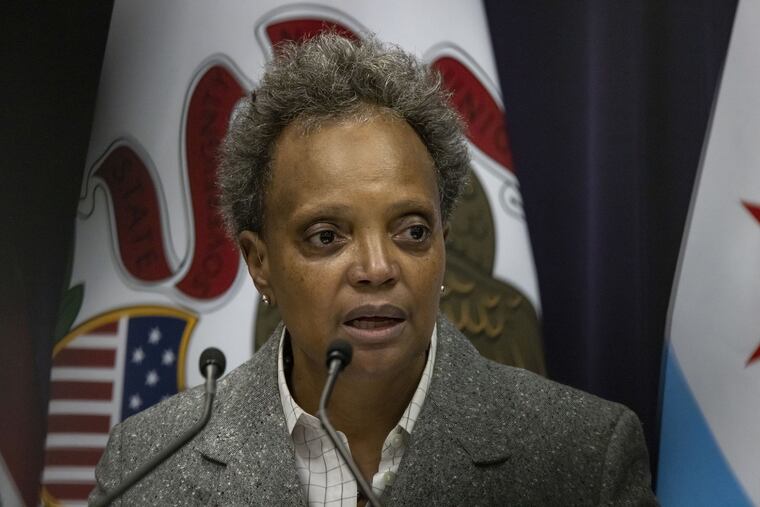
Chicago teachers on Monday agreed to resume in-person classes this week after city officials pledged to boost pandemic safety measures at schools, ending a days-long standoff between teachers and the city that resulted in canceled classes for 340,000 students.
The deal means students can return to school on Wednesday, Chicago Democratic Mayor Lori Lightfoot said in a statement. Lightfoot told reporters that the city would expand testing and enhance contact tracing efforts, as well as provide criteria for closing schools with outbreaks, to address the concerns held by the Chicago Teachers Union, whose members have expressed fear about getting infected in the classroom amid a nationwide surge fueled by the omicron variant.
Last week, the union had voted to return to remote learning, and the school system responded by canceling classes, making Chicago one of few U.S. cities without in-person classes after winter break.
"Someone asked who won and who lost," Lightfoot said, reading aloud a statement to reporters. "No one wins when our students are out of a place where they can learn, and where they're safest," she said.
Nearly two-thirds of the teachers union's House of Delegates voted to return to schools, said Jesse Sharkey, the union president. The decision will be subject to ratification by the rest of the union's 25,000 members.
Chicago teachers have demanded enhanced safety measures in schools, such as KN95 masks for educators and students, more frequent testing, and the option to take an unpaid leave of absence if an employee's medical condition puts them at higher risk of severe illness from covid-19. They also proposed standardized criteria for pausing in-person learning amid outbreaks. Without such accommodations, teachers have said, the city should transition classes to remote learning.
One major complaint from teachers was that the city had not set up a system to effectively test students for the virus before they returned to buildings. Other communities have staged effective "test-to-return" programs, and in Chicago, the district encouraged students to take coronavirus tests near the end of the winter break, but thousands of those tests were deemed invalid. Some samples were labeled unsatisfactory after delayed deliveries to labs due to weather and holiday traffic.
But municipal officials have resisted teachers' demands to hold remote classes, which Lightfoot said puts too big a strain on working parents and can set students back in their education. During the last round of remote-learning, Chicago schools lost contact with about 100,000 students - nearly a third of the district's students, she said.
The standoff in Chicago, the nation's third-largest district, was reminiscent of battles last school year between teachers unions, which saw in-person school as too dangerous, and school systems, which were trying to reopen buildings. This year, however, Chicago was an outlier.
The vast majority of school districts are now operating in person, though many have struggled to cover classes for absent teachers and some have seen large numbers of students out after testing positive or being exposed to the virus.
The fact that so many schools have stayed open represents a resolve on the part of school districts to try and avoid the academic and social harms of remote education that dominated the 2020-21 school year. Nonetheless, last week, about 5,400 schools were disrupted at some point, according to Burbio, a data firm. That's the highest total this calendar year but a small fraction of some 100,000 public schools in the United States.
Last week, some schools shifted to remote learning because of high covid numbers, others delayed the start of school to allow for testing of students before they returned from winter break, and still others were interrupted by a snow storm. But no other significant district saw the sort of acrimony or standoff that unfolded in Chicago.
The number of schools disrupted on Monday fell from more than 3,600 on Friday to slightly more than 1,300, according to preliminary data from Burbio.