Why China could emerge a winner from Trump’s global energy shock
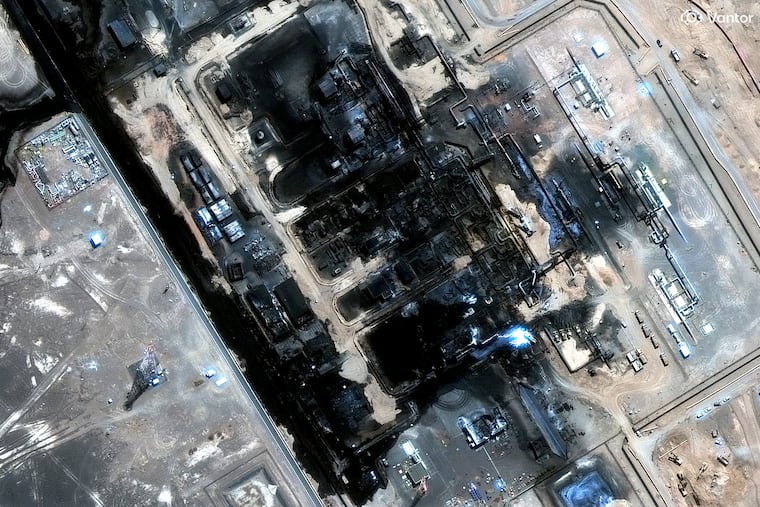
As the threat of strikes by Iran forces oil tankers destined for Asia to idle in the Persian Gulf, some top Republicans have declared an economic victory against a rival super power.
As the threat of strikes by Iran forces oil tankers destined for Asia to idle in the Persian Gulf, some top Republicans have declared an economic victory against a rival super power. “This is China’s nightmare,” Sen. Lindsey Graham (R., S.C.) said on Fox News this week.
But the disruption caused by the war on Iran may reveal a different story about China: that years spent preparing for a global energy crisis have left the country and its economy better positioned than most to endure a long-term hike in the cost of oil and gas.
Through massive stockpiles of crude oil, an aggressive push into electric vehicles and huge investments into coal, renewable power, and battery storage, Beijing has worked to insulate its economy from future oil shortages that once would have been crippling. As China has rolled out miles of new solar and wind farms while also sprouting new coal plants, some energy experts have dubbed it an “electrostate,” increasingly powered by electricity generated at home rather than fossil fuels shipped from abroad.
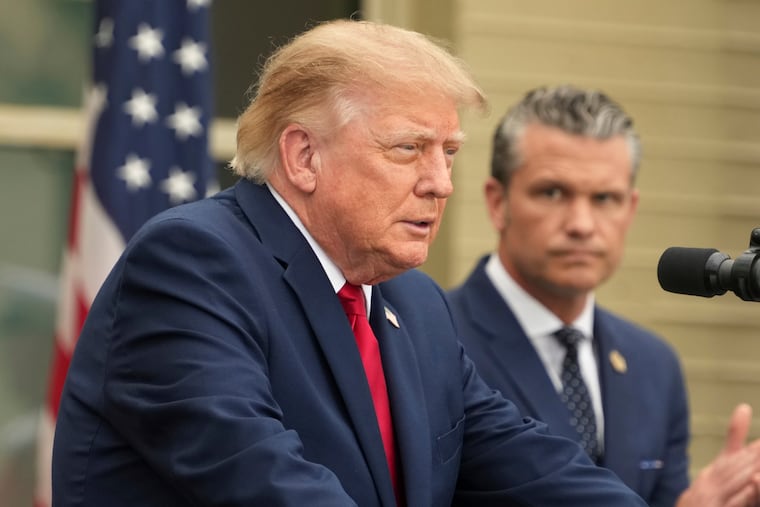
China’s strategy is being put to the test as oil prices climb and President Donald Trump sends mixed signals about how long the war on Iran will continue. While the Chinese economy like others around the world faces major challenges from increased energy costs, the country may be positioned to ultimately leverage geopolitical opportunity out of the crisis. China’s recent energy investments make it particularly resilient to fossil fuel price shocks compared with nations that have not kept pace in growing and diversifying their energy economies — including the United States and its allies in Europe.
“People out there tweeting that this is destabilizing China may be wishing that were the case, but tweets are not reality,” said Josh Freed, head of climate and energy at Third Way, a center-left think tank. “This is a shock China can absorb. It will end up in a stronger position on the other side.”
Successive U.S. presidents have talked about pursuing an “all-of-the-above” energy strategy, a phrase that was used by President Barack Obama and more recently by Trump to pledge investment into an array of different energy sources. But U.S. leaders have struggled to find the resources and political will to fully execute on that ideal.
Trump’s recent attacks on wind and solar power, as well as electric vehicles, have allowed China to pull further ahead in leading those sectors as an exporter and a user. The U.S. Strategic Petroleum Reserve was drawn down considerably under the Biden administration, and its restrictions on permits for new liquefied natural gas exporting facilities angered the industry. Every recent U.S. administration has promised a new generation of cost-efficient nuclear plants but struggled to build any, while China breaks ground on many new reactors.
By contrast, China’s years of steady and increasing investment have left it with huge capacity to absorb energy shocks. The country’s domestic production of oil covers only about a quarter of its needs, but its stockpiles of oil dwarf those of the U.S., with an estimated 1.3 billion barrels in reserve, according to analyst firm Kpler. That is enough to backfill more than six months of disruption of China’s supply via the Strait of Hormuz, where the tankers that once shipped half of the country’s oil imports and a third of the foreign natural gas it buys have been paralyzed by Iran’s attacks in the region.
China has also been rapidly building new coal plants in recent years and now has so many that they do not need to run at full capacity. That spare power generation can be fired up to help limit interruptions to heavy industry and its power grid.
“They have an abundance of domestic coal,” said Ben Cahill, director for energy markets and policy at the Center for Energy and Environmental Systems Analysis at the University of Texas at Austin. “China has strategized to protect itself from risks associated with imported fossil fuels. They see it as a vulnerability to be overly dependent on imported energy.”
Efforts to minimize use of imported fuels before the next crisis erupted have been a centerpiece of that strategy. Roughly one-third of China’s total energy consumption now comes from electricity, according to the Center on Global Energy Policy at Columbia University, 50 percent higher than the global average. More than a third of that electricity comes from solar, wind, and hydropower — generally built with components from Chinese factories that are also exported around the world.
China is also a leader in making and adopting electric vehicles. A majority of cars sold in the country are now EVs, and drivers in other nations are clamoring to buy Chinese models.
These pivots from gas and oil-fueled engines and power plants have, according to the International Energy Agency, enabled China to severely curb its growth in fossil fuel consumption, avoiding what would have been 1.2 million barrels of new daily oil demand since 2019. Natural gas accounts for just 4 percent of power generation in China, according to the Oxford Institute for Energy Studies.
“When you look at everything China has done, it has hedged its exposure in a way that few other countries have,” said Michal Meidan, director of the China energy program at the Oxford Institute for Energy Studies. “Its power system is relatively insulated from these shocks.”
The U.S. has struggled to tap into global enthusiasm for electric vehicles and neglected its power grid to the point where electricity prices are spiking around the country and tech companies can’t find the energy needed to power their AI ambitions. Trump has recently depressed growth in wind and solar energy by blocking nearly complete projects and cutting incentives that encourage development of renewable energy.
No country is going unscathed in the energy crisis triggered by the U.S. and Israeli assault on Iran, and China is no exception.
Despite its efforts to move its factories off oil and gas, some industries have not yet found viable substitutes. Imported fossil fuels are still needed to power manufacturing plants and provide ingredients needed to make other products. Making the glass for solar panels and manufacturing the giant grid batteries that China installs domestically and exports overseas requires chemicals derived from oil and gas.
“They are still going to need a lot of oil and gas for their industries,” said Sarah Ladislaw, a former senior director for climate and energy at the National Security Council under the Biden administration, who now runs the New Energy Industrial Strategy Center, a think tank. She added that the current disruption could also drive countries around the world to look for innovations that power manufacturing with clean energy, another area where China is already investing heavily.
China may also benefit from the energy shock from the Iran conflict by appearing to be a more acceptable partner for building out renewable energy.
“If you are, say, in Europe, you might not have wanted to increase your dependence on China for all the stuff you need for electrification, like critical minerals and batteries and solar panels,” said Jason Bordoff, the founding director of the Center on Global Energy Policy. “But in a world where now the oil and gas market looks pretty risky, too, increasing dependence on China for energy may start to look a little different.”
How much China can capitalize on the current tumult in energy markets hinges on how long it lasts, and what direction it takes. A rapid restoration of stability in Iran and a reopening of the Strait of Hormuz would limit how dramatically this conflict shakes the world’s energy economy.
But the outlook for a speedy return to the way things were before Trump ordered attacks on Iran two weeks ago is rapidly dimming as the conflict escalates across the region and oil infrastructure and shipping has been attacked. On Thursday, Iran’s newly appointed supreme leader, Ayatollah Mojtaba Khamenei, pledged in a written address that Tehran would keep retaliating and said the Strait of Hormuz would remain closed.
Richard Nephew, a senior adviser on Iran in both the Biden and Obama administrations who is now a scholar at Columbia University, said a lengthy period of disruption would also create a valuable learning opportunity for China’s leaders. Beijing’s threats of “reunifying” Taiwan have always raised questions about its dependence on foreign oil, because moving on the self-governed island would likely trigger an embargo of fuel deliveries.
China is getting “a dry run of what a boycott or embargo looks like if they ever try to take Taiwan,” Nephew said, while also getting a chance to observe the U.S. military’s weaponry and tactics in action. “There are ways in which the Chinese could use this whole situation to their long-term advantage,” he said.