U.S. prepares to indict Raul Castro as it pressures Cuba
The surprise appearance by John Ratcliffe, a visit Cuba said the United States requested, came as the Trump administration has ratcheted up pressure on Cuba’s communist government.
The Justice Department is preparing to seek an indictment against former Cuban President Raúl Castro, three people familiar with the matter told the Associated Press on Friday, as President Donald Trump threatens possible military action against the communist-run island.
One of the people told the AP that the potential indictment is connected to Castro’s alleged role in the 1996 shootdown of four planes operated by the Miami-based exile group Brothers to the Rescue. Castro was defense minister at the time.
All three people spoke on the condition of anonymity because they weren’t authorized to discuss an ongoing investigation. The Cuban government did not respond to a request for comment on the potential indictment, which was reported earlier by CBS.
Any criminal charge against Castro, which would need to be approved by a grand jury, would dramatically escalate tensions with Havana and ramp up expectations of U.S. military action in Cuba like the one carried out in January in Venezuela to bring President Nicolàs Maduro to New York on drug trafficking charges.
Following Maduro’s ouster, the Trump administration quickly turned its attention to his ally Cuba and ordered an economic blockade that choked off fuel shipments to Cuba, leading to severe blackouts, food shortages, and a collapse in economic activity across the island.
Iran war gave Cuba a breather
The U.S. war in Iran appeared to have given Cuban leaders something of a reprieve from U.S. talk of regime change.
As Trump seeks to wind down that conflict, speculation has been growing that he may soon turn his attention back to Cuba after pledging earlier this year a “friendly takeover” of the country if its leadership didn’t open up its economy to American investment and kick out U.S. adversaries.
Richard Feinberg, a professor emeritus specializing in Latin America at the University of California-San Diego, said that any indictment of Castro will play well with voters in south Florida but is unlikely to persuade career war planners in the Pentagon to pursue a second war of choice — this time just 90 miles from Florida.
“There’s no easy Venezuela copy,” said Feinberg. “There’s no clear line of succession and it’s hard to imagine regime change without U.S. boots on the ground.”
The AP reported in March that the U.S. Attorney in Miami had created a special working group of prosecutors and federal law enforcement to build cases against top Cuban officials amid calls by several south Florida Republicans to reopen its investigation into Castro’s alleged role in the 1996 shootdown.
Trump calls Cuba ‘a declining country’
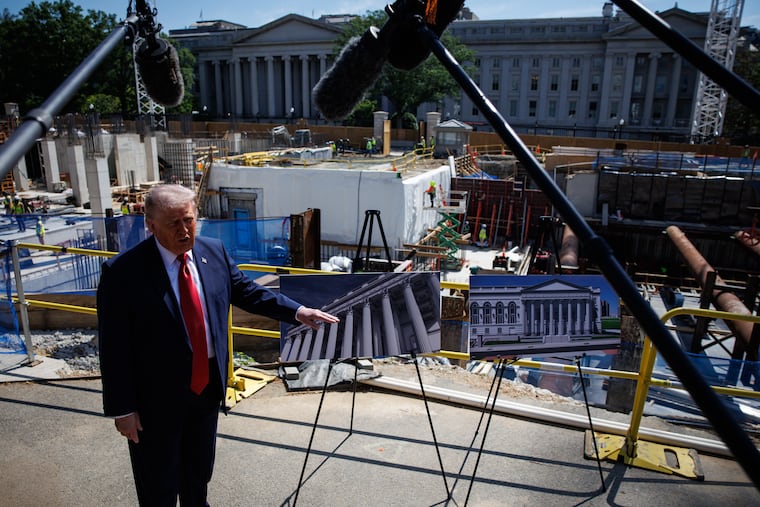
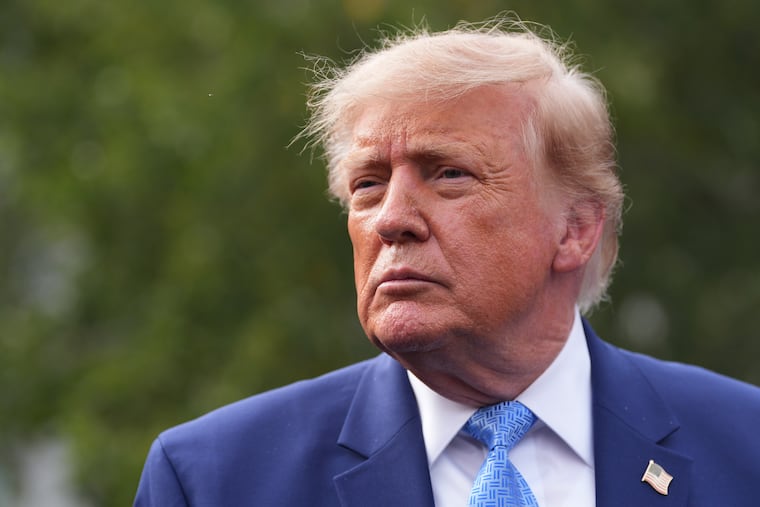
Trump declined to discuss a potential indictment on Friday, deferring to the Justice Department.
“But they need help, as you know, and you talk about a declining country — they are really a nation or a country in decline, so we’re going to see,” Trump told reporters aboard Air Force One. “We have a lot to talk about on Cuba, but not maybe for today.”
CIA Director John Ratcliffe met with Cuban officials, including Castro’s grandson, during a high-level visit to the island on Thursday.
Castro, 94, took over as president from his ailing brother, Fidel Castro, in 2011, and then handed power to a handpicked loyalist, Miguel Díaz-Canel, in 2019.
While he largely has avoided the spotlight since retiring in 2021 as head of the Cuban Communist Party, he is widely believed to wield power behind the scenes, a fact underscored by the prominence of his grandson, Raúl Guillermo Rodríguez Castro, who previously met secretly with U.S. Secretary of State Marco Rubio.
Florida straits shootdown a watershed moment
Cuba’s shootdown in 1996 of two Cessna aircraft operated by the Brothers to the Rescue was a watershed moment in decades of hostilities between the two countries.
At the time, President Bill Clinton had been cautiously exploring ways to reduce tensions with a Cold War adversary but faced stiff opposition from exiles who organized publicity-seeking flyovers of Havana, dropping anti-Castro leaflets, and aiding Cuban rafters fleeing economic deprivation and single-party rule.
The Cubans had warned the U.S. government for months that it was prepared to defend against what it considered deliberate provocations. But those calls went unheeded and on Feb. 26, 1996, missiles fired by Russian-made MiG-29 fighter jets downed two unarmed civilian Cessna planes just beyond Cuba’s airspace, according to an investigation conducted by the International Civil Aviation Organization. A third plane, carrying the organization’s leader, narrowly escaped.
“With hindsight, it appears the Castros’ motive was to slow down the Clinton outreach because they needed the U.S. as an external enemy to justify their national security posture,” said Richard Fienberg, who worked on Cuban issues at the National Security Council at the time.
They succeeded beyond their wildest dreams, said Feinberg.
Shortly after the shootdown, Congress passed what became known as the Helms-Burton Act, which codified a U.S. trade embargo enacted in 1962 and made it far more complicated for successive U.S. presidents to engage with Cuba.
To date, the U.S. has convicted only a single person of conspiracy to commit murder in connection with the Brothers to the Rescue shootdown. Gerardo Hernández, the leader of a Cuban espionage ring dismantled by the FBI in the 1990s, was sentenced to life in prison but was released by President Barack Obama during a prisoner swap in 2014 as part of an attempt to normalize relations with Cuba.
Two fighter jet pilots and their commanding officer have also been indicted but are outside the reach of U.S. law enforcement while living in Cuba.
Castro previously investigated for drug trafficking
Castro has been under U.S. criminal investigation before. In 1993, federal prosecutors in Miami considered charging him and several other senior Cuban military officials with cocaine trafficking based on testimony from Colombian traffickers that emerged in the drug trial of former Panamanian leader Manuel Noriega, the AP reported in 2006.
But an indictment never followed amid concerns about the witness’ credibility as well as fears that it could risk U.S. intelligence operations and derail Clinton’s tentative outreach.